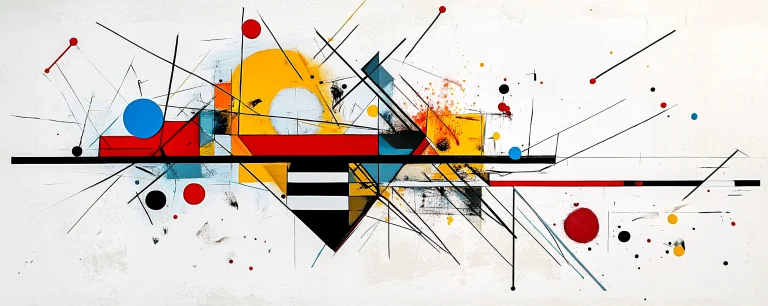

A Symphony of Forms: The Organic Beauty of Art Nouveau
Art can often be a window to history, capturing the essence of an era. Yet sometimes, journeying through art’s vast landscape makes it easy to feel lost amid the different movements and styles.
You might have heard of Art Nouveau but can’t quite place its swirling lines or nature-inspired motifs into today’s context.
Did you know that Art Nouveau was not just a visual feast but also a bold statement against traditional boundaries in design? This revolutionary style blurred the lines between high art and everyday objects, bringing beauty into homes like never before.
This article will guide you through this elegant world where function met form in harmony, revealing how Art Nouveau left its mark on artistry, from teacups to towering buildings.
You’ll discover why these creations continue to charm us with their timeless aesthetics even after over a century. Let’s dive in!
Key Takeaways
- Art Nouveau is an art movement known for its sensual curves, flowing lines, and designs inspired by nature. It started in the late 19th century and quickly spread across the world.
- Important artists like Alphonse Mucha, Gustav Klimt, and Louis Comfort Tiffany created famous works that defined Art Nouveau. They used new materials to blend art into everyday life.
- The movement affected many areas, including architecture with buildings like the Hôtel Tassel and Sagrada Familia. It also helped change designs in glass art, jewelry, furniture, and interior design.
- Art Nouveau was part of a larger change that wanted to combine fine and applied arts. This idea led to new ways of thinking about creative work.
- Different regions developed their own versions of Art Nouveau. For example, France had its own unique style, just like Germany, with Jugendstil. Each place added something unique to the movement’s history.
Defining Art Nouveau: Origins and Key Characteristics
Art Nouveau, an art movement that emerged in the late 19th century, is characterized by sensuality, Japanese-inspired flat perspective, intricate stained glass and window panes, undulating asymmetrical lines, and a floral style.
These key characteristics define the organic beauty of Art Nouveau and set it apart from other artistic movements of its time.
Sensuality
Art Nouveau’s curvy lines and forms brought design a fresh, sensual feel. These elegant shapes took inspiration from the natural world, celebrating the soft swirls of plants and flowers.
Think of Alphonse Mucha’s flowing hair on his famed posters or René Lalique’s glasswork that seems to dance with light. Each piece sought to capture the eye and harmonize with nature through its beauty.
Materials like iron, glass, ceramics, and concrete were key in this quest for sensuality. They bent and twisted into forms that felt alive—breaching the barrier between art and everyday objects.
This blend made items like lamps, furniture and jewelry come alive with an intimate charm, whispering stories of elegance long forgotten in simpler designs.
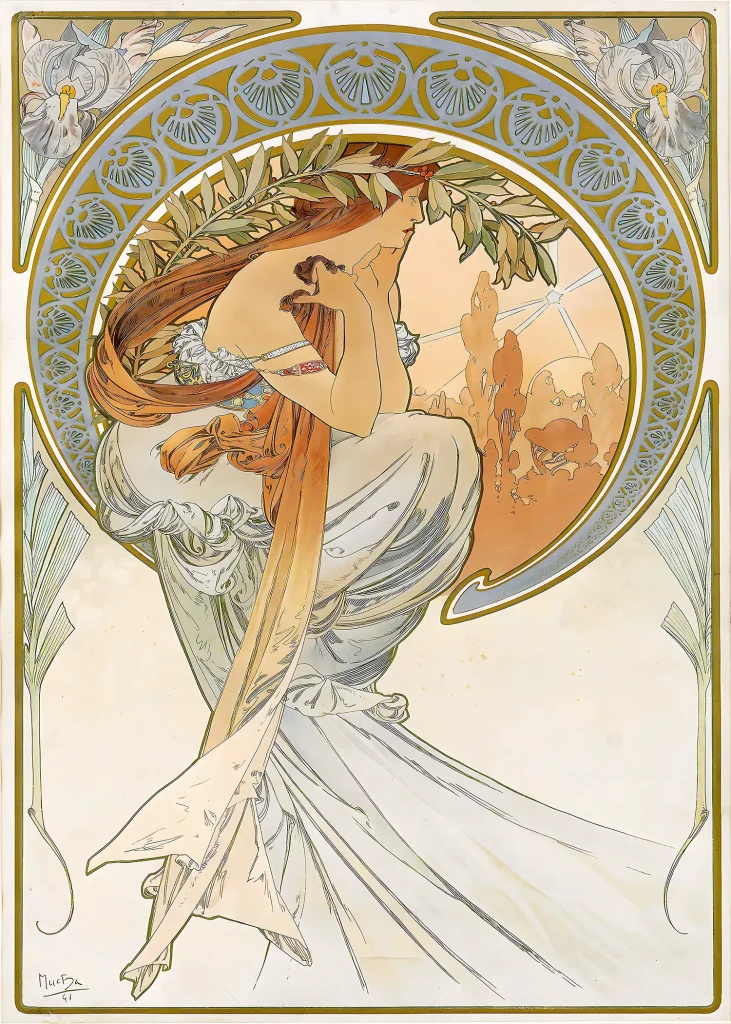
Japanese-inspired flat perspective
Art Nouveau artists fell in love with Japanese art. They admired ukiyo-e prints for their vivid colors and use of space. This influence showed up in the way they painted. Artists like Gustav Klimt used flat areas of color in their work, similar to those seen in Japanese prints.
This made their pieces stand out and feel modern yet timeless.
Their paintings didn’t show depth as traditional Western art did. Instead, they focused on creating a sense of balance without relying on perspective tricks. Art lovers noticed how these flat images brought fresh life to European scenes and figures.
Moving from paintings, let’s look at how Art Nouveau transformed glass into stunning artwork through stained glass and intricate window panes.
Stained glass and intricate window panes
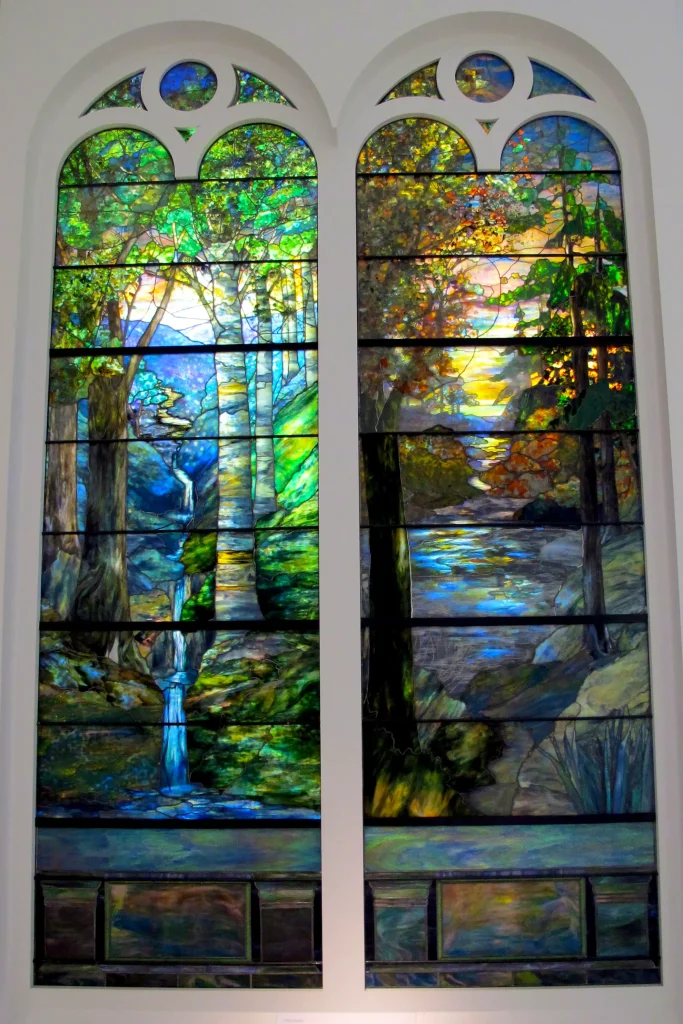
Art Nouveau brought stained glass to new heights with bold designs and vivid colors. Louis Comfort Tiffany became famous for his remarkable windows that shimmered like jewels. Using innovative techniques, he layered and blended different shades of glass, creating complex patterns inspired by nature.
Artisans cut intricate details into glass, capturing the essence of flowers and leaves. These windows were not just openings to let in light; they were pieces of art themselves.
They transformed sunlight into a dazzling display that brightened up homes and churches alike. With every piece, master artists like Tiffany turned ordinary spaces into enchanting scenes from a fairy tale world.
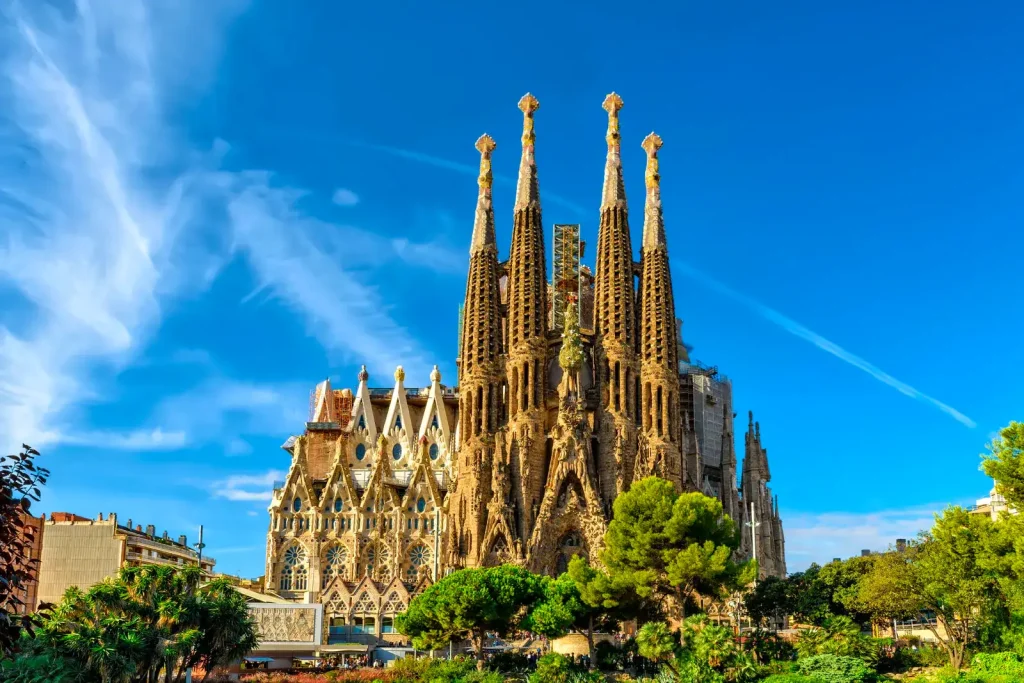
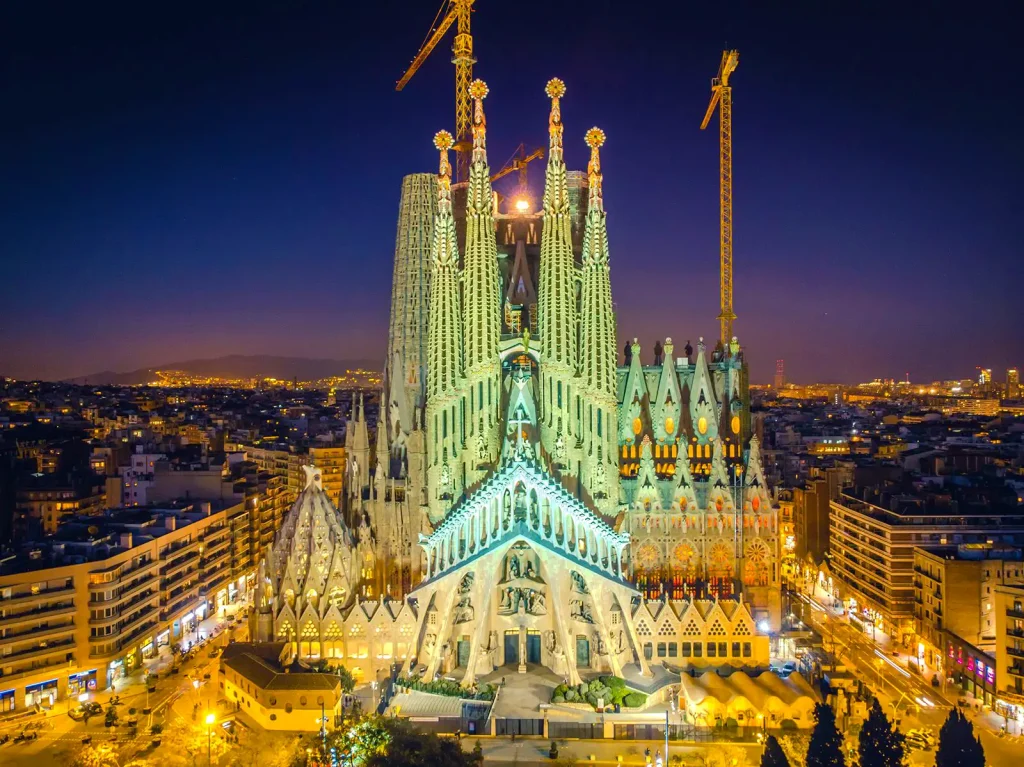
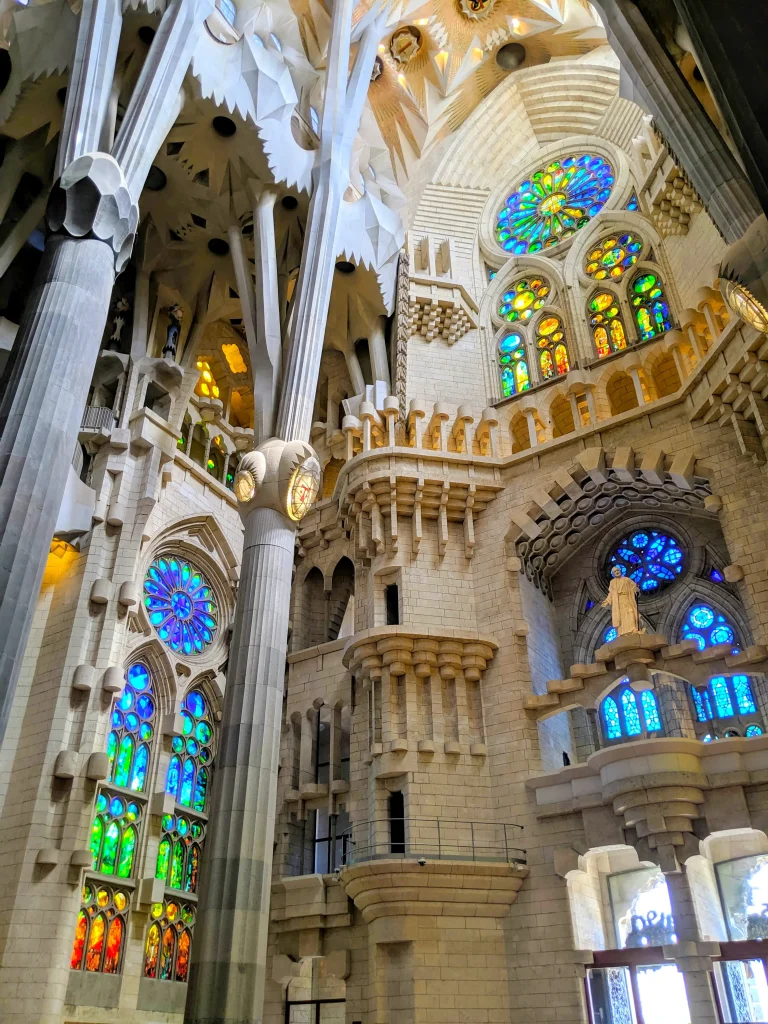
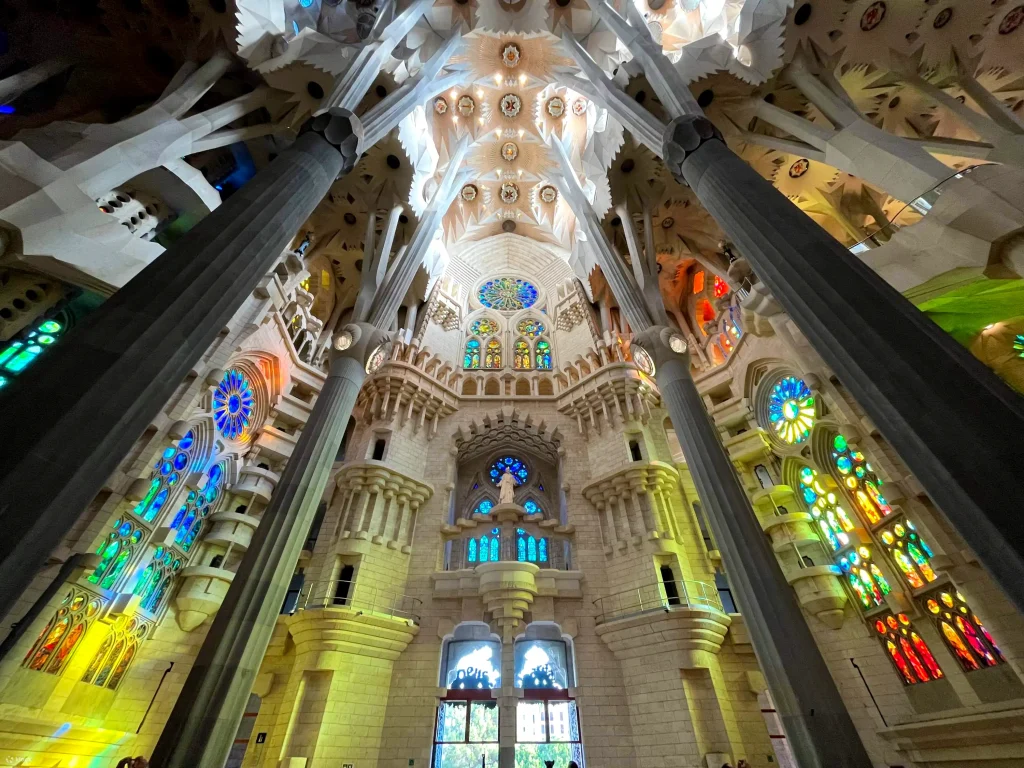
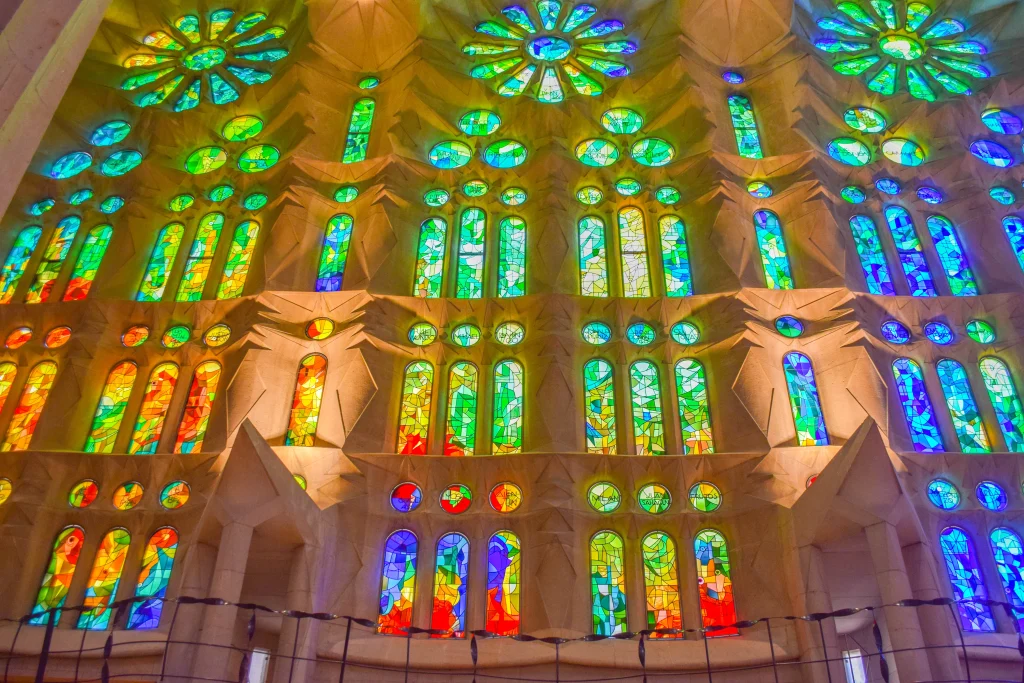
Sagrada Familia in Barcelona
Floral style
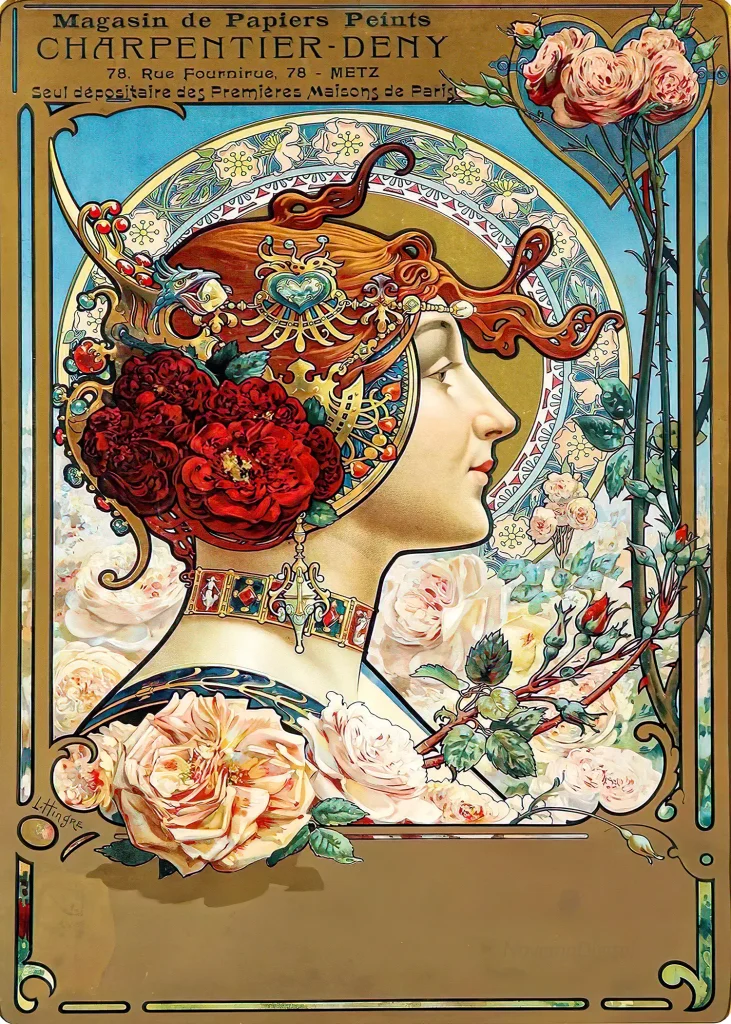
Flowers and plants often inspire Art Nouveau designs. Think swirling tulips, climbing vines, and delicate petals captured in metal, glass, and paint. Art Nouveau artists turned to nature for flowing shapes that bring energy to their creations.
Look around; you might see lamps that bloom like flowers or buildings with ironwork tendrils.
This style blends modern materials with the beauty of the natural world. Stained glass windows dividing light into a dance of colors across flower-strewn floors. Jewelry mimicking the curves of leaves and stems in precious metals.
Every piece tells a story of life’s intricate patterns woven into daily objects around us.
Undulating asymmetrical lines
Art Nouveau is distinguished by its undulating asymmetrical lines, drawing inspiration from the natural world. These sinuous curves mimic the flowing forms of plants, flowers and even insects, infusing art and design with dynamism and organic movement.
This unique characteristic gives Art Nouveau creations a fluidity that captivates the eye and imparts a harmonious rhythm to each piece.
This distinctive feature was one of the defining elements that set Art Nouveau apart from preceding artistic movements. Embracing these fluid lines brought an unprecedented sense of grace and natural beauty to architecture, graphic arts, jewelry, furniture, and interior design within this influential period.
The Beginnings of Art Nouveau
Art Nouveau emerged in the 1890s, initially taking root in Brussels, Belgium. Architects like Victor Horta and Henry van de Velde played a pivotal role in shaping its early beginnings, paving the way for this unique artistic movement.
The style’s initial influence can be observed in the distinctive architecture and interior design of houses created by these pioneers, setting the stage for the organic beauty that would come to define Art Nouveau.
At its core, Art Nouveau sought to break free from traditional artistic forms and embrace a new approach that blended art with everyday life. This was just the beginning of a profound shift in creative expression that would soon captivate audiences worldwide.
Key Artists and Their Contributions to Art Nouveau
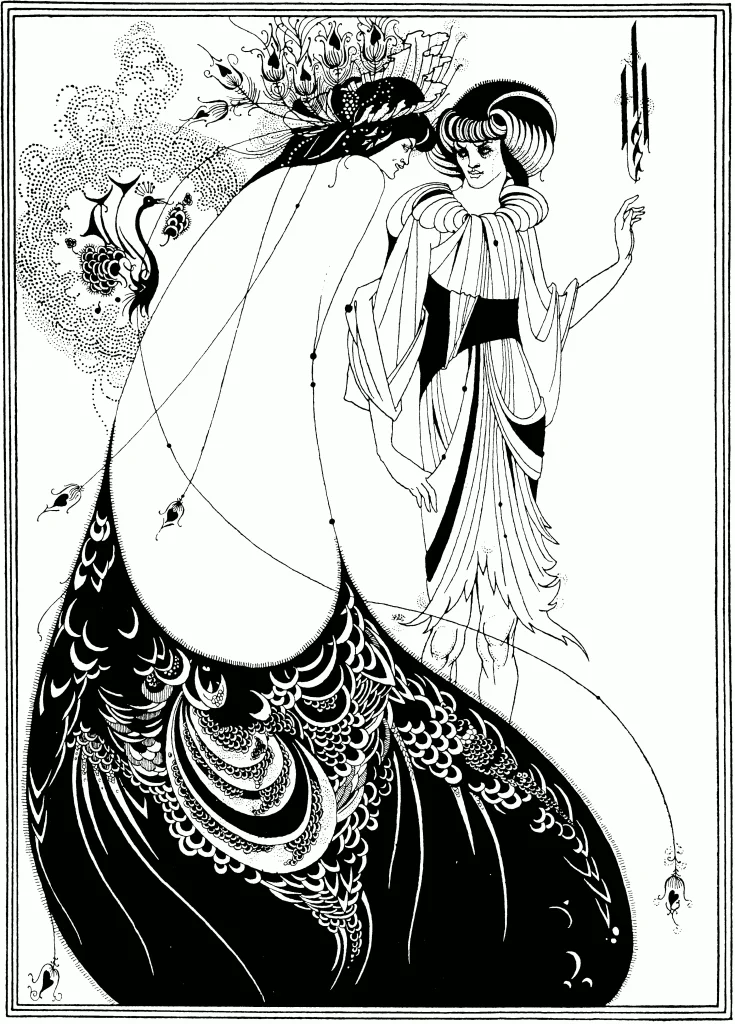
Aubrey Vincent Beardsley
Aubrey Vincent Beardsley, a prominent figure in the Art Nouveau movement, was celebrated for his innovative contributions to graphic arts and illustration. His work exuded a sense of dynamism and movement, heavily influenced by the natural forms and sinuous curves characteristic of Art Nouveau.
Notably, Beardsley’s intricate illustrations often featured asymmetry and whiplash lines, emblematic of the Art Nouveau style. By breaking down traditional distinctions between fine arts and applied arts through his work, he played a pivotal role in advancing the objectives of the Art Nouveau movement.
Hugely influential globally, Beardsley’s art reached audiences worldwide through art magazines and illustrated publications. This extensive reach significantly contributed to popularizing the unique aesthetics of the Art Nouveau style on an international scale.
Alphonse Mucha
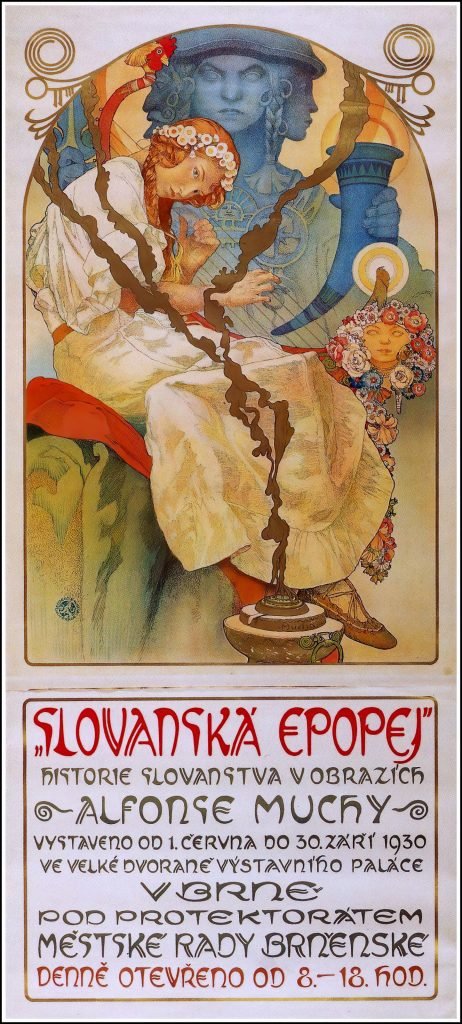
Transitioning from the groundbreaking work of Aubrey Vincent Beardsley, Alphonse Mucha is another trailblazing artist synonymous with the Art Nouveau movement. His intricate and decorative designs were showcased at the 1900 Paris International Exposition, marking a pinnacle in Art Nouveau’s influence on global art and design.
Mucha gained renown through his iconic poster for Sarah Bernhardt in 1895, solidifying his position as a leading figure representing the organic forms and sinuous lines characteristic of Art Nouveau.
One can’t overlook his influential role in popularizing this artistic style worldwide through his posters, illustrations, and decorative objects.
Incorporating elements from nature into his works, Mucha epitomized the essence of Art Nouveau through the thoughtful incorporation of natural forms within detailed compositions that captured the imagination of a broad audience.
Gustav Klimt
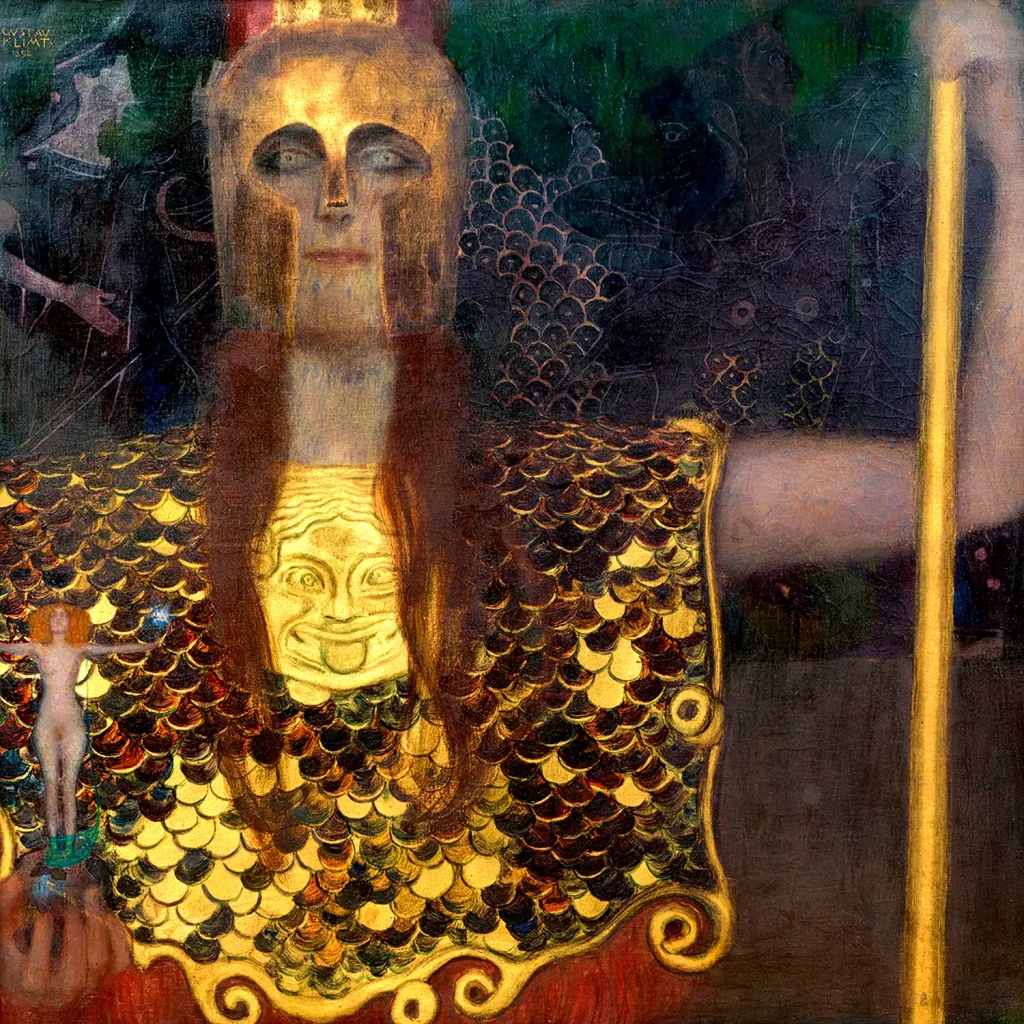
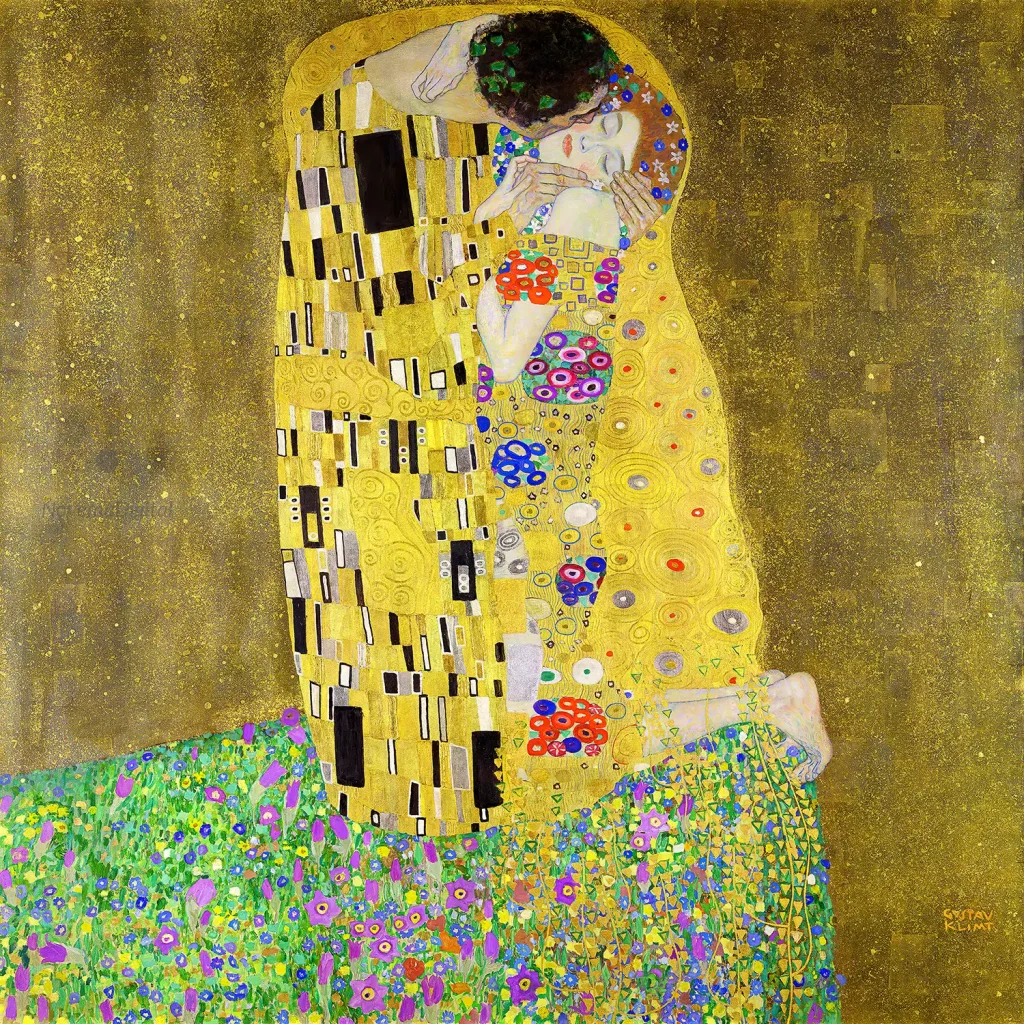
Gustav Klimt, a prominent figure in the Vienna Secession, was deeply influenced by the organic forms and decorative elements of Art Nouveau. His renowned painting “The Kiss” exemplifies this movement’s sinuous curves and ornate style.
Using gold leaf in his work, Klimt added opulence and intricate beauty to his pieces, aligning perfectly with the Art Nouveau aesthetic. Collaborating with other key artists of the era, he significantly advanced and popularized this artistic style at Vienna Secession exhibitions.
Klimt’s contribution to promoting Art Nouveau extended beyond Austria, impacting international art scenes through his innovative approach that embraced nature-inspired patterns and luxurious embellishments.
Charles Rennie Mackintosh
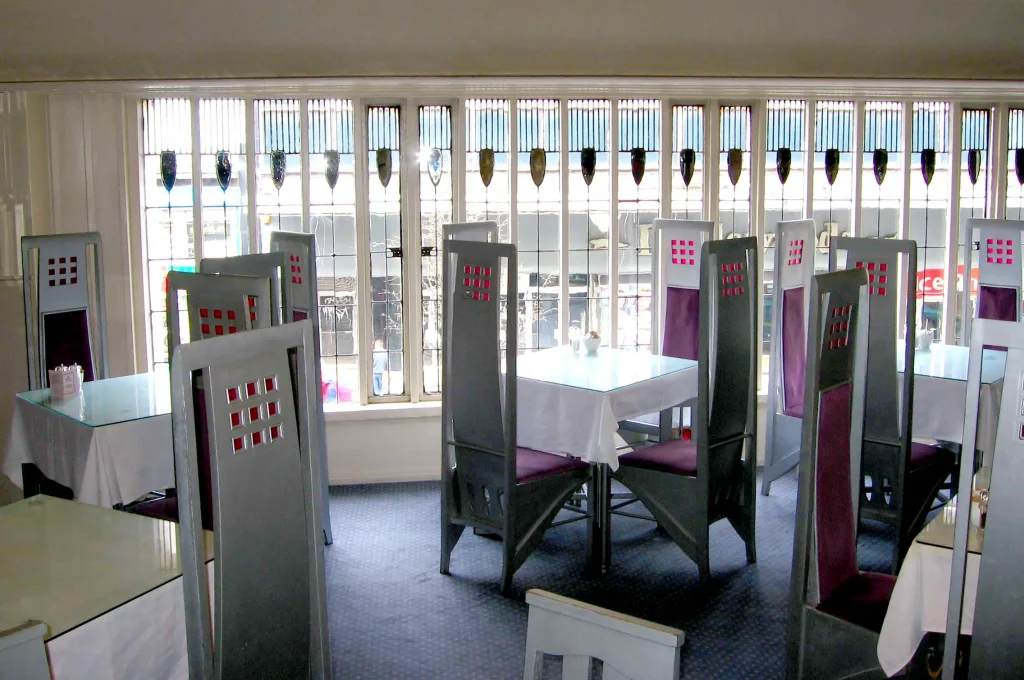
Charles Rennie Mackintosh, a key figure in the Glasgow School, also greatly influenced the Art Nouveau movement. His designs embraced natural forms and asymmetry, reflecting the organic beauty synonymous with Art Nouveau.
Collaborating with Léon-Victor Solon and other prominent artists, Mackintosh seamlessly integrated fine arts painting into his decorative work. His architectural and design contributions captured the dynamism and fluidity central to the style.
Through his international reach, particularly in Glasgow, and his association with Vienna Secession’s founders, Mackintosh played a pivotal role in promoting and developing Art Nouveau.
Louis Comfort Tiffany
Stepping into the world of Louis Comfort Tiffany, we encounter an artist whose influence on Art Nouveau was profound. At the 1900 Paris International Exposition, Tiffany’s work in stained glass left an indelible mark.
Alongside Alphonse Mucha and René Lalique, his creations defined the organic beauty of Art Nouveau. His innovative use of materials and distinct style elevated stained glass to new heights – a centerpiece showcasing sinuous curves and natural forms.
Inspired by nature, Tiffany’s designs perfectly encapsulated the essence of this influential movement, and his renowned stained glass windows and lamps, glass mosaics, ceramics, jewelry, enamels, and metalwork are all symbols of his artistry and visionary aesthetic.
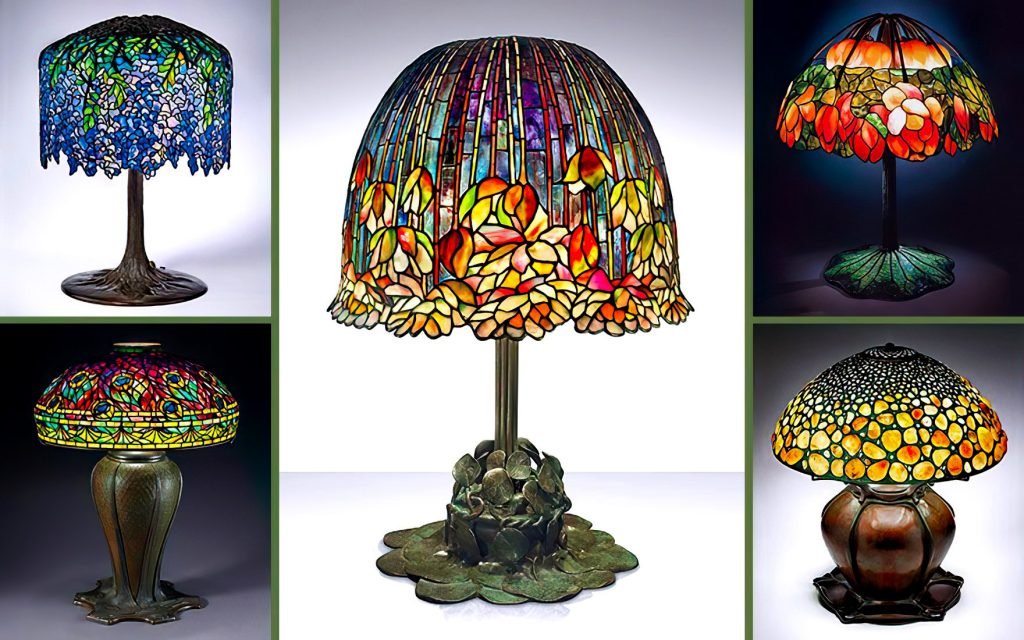
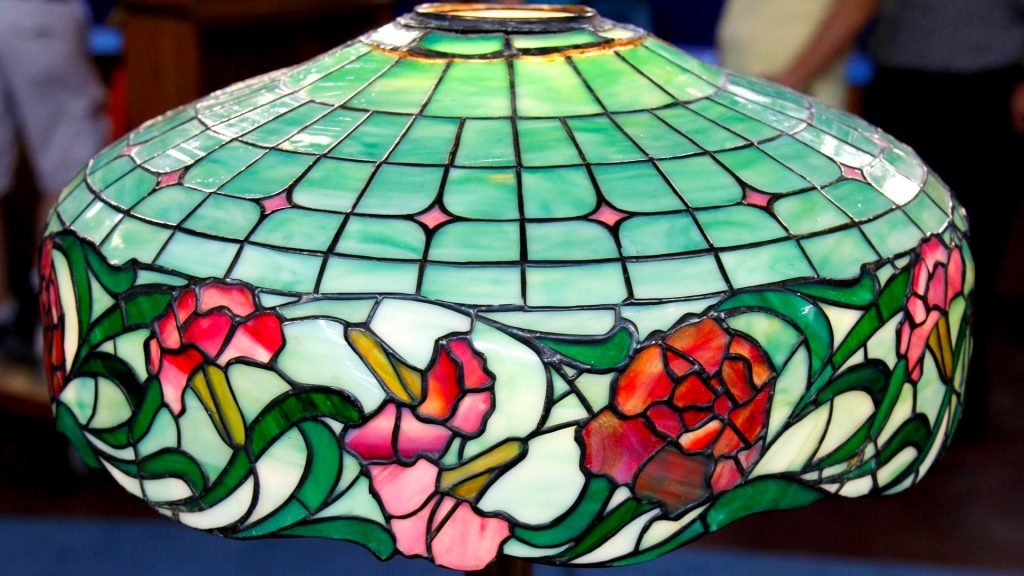
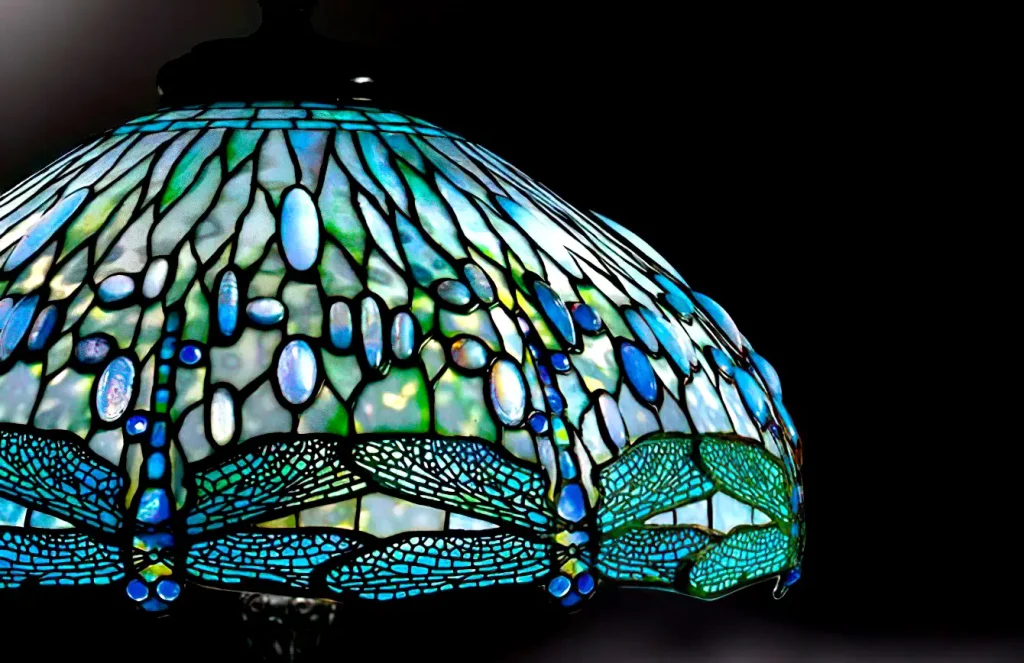
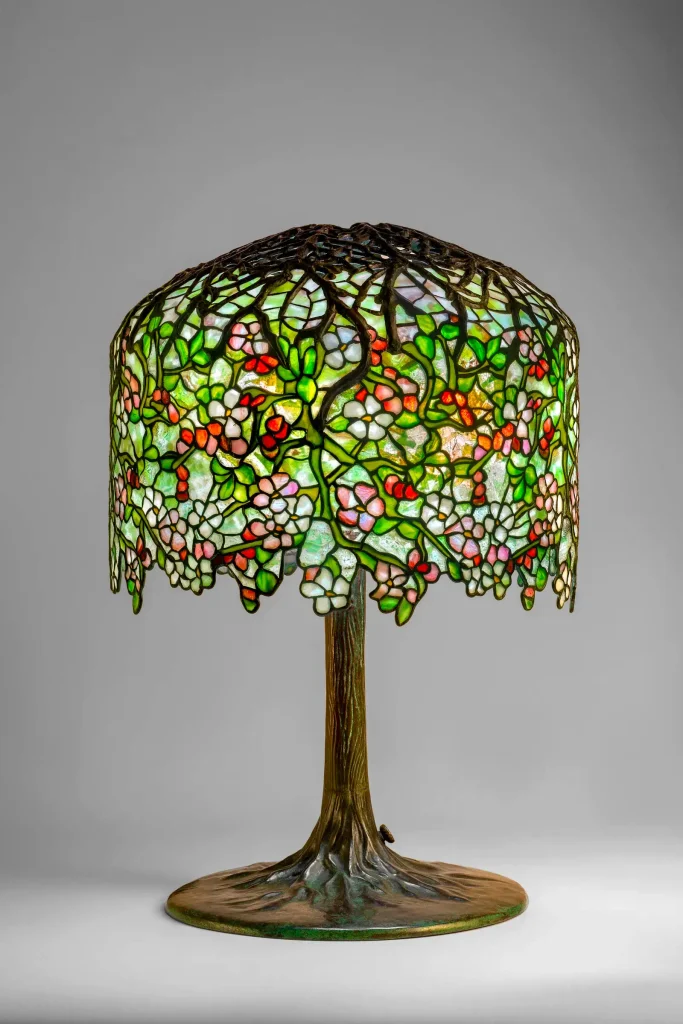
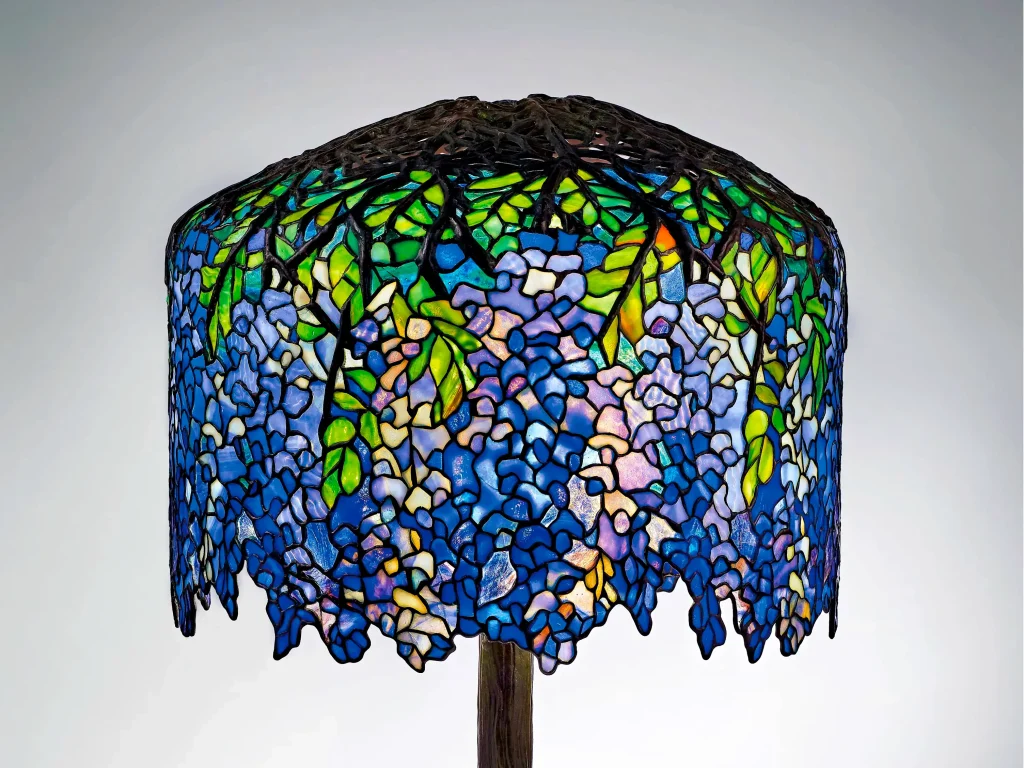
Tiffany Lamps
Henri de Toulouse-Lautrec
Henri de Toulouse-Lautrec, a master of modernism associated with Art Nouveau, was heavily influenced by the expressive line experiments of painters like Paul Gauguin and the linear patterns found in Japanese prints.
His work shows an innovative overlap of Japanese prints with the Aesthetic movement in Art Nouveau. His rejection of academic painting and focus on creating a literal “new art” showcases his pioneering approach to Art Nouveau.
Lautrec’s La Goulue at the Moulin Rouge (1891) exemplifies his influence on English design and poster art – a testament to his significant impact on this artistic era.
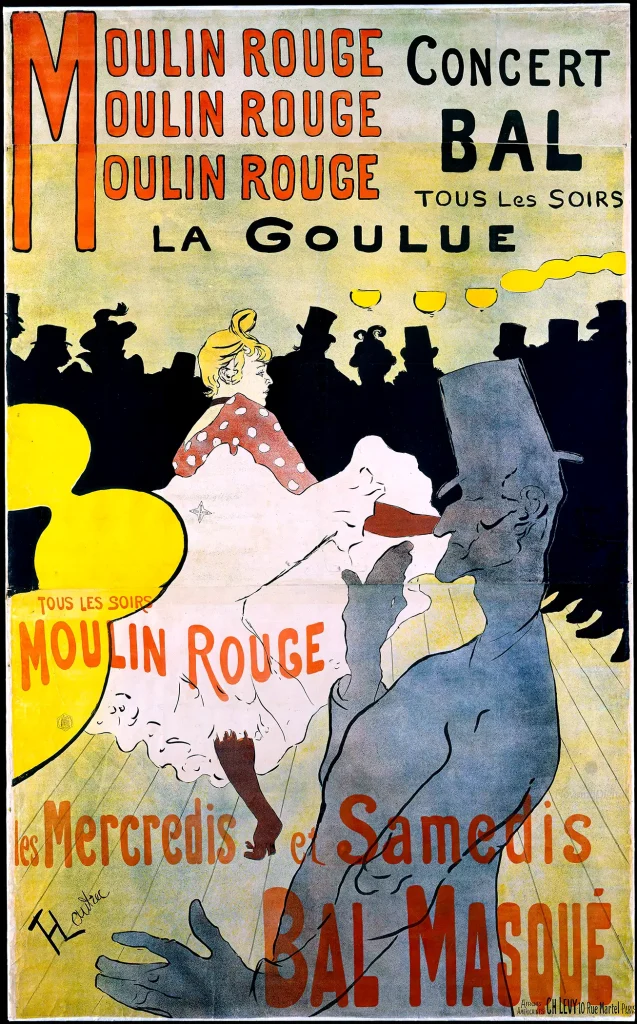
Notable Art Nouveau Artworks
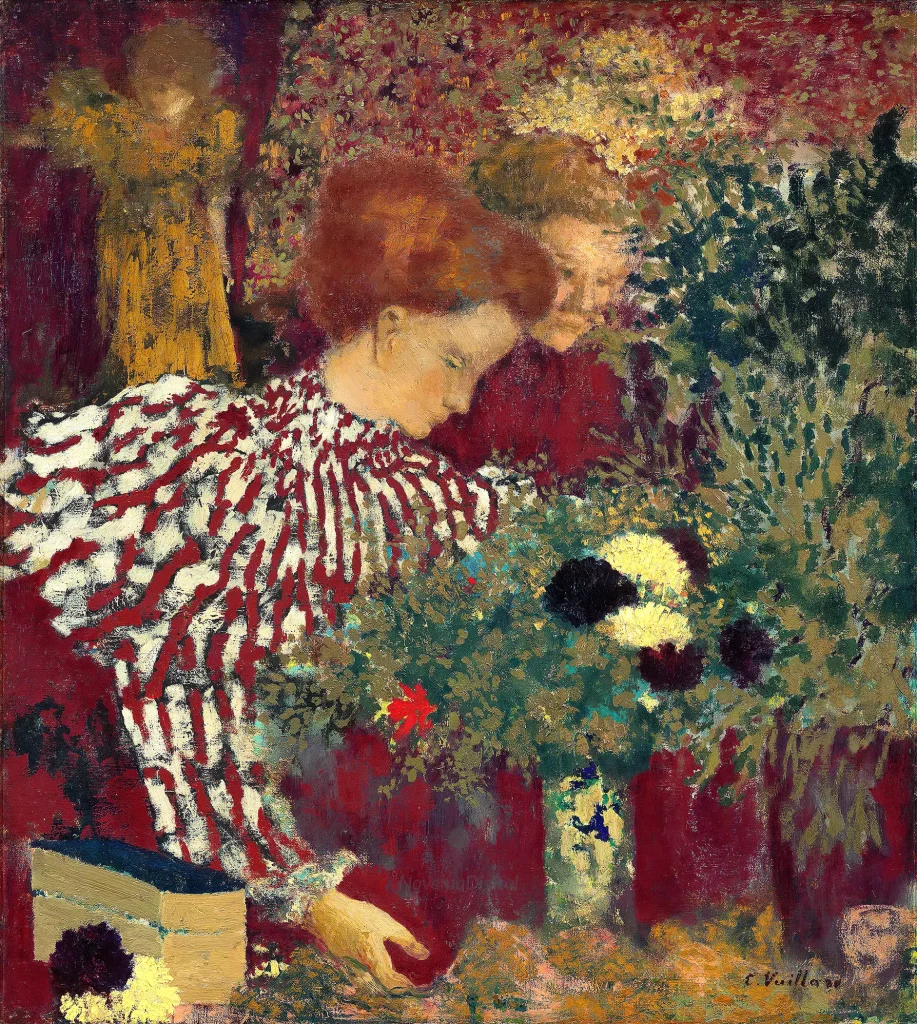
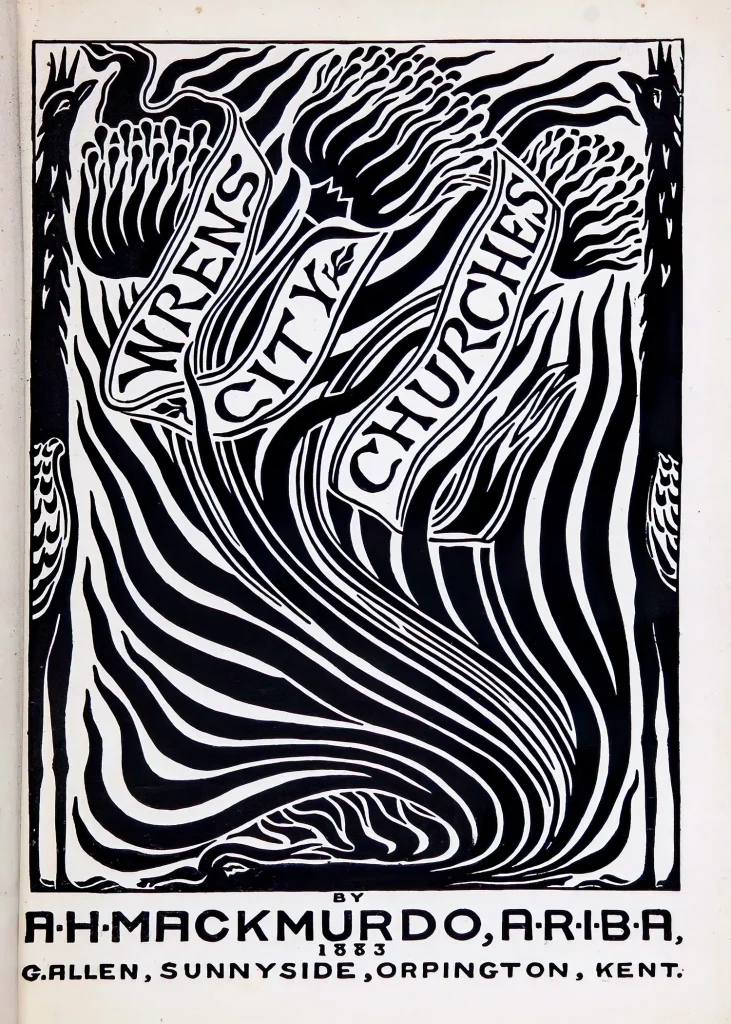
Let’s now explore the captivating beauty of Art Nouveau through iconic artworks such as “Woman in a Striped Dress”, “The Kiss”, and the cover design for Wren’s City Churches. Dive into the intricate details and symbolic representations that define this enchanting art movement.
Woman in a Striped Dress
“Woman in a Striped Dress” exemplifies the fluid, organic lines that define Art Nouveau. This notable artwork embodies the movement’s emphasis on breaking down the barriers between fine and applied arts.
As part of this influential style, it carries the legacy of impacting modernism and inspiring later movements such as Bauhaus. The artistic genius behind this painting lies in its ability to epitomize Art Nouveau’s pursuit of blending art with everyday life.
The Kiss
Gustav Klimt’s “The Kiss” stands as a significant Art Nouveau masterpiece, showcasing the Vienna Secessionist variant of the movement. This iconic artwork vividly embodies the undulating asymmetrical lines and ornamental characteristics of Art Nouveau.
Notably, “The Kiss” prominently features organic forms, evident in its depiction of flower and vine motifs, a hallmark aspect of the movement. Moreover, this captivating piece exemplifies how Art Nouveau influenced subsequent modernist movements through its innovative design – and notably contributed to reviving interest in Art Nouveau during the 1960s.
The popularity and enduring appeal of “The Kiss” attest to its profound impact on art history while demonstrating Gustav Klimt’s mastery in encapsulating the essence of Art Nouveau with captivating beauty.
Cover design for Wren’s City Churches
The cover design for Wren’s City Churches is a standout example of Art Nouveau’s intricate and organic style. A fusion of flowing lines, delicate floral motifs, and captivating asymmetry, it epitomizes the movement’s penchant for sensuality and natural forms.
This unique artwork showcases the seamless integration of art with architecture, embodying the Art Nouveau philosophy of creating a total work of art. Its influence extends beyond visual art, leaving an indelible mark on architectural design and decorative arts; city churches such as these played a significant role in shaping the aesthetic landscape of cities during this period.
Art Nouveau Across Different Disciplines
Art Nouveau permeated various disciplines with its distinctive style, from architecture to glass art, jewelry, and furniture design. The movement’s influence can be seen in the organic motifs and flowing lines that adorned buildings, decorative objects, and wearable art during this period.
Art Nouveau in Architecture
Art Nouveau architecture rebelled against traditional styles, embracing modern materials like iron, glass, and concrete. Its designs featured flowing lines, organic forms, and intricate decorative details that mirrored nature.
Notable examples of Art Nouveau architecture include the Hôtel Tassel in Brussels, designed by Victor Horta with its innovative use of iron and light-filled interior spaces. Another standout is Antoni Gaudí’s iconic Sagrada Familia in Barcelona, showcasing the movement’s characteristic fusion of architectural elements with natural motifs.
The style aimed to create a harmonious relationship between buildings and their surroundings while incorporating practicality with artistic expression. Architects integrated ornamental flourishes into the structure itself rather than adding them as mere embellishments – a hallmark of Art Nouveau architecture.
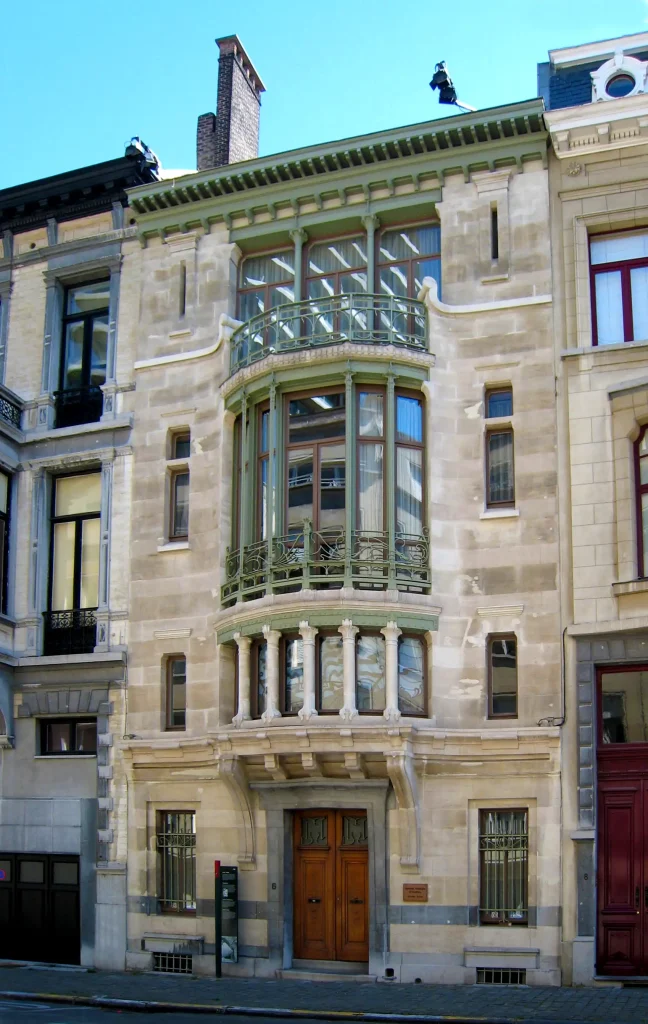
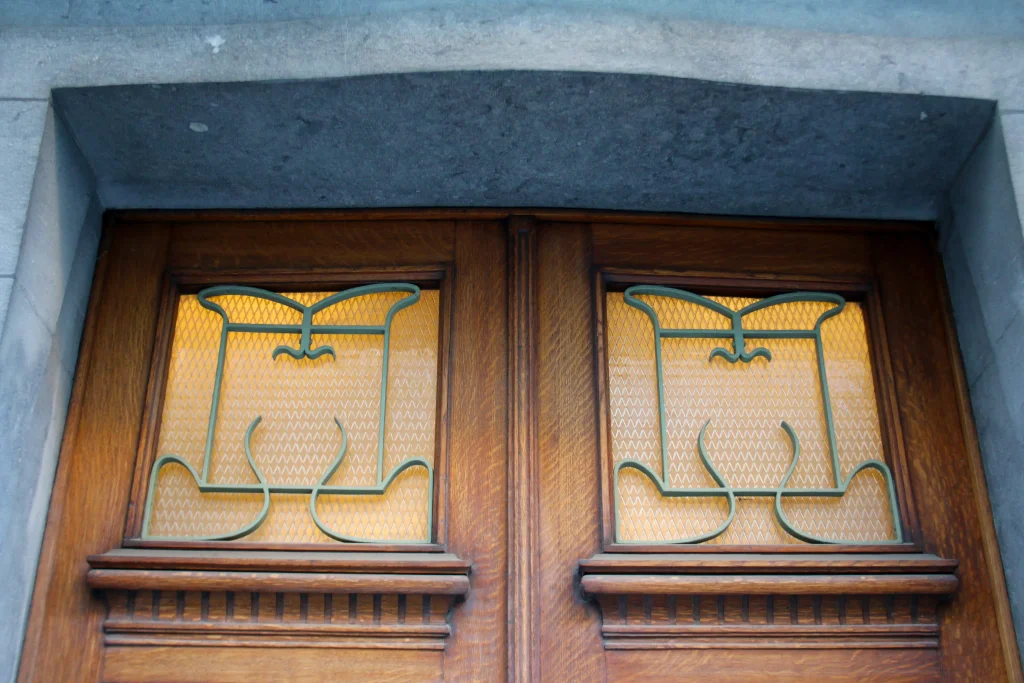
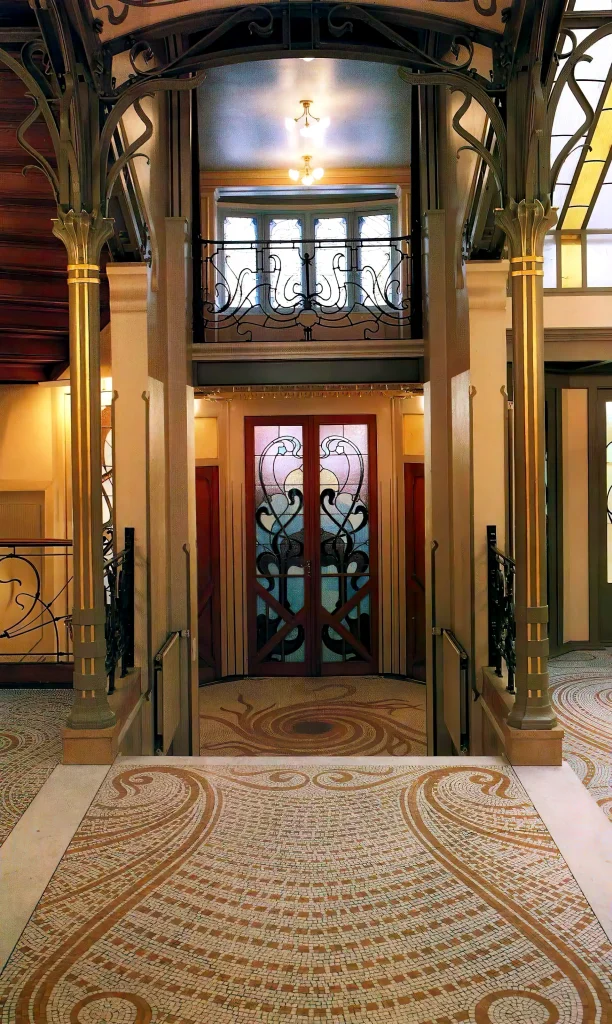
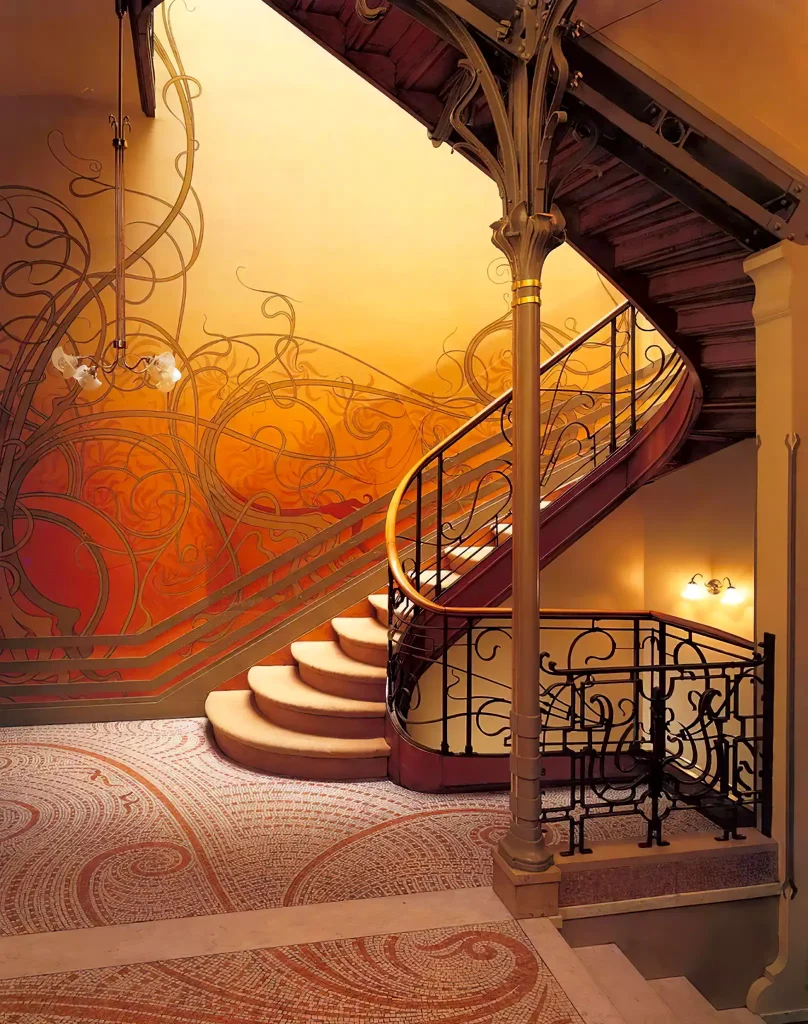
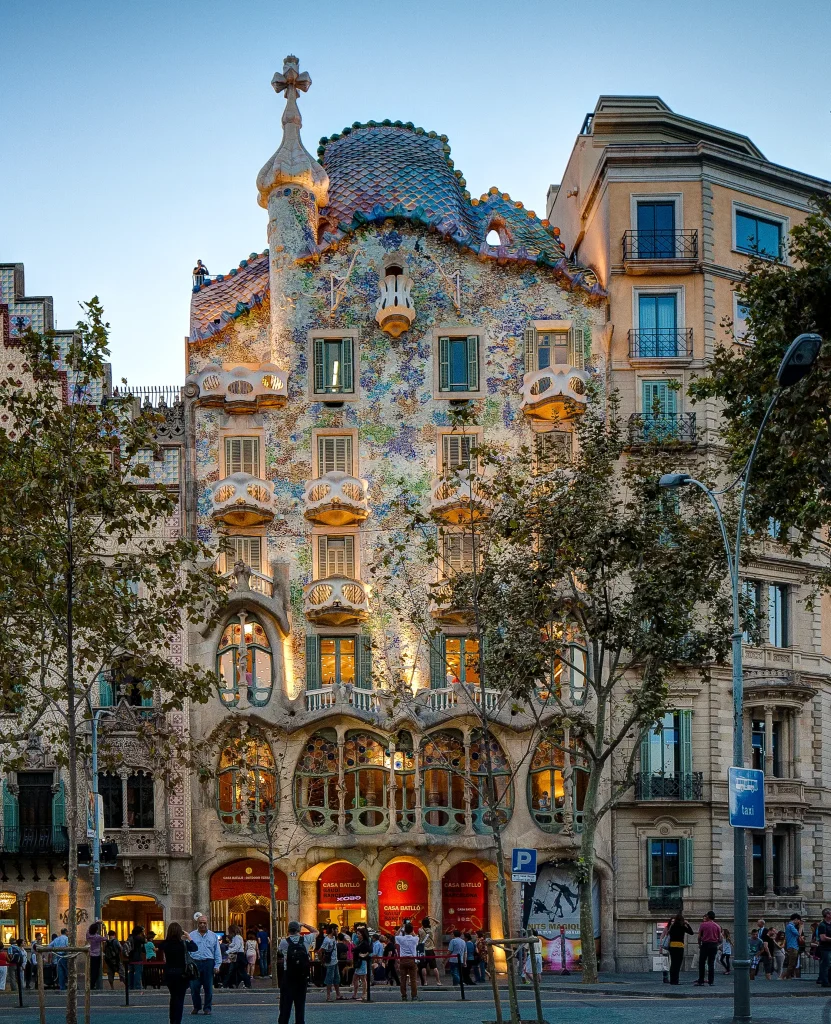
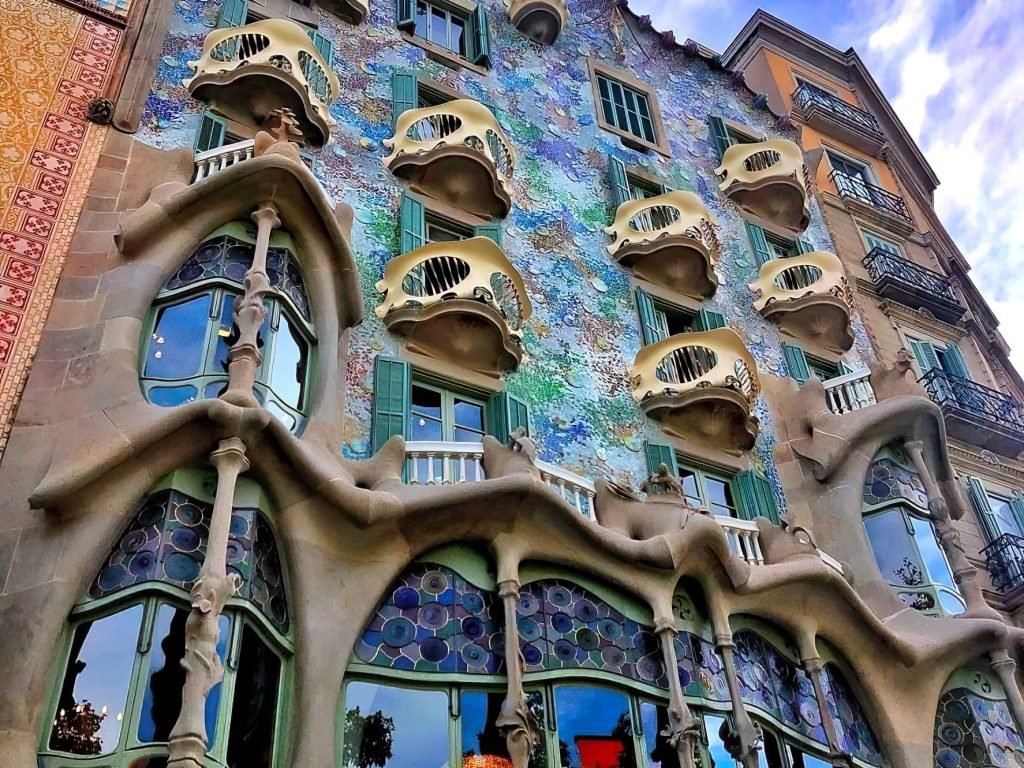
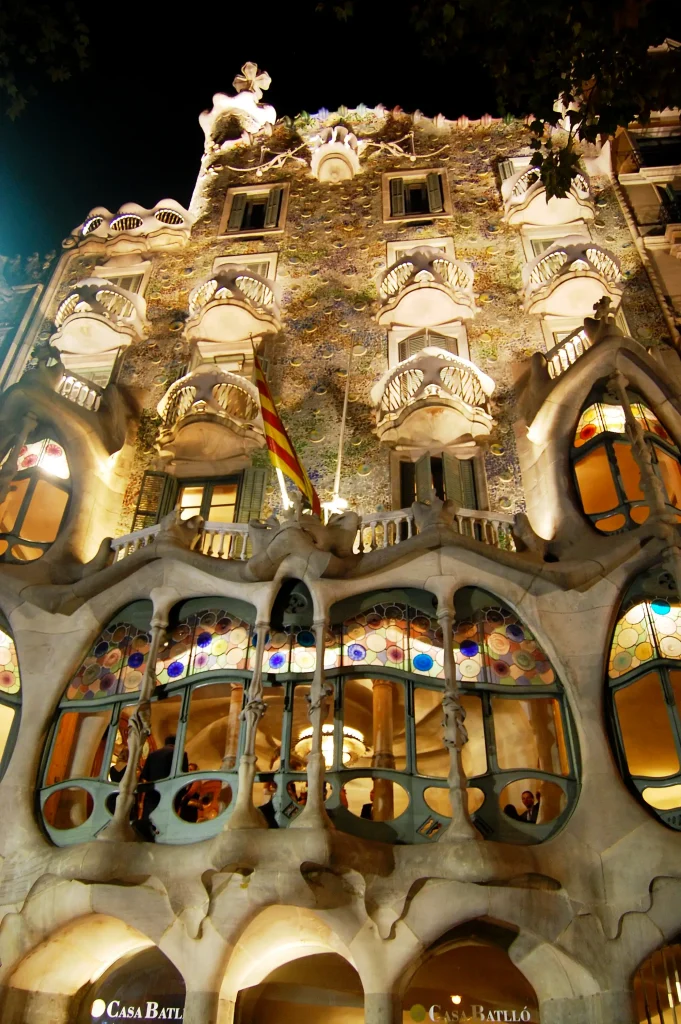
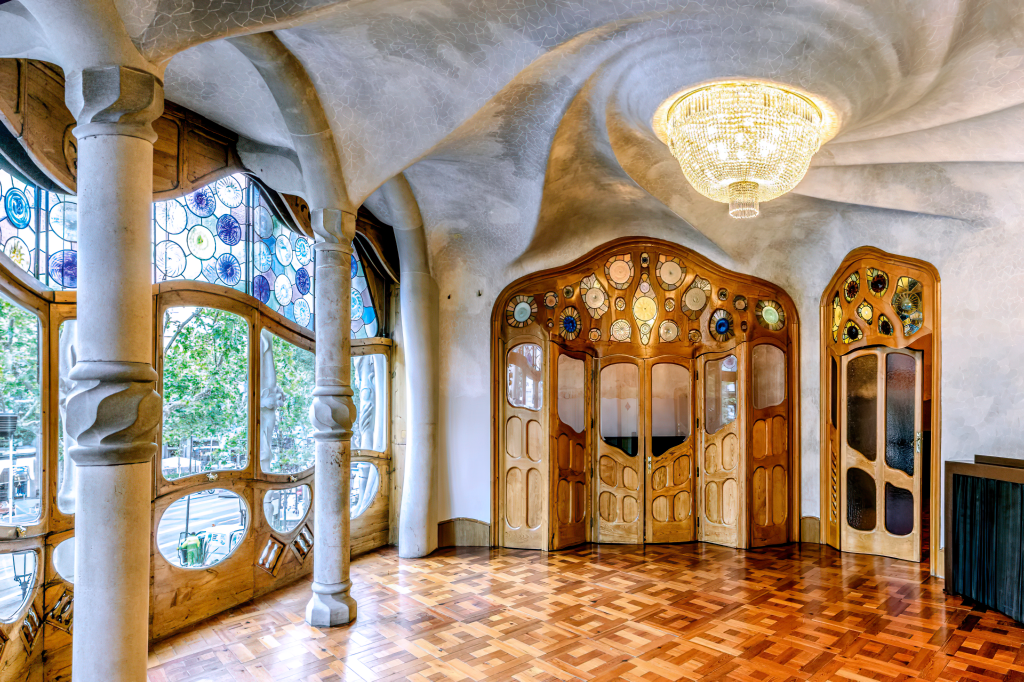
Hotel Tassel in Vienna & Casa Batlló in Barcelona
Art Nouveau in Glass Art
Art Nouveau thrived in glass art, where artists showcased their mastery through organic, flowing forms and nature-inspired motifs. Louis Comfort Tiffany, renowned for his exquisite glass art pieces, and René Lalique were instrumental in shaping this aspect of the movement.
The innovative use of new technologies in glassmaking allowed the creation of intricate and elaborate Art Nouveau glass art pieces that left a lasting impact on modernism. These stunning creations drew inspiration from natural elements, featuring vibrant colors and captivating designs that continue to mesmerize art enthusiasts today – a testament to the enduring allure of Art Nouveau.
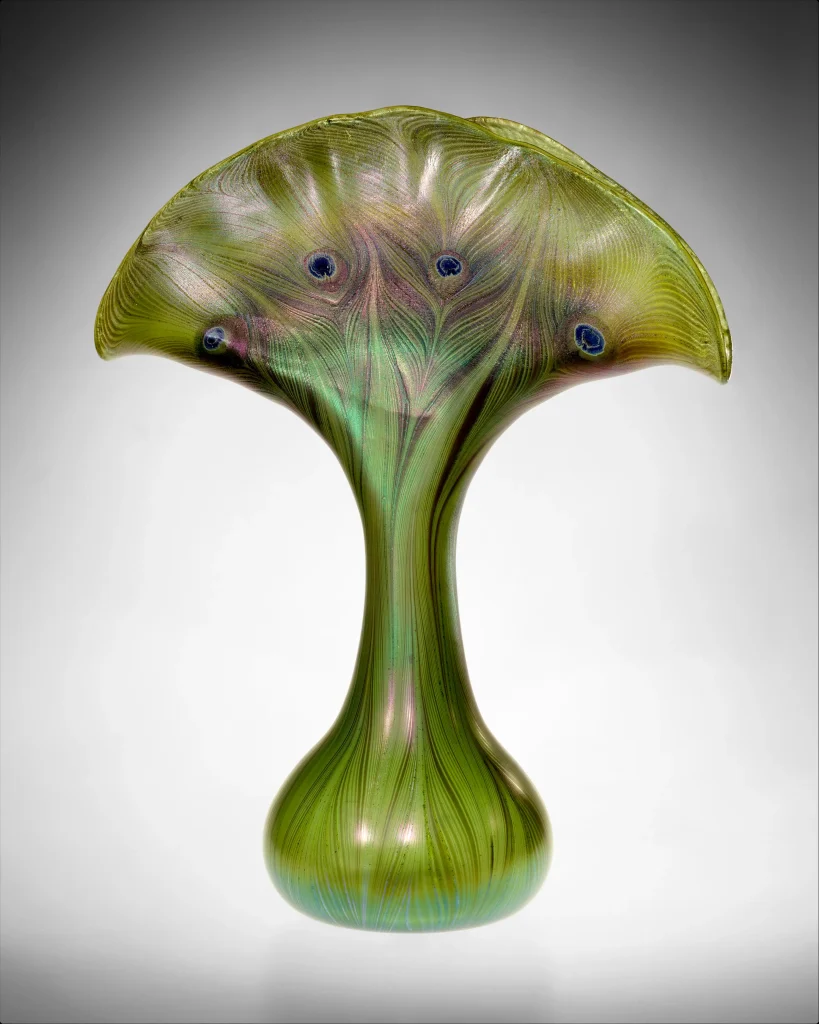
Art Nouveau in Jewelry
Art Nouveau jewelry drew inspiration from nature’s graceful, organic forms, with sinuous curves mirroring plants, flowers, and insects. The defining characteristic is undulating asymmetrical lines – often resembling flower stalks, vine tendrils and insect wings – capturing the essence of natural objects.
Notably associated with major urban department stores and design outlets, Art Nouveau jewelry embodies a unique blend of elegance and nature-inspired beauty, making it a captivating addition to any collection.
The distinguishing ornamental features of Art Nouveau jewelry stem from its association with natural forms, such as plant sinuosity and floral motifs, giving them an organic quality. These pieces often showcase undulating asymmetrical lines that emulate the grace and fluidity of the organic world, setting them apart as exquisite examples of wearable artistry steeped in nature’s allure.
Notable Art Nouveau jewelers were Georges Fouquet, Henri Vever, Lucien Gaillard, René Lalique, and Louis Comfort Tiffany.
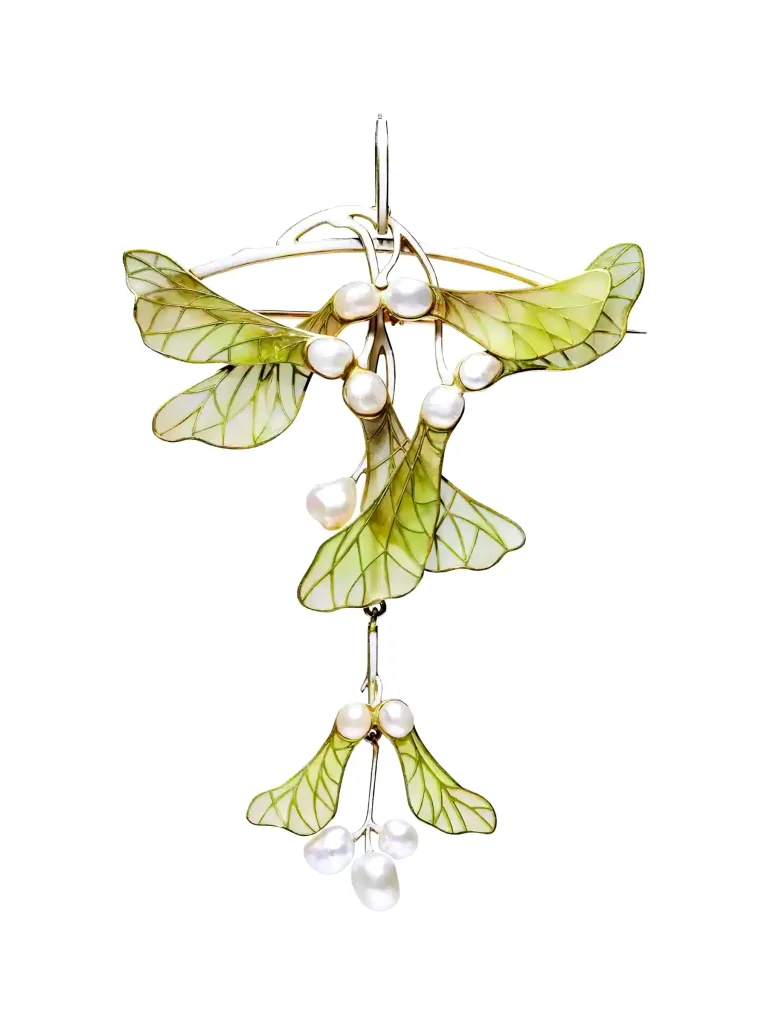
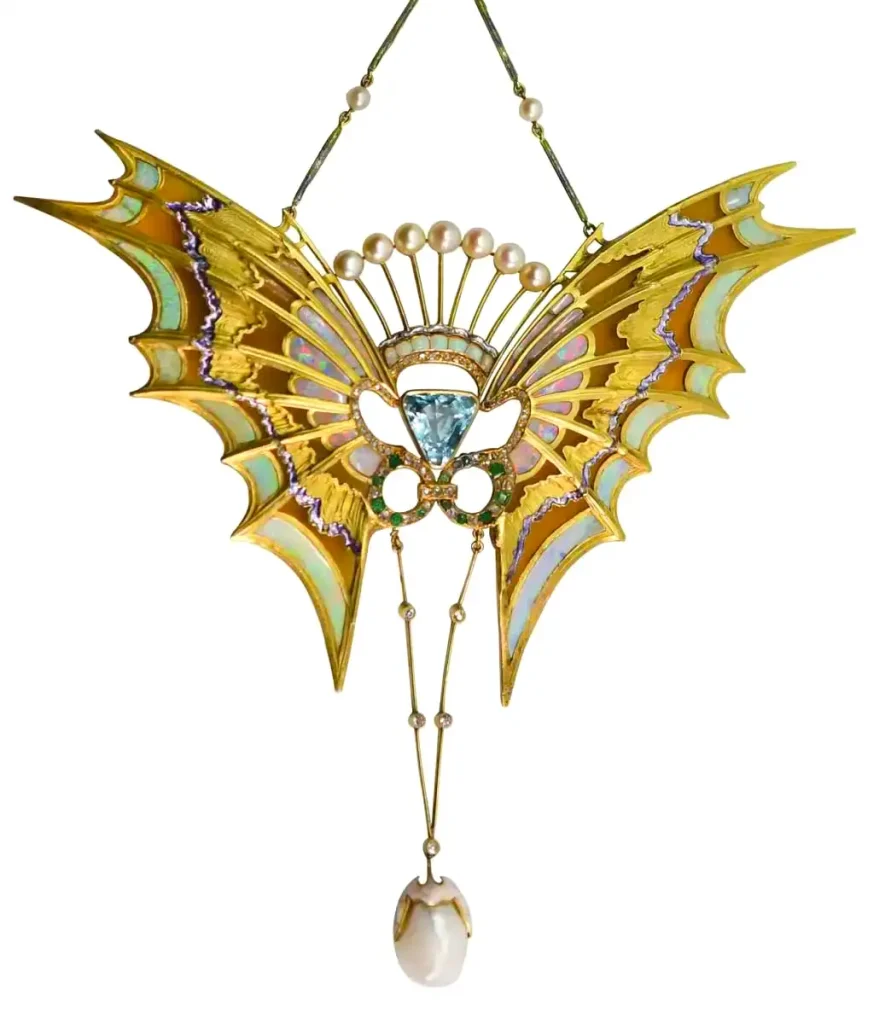
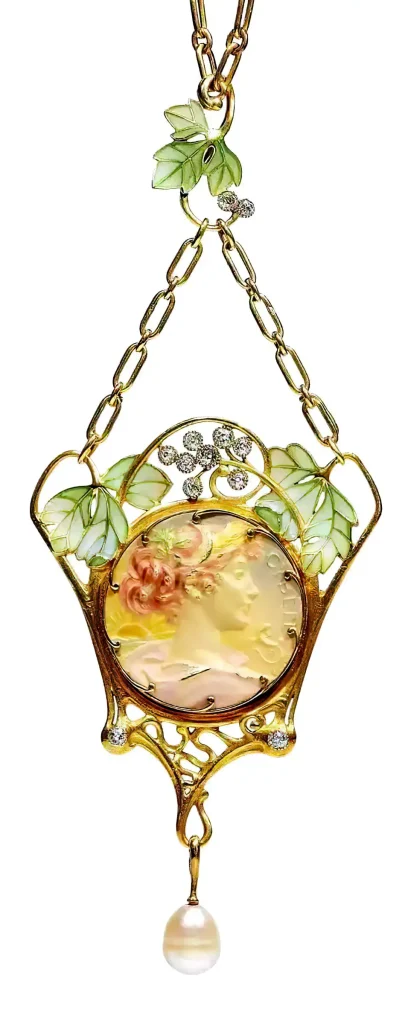
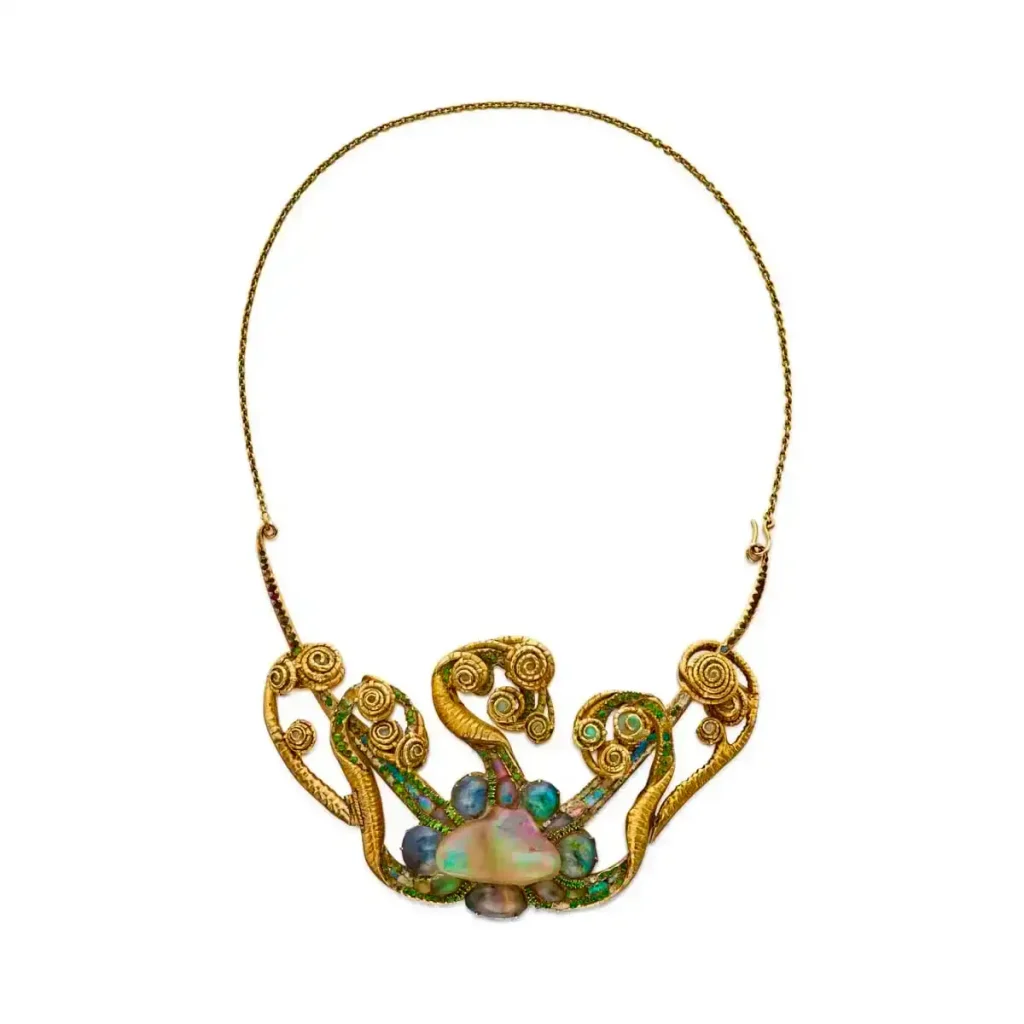
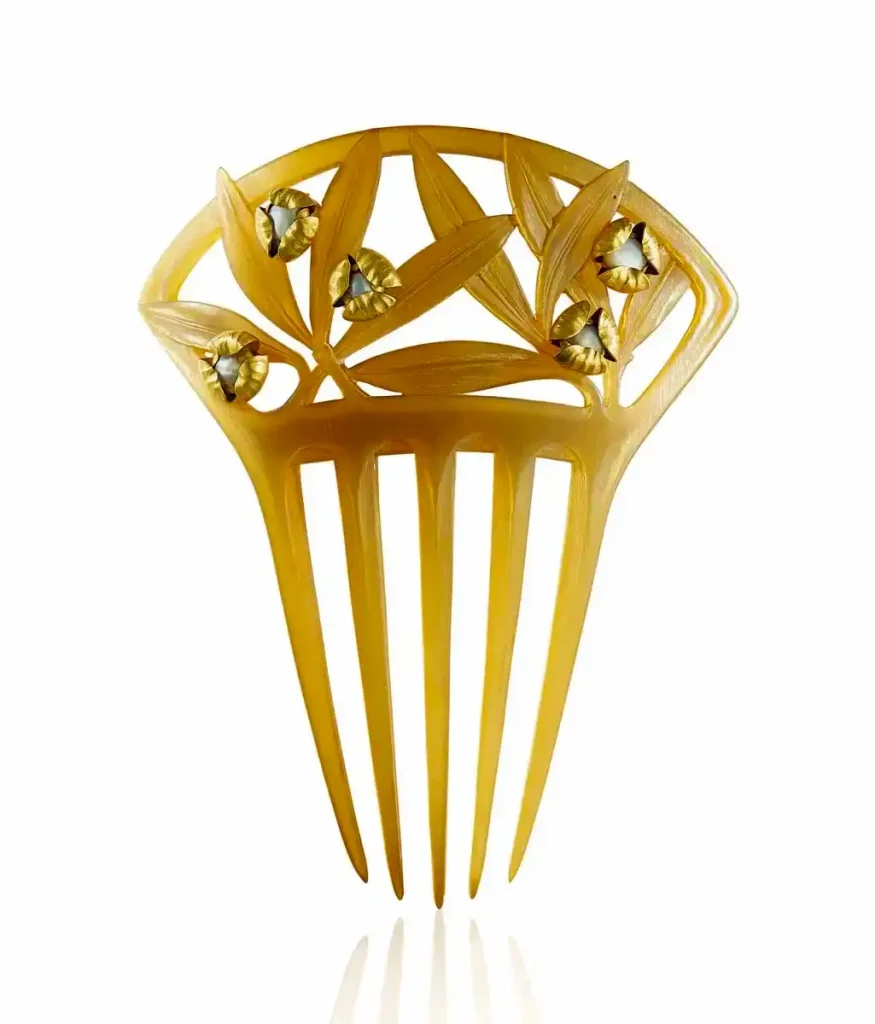
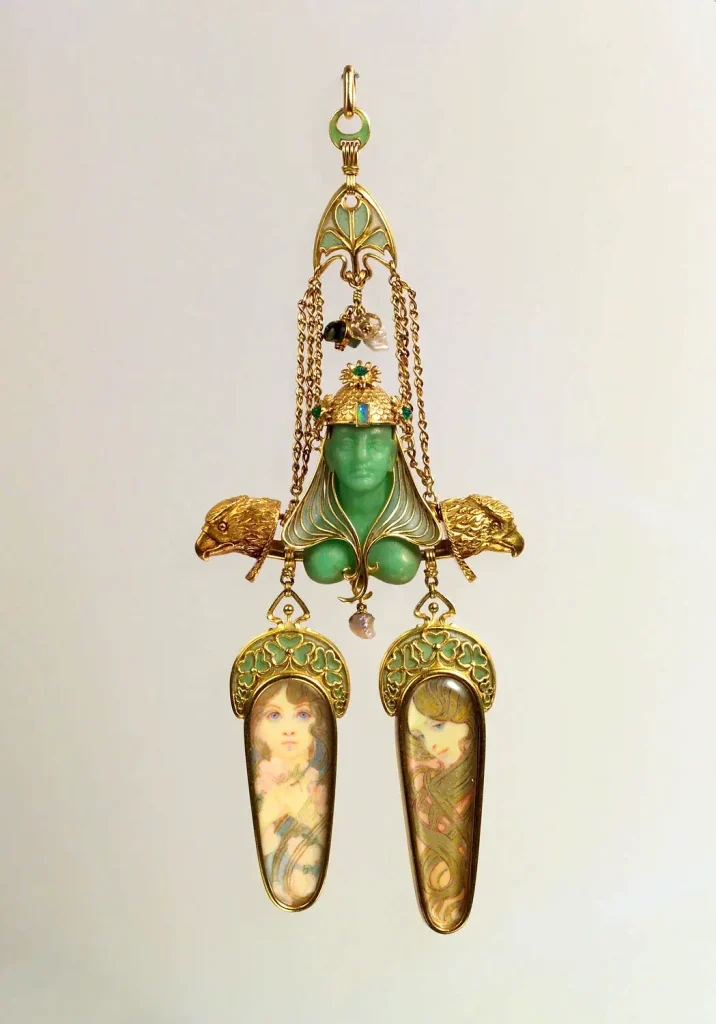
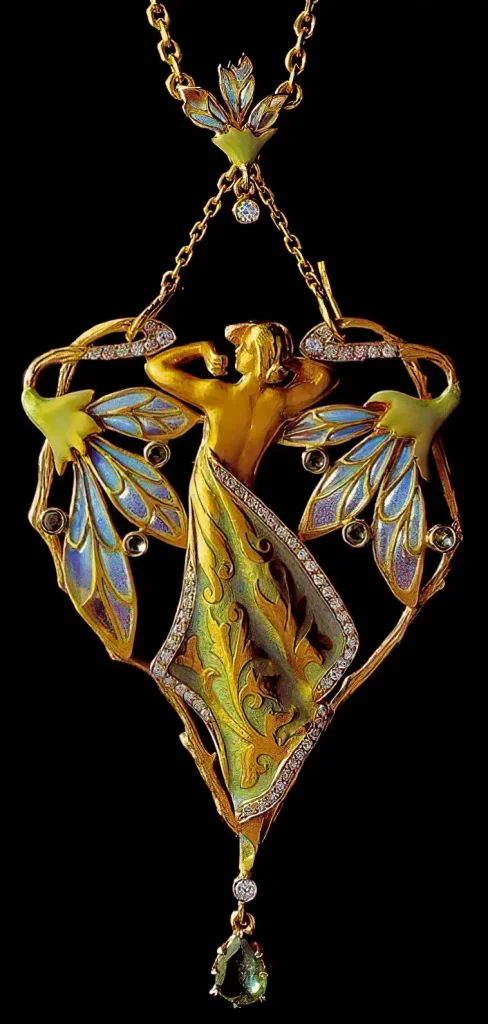
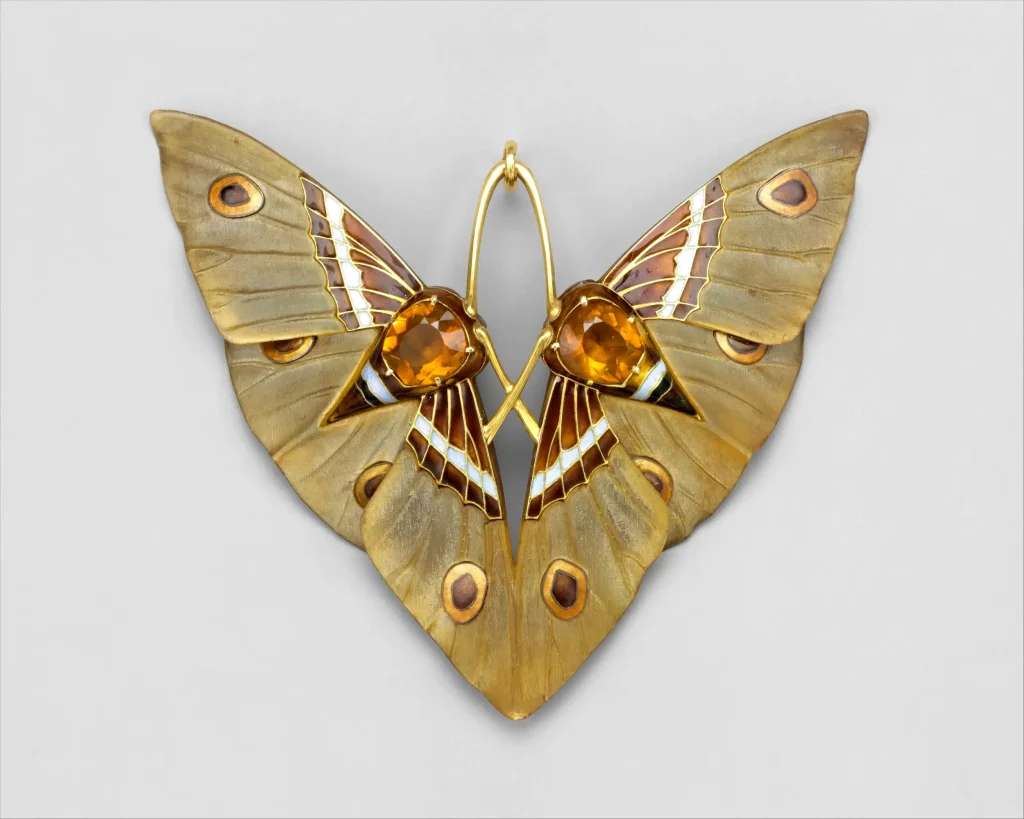
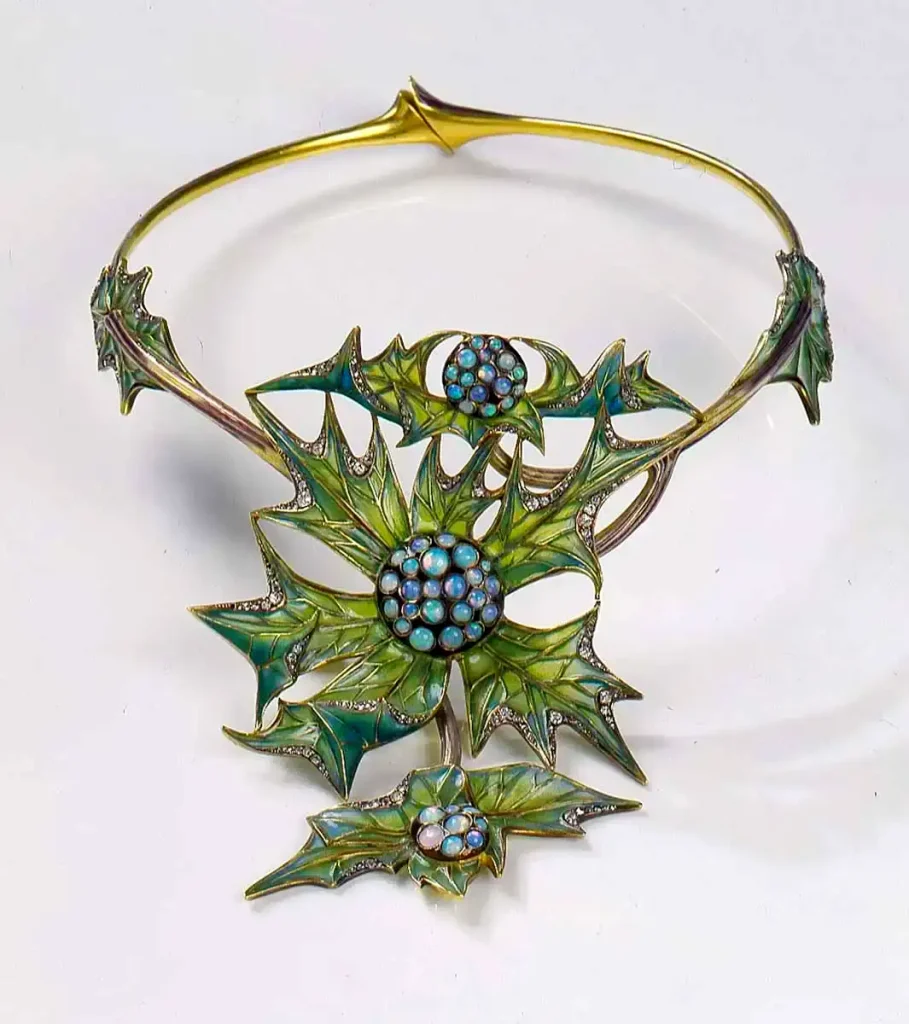
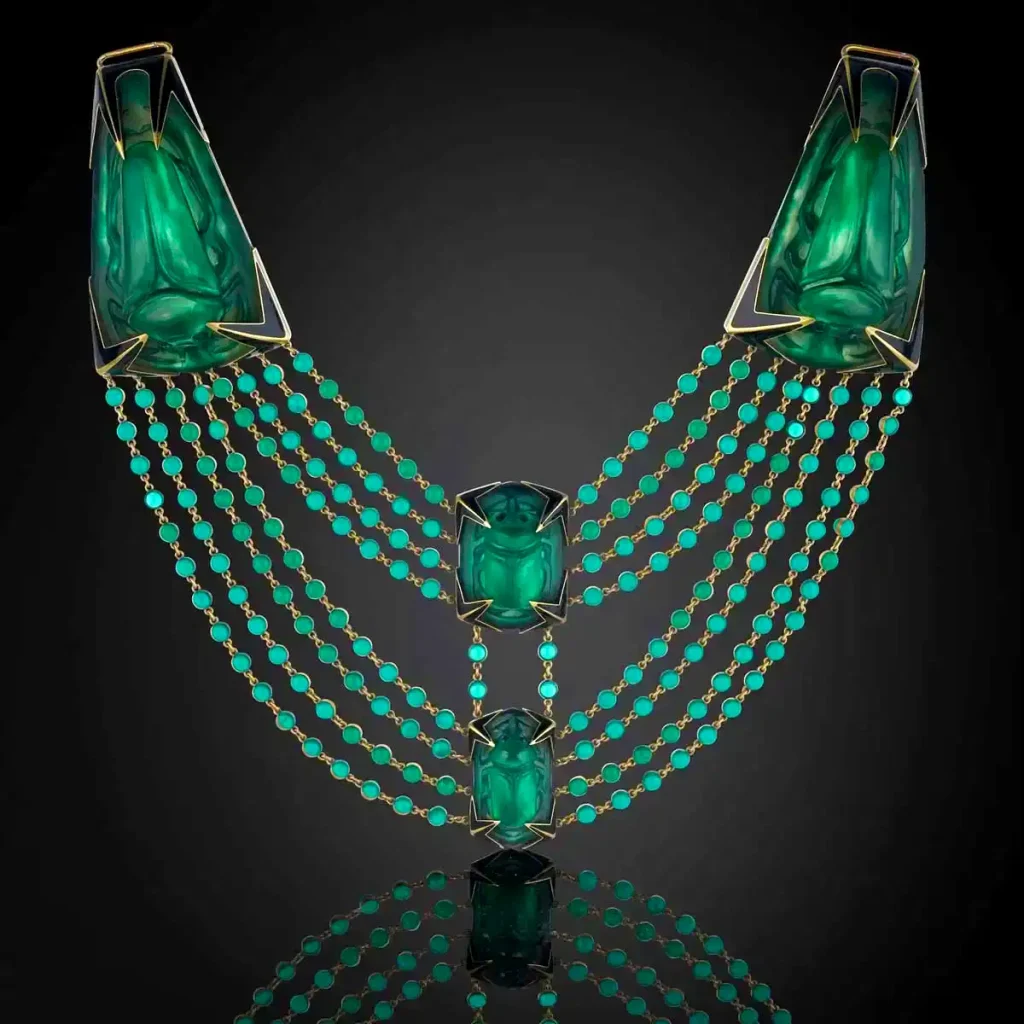
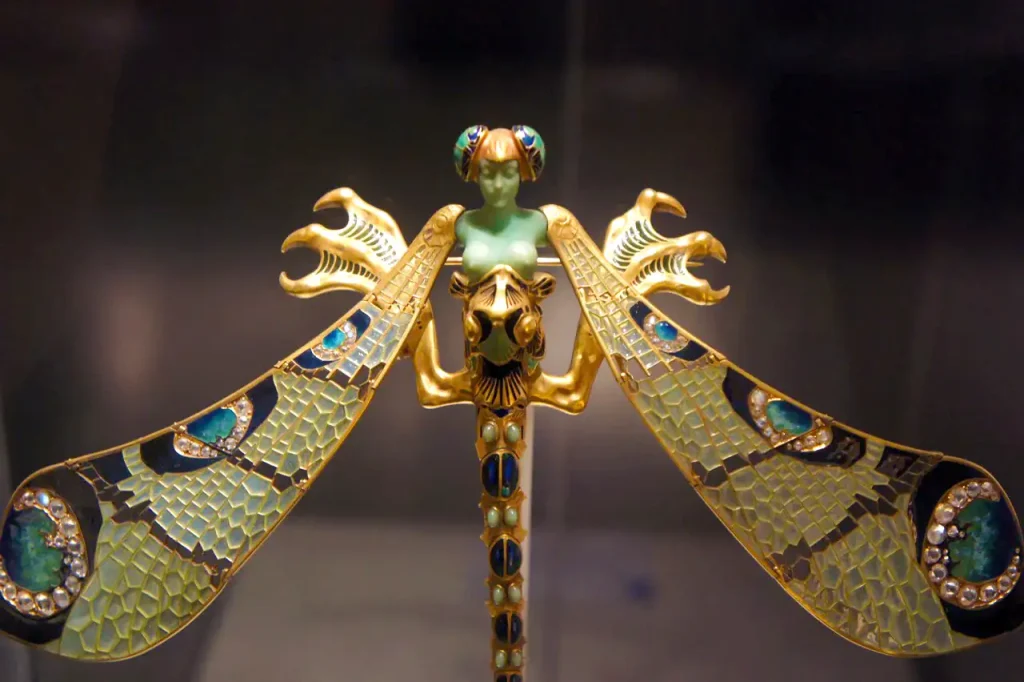
Art Nouveau Jewelry by Georges Fouquet, Henri Vever, Lucien Gaillard, René Lalique & Louis Comfort Tiffany
Art Nouveau in Furniture and Interior Design
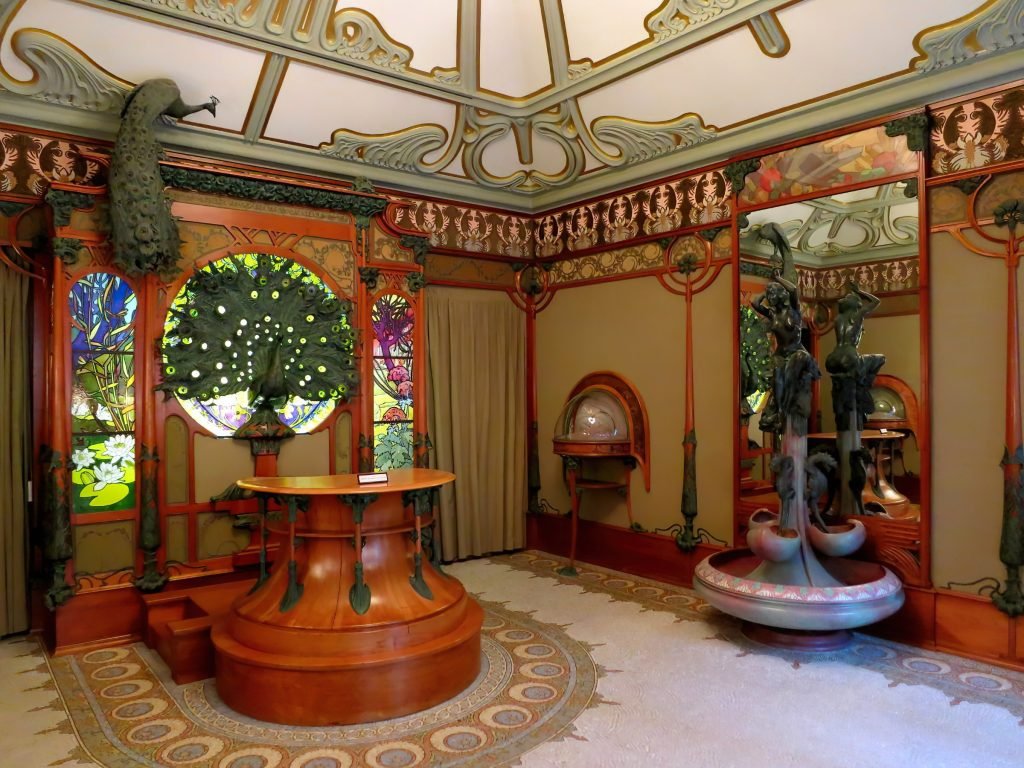
Sculpted lines and organic forms define Art Nouveau furniture, with delicate floral motifs adorning chairs, cabinets, and tables. Influenced by the natural world, these pieces often feature plants and flowers, inspired by their sinuous curves that blend perfectly onto wooden and metal furnitures.
These designs incorporated these elements through decorative accents and ornate carvings, creating a harmonious integration of form and function within living spaces.
Notable artists such as Louis Majorelle and Eugène Gaillard were instrumental in perpetuating French craftsmanship in this new aesthetic. Their works showcase the fusion of artistry and functionality, epitomizing the movement’s emphasis on beauty in everyday objects.
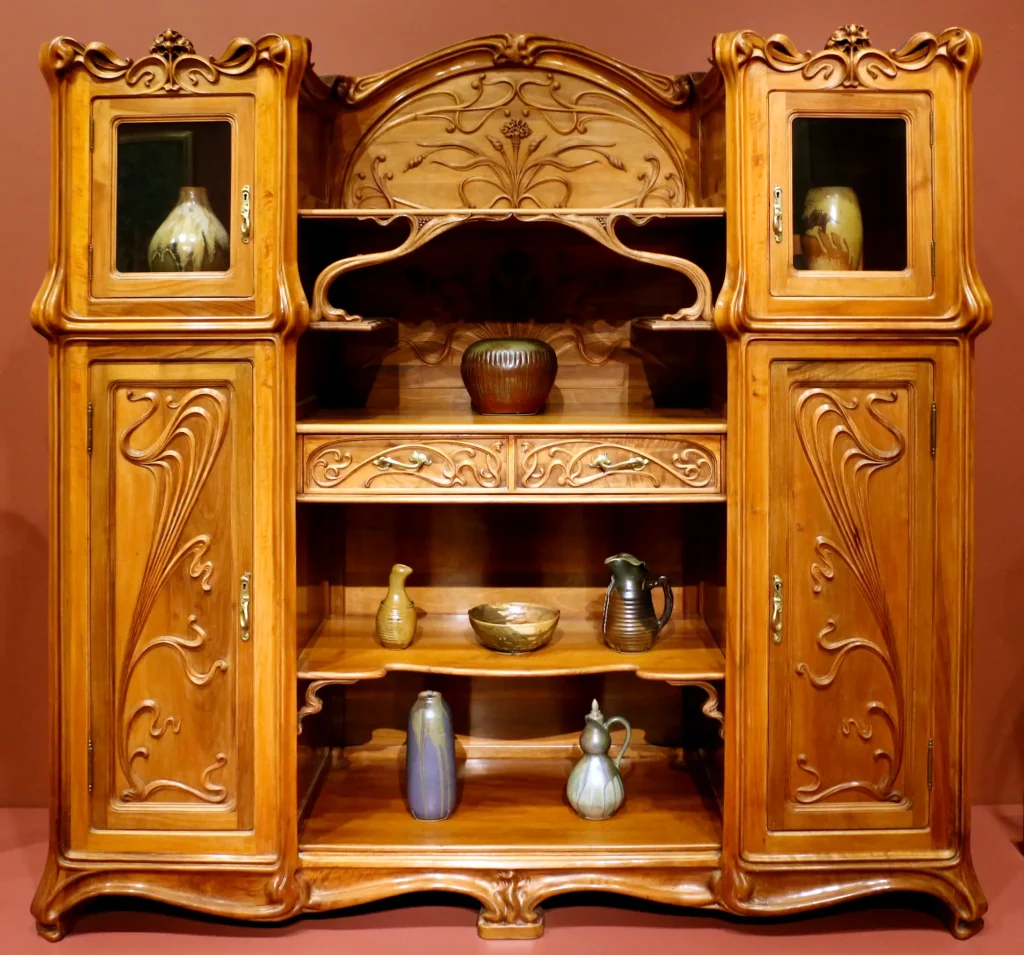
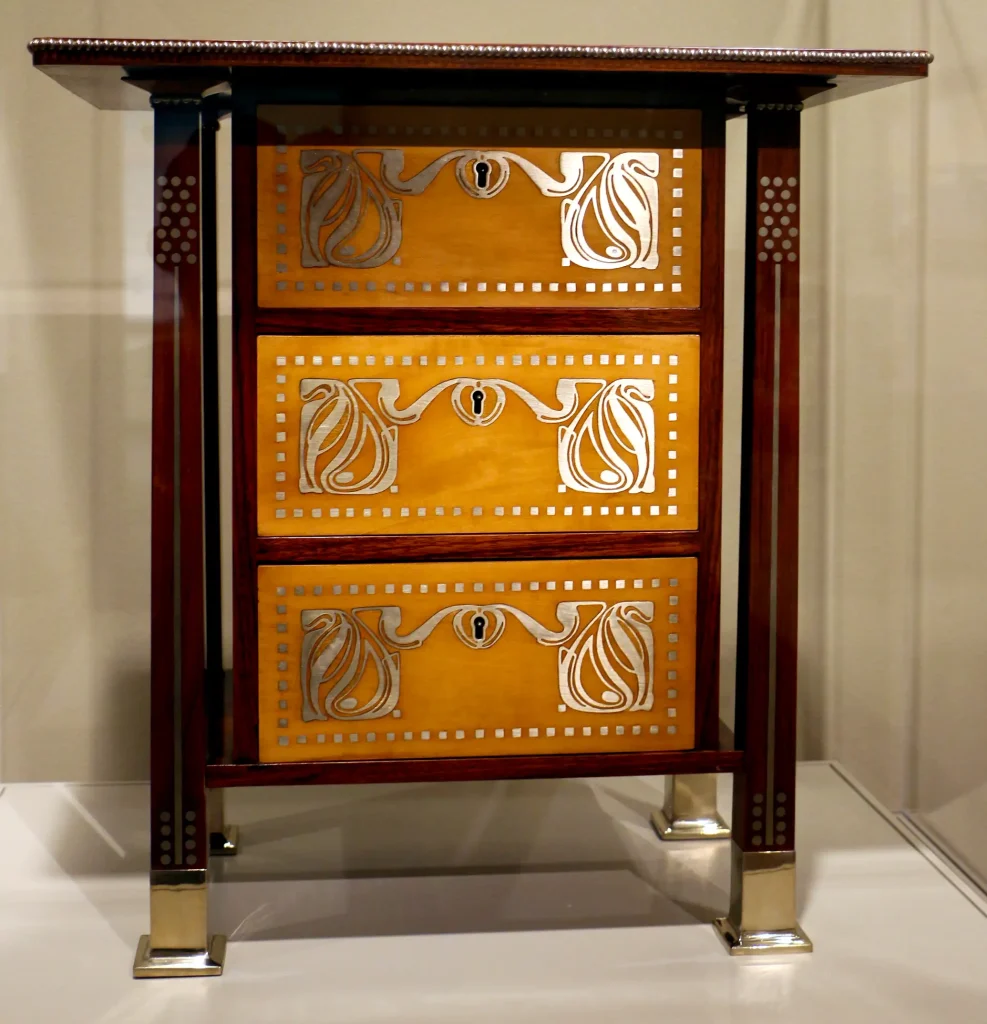
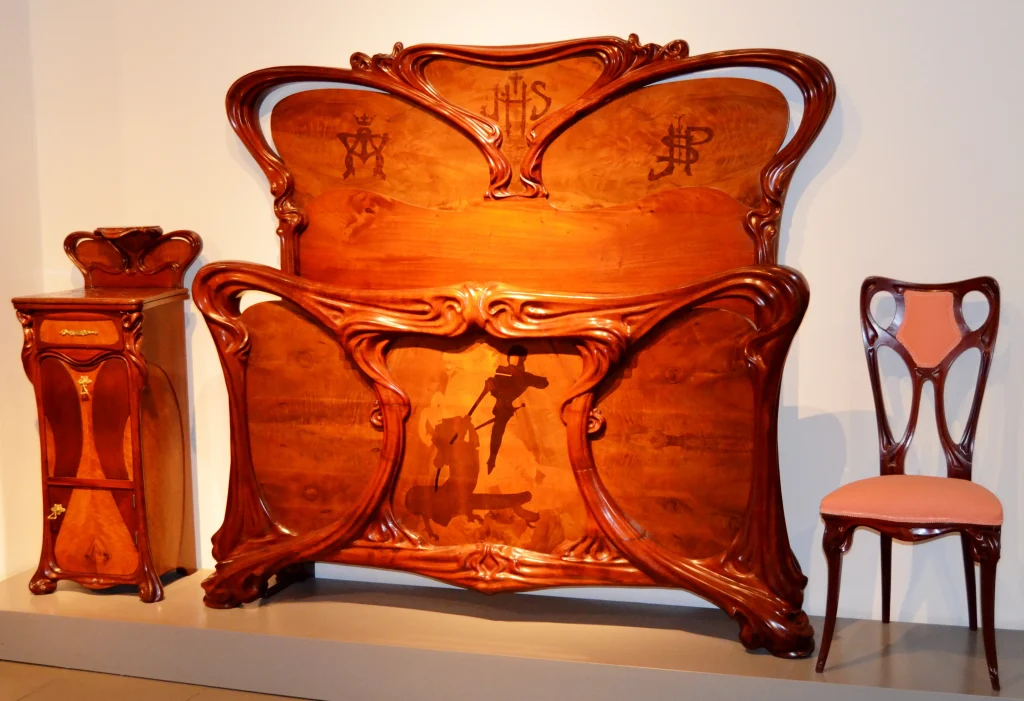
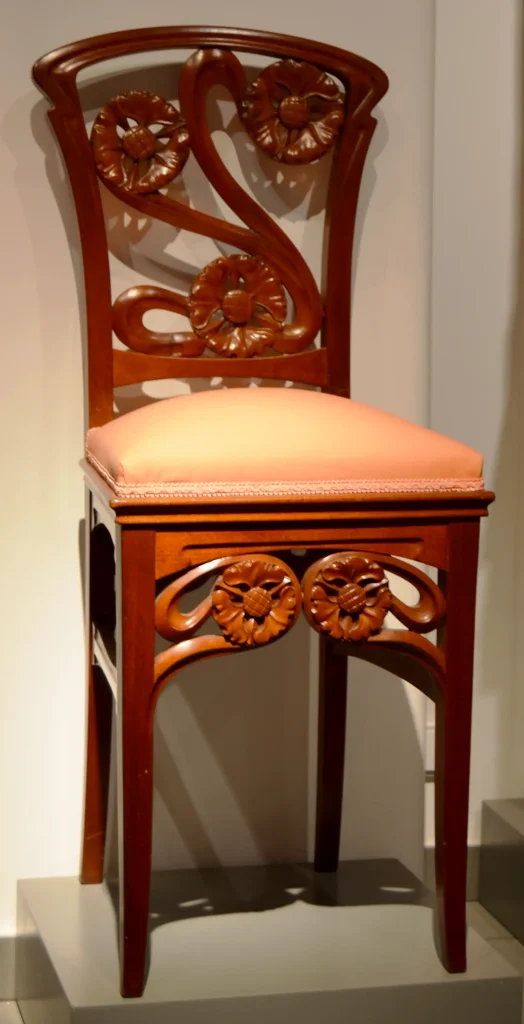
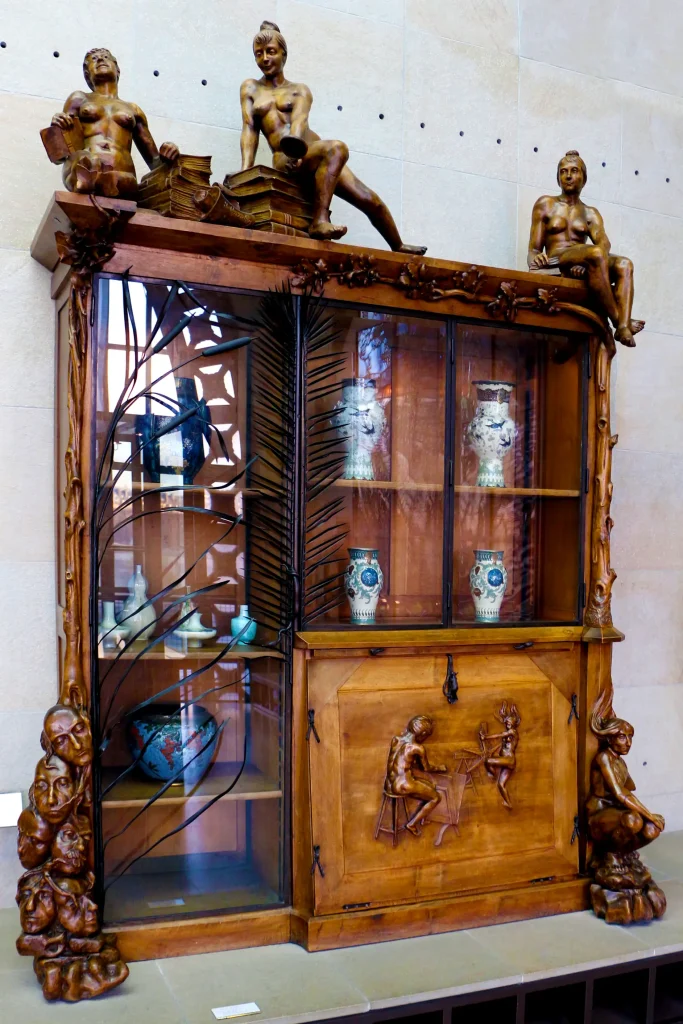
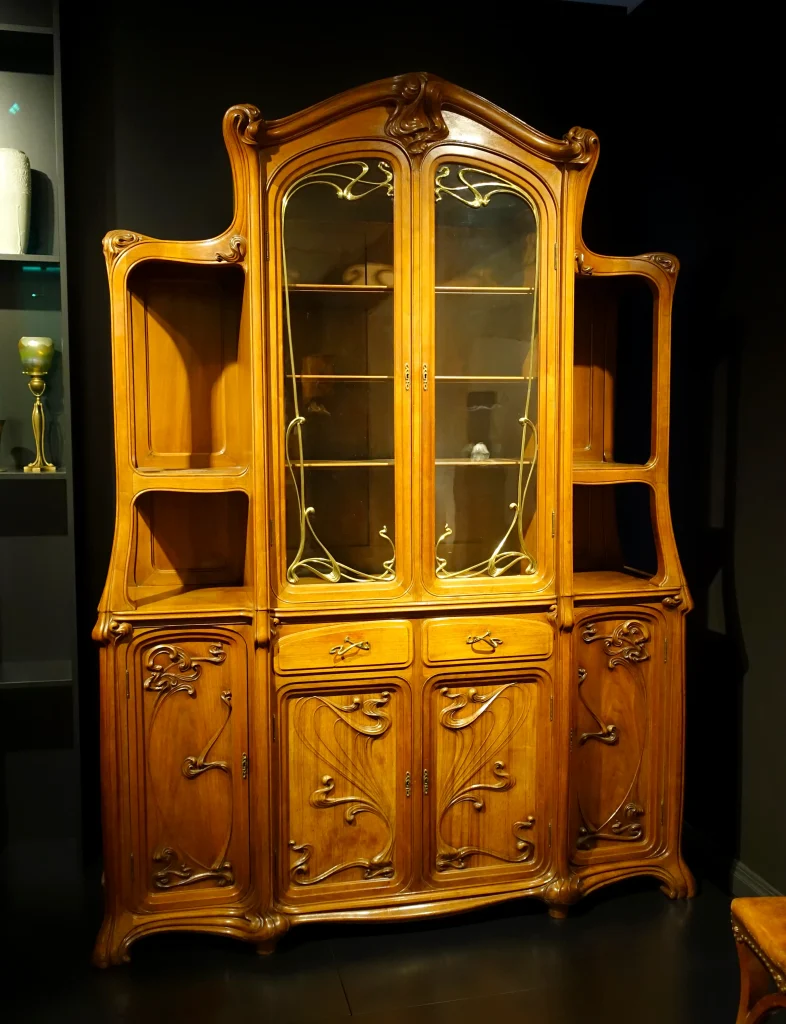
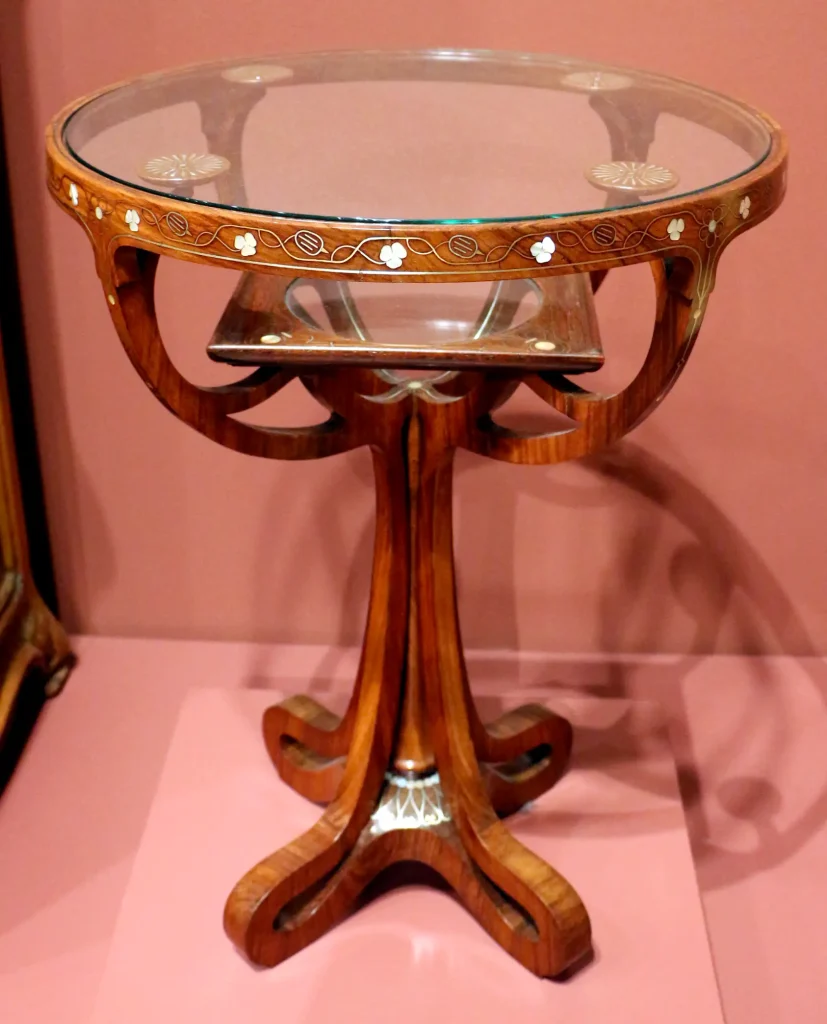
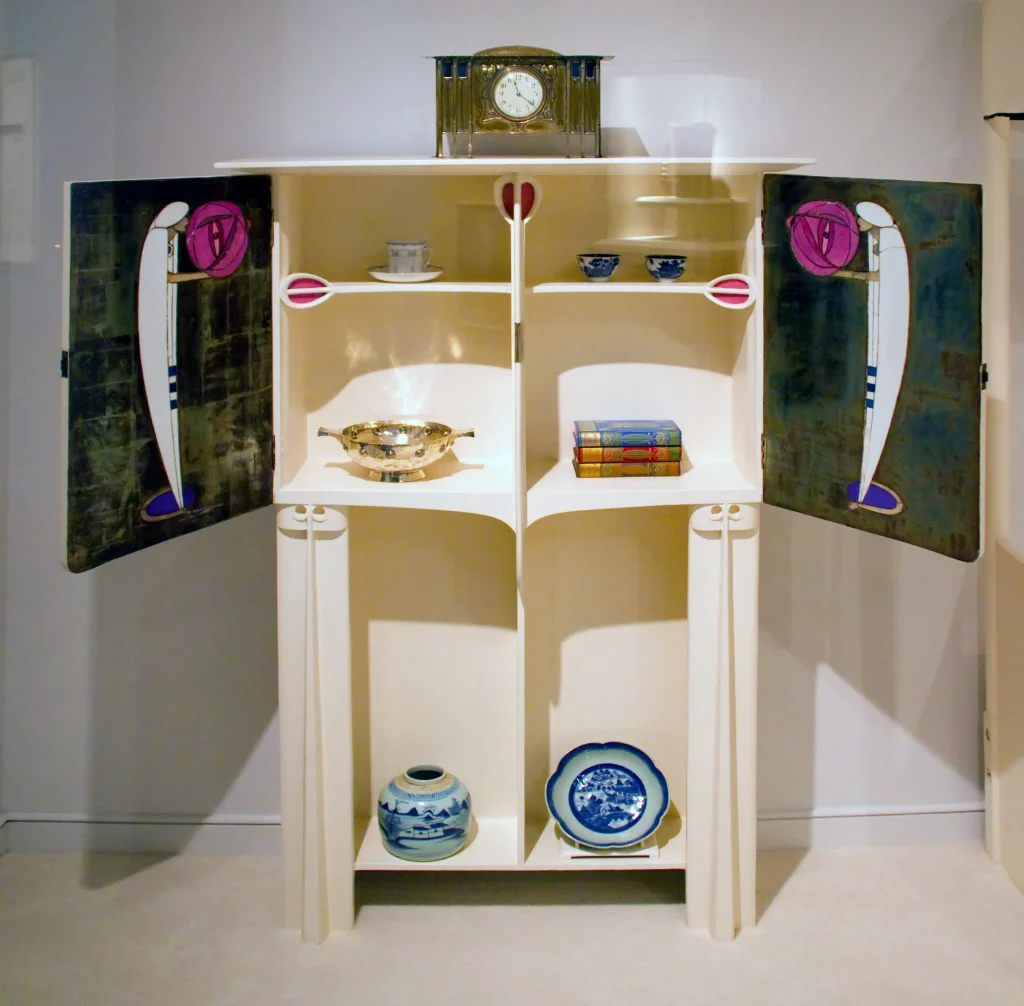
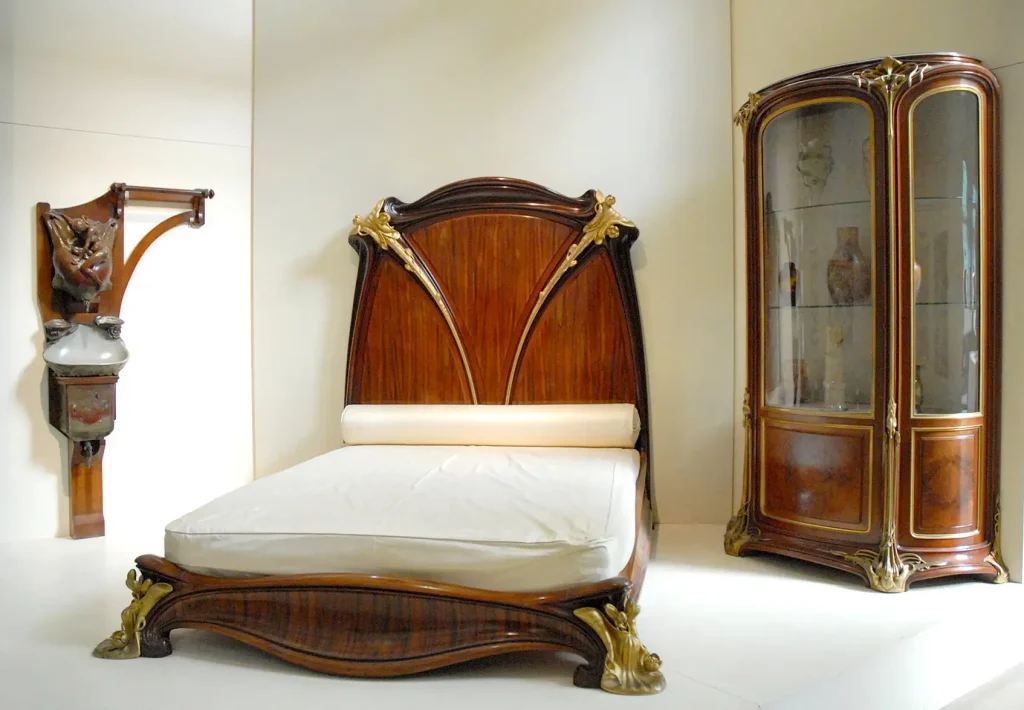
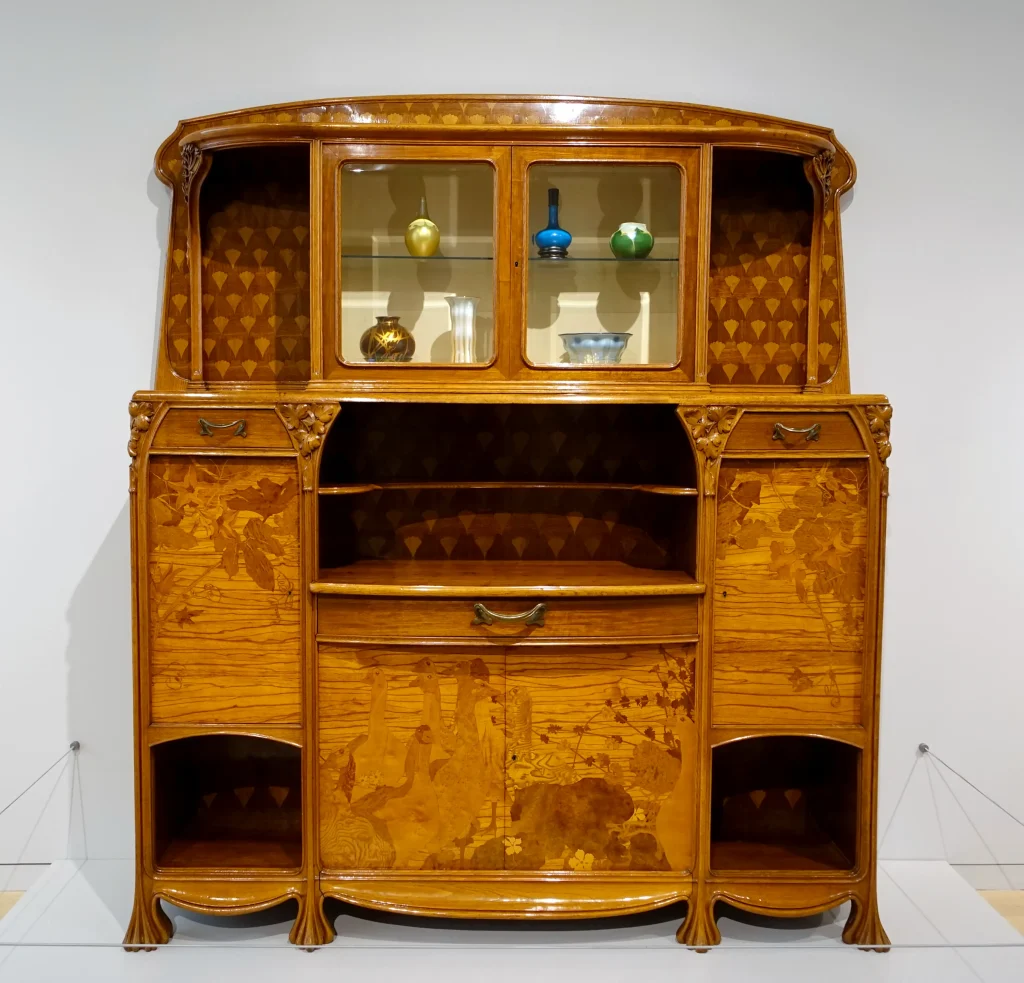
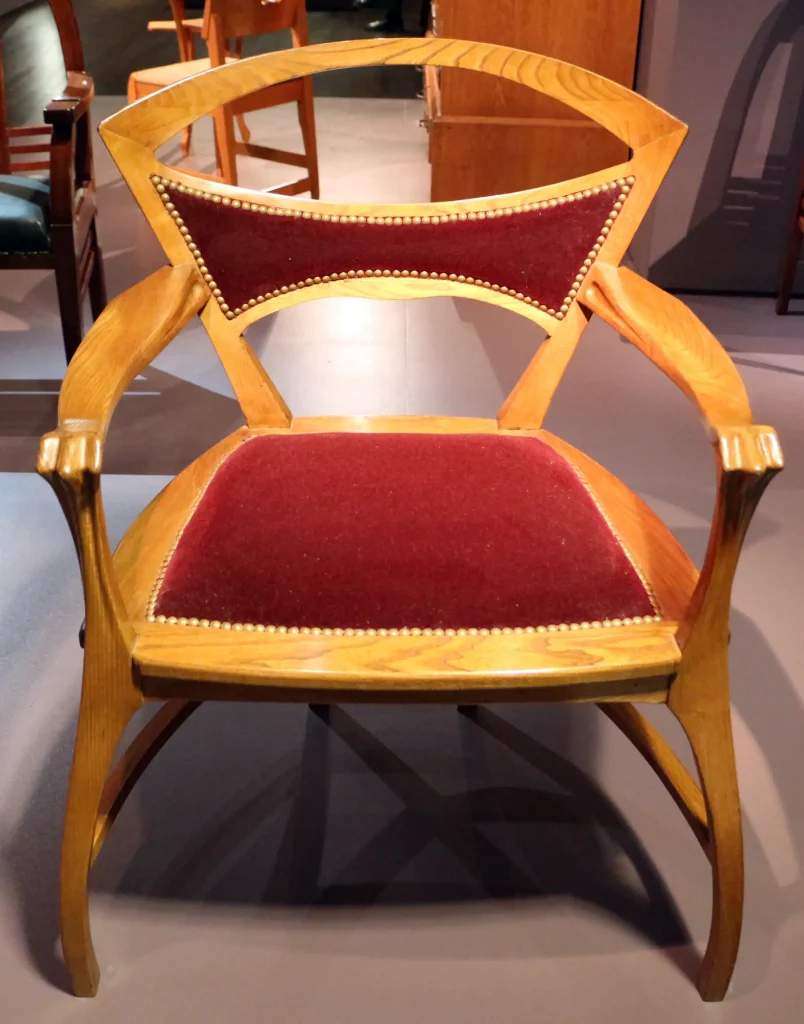
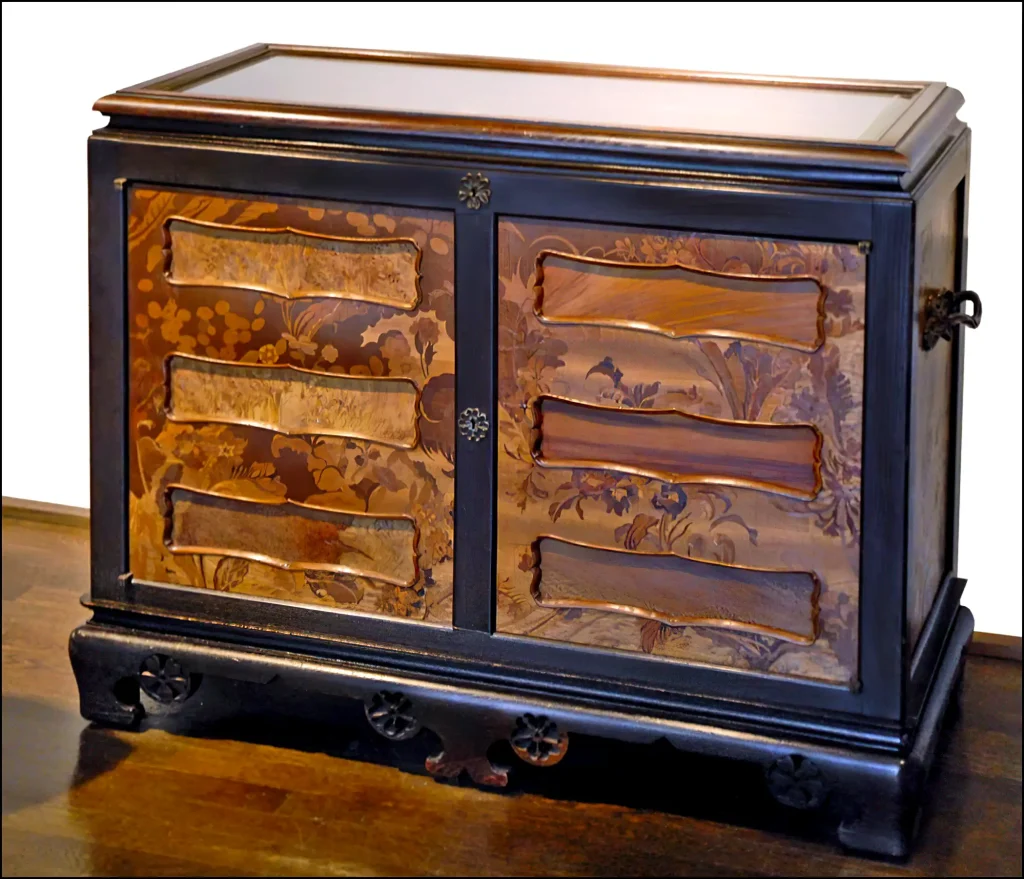
Art Nouveau Furniture
Different Regional Styles and Trends in Art Nouveau
Art Nouveau took on different regional flavors and trends, with distinct styles in France, Germany, Austria-Hungary, Italy, and the United States. Each region brought its unique interpretation to this organic art form.
Let’s delve deeper into these intriguing variations of Art Nouveau.
Art Nouveau in France
Art Nouveau in France reached its pinnacle during the 1900 Paris International Exposition, influencing architecture, decorative arts, and painting. Local variations flourished as French artists and architects embraced this dynamic style. Hector Guimard contributed notably to Art Nouveau architecture through his innovative use of iron structures and glass panels.
The movement’s popularity was propelled by influential magazines such as The Studio, Arts et Idées, and Art et Décoration.
French Art Nouveau showcased a blend of sensuality and nature-inspired designs that captivated audiences worldwide. By incorporating these elements into their creations, renowned figures like Maurice Denis, Pierre Bonnard, and Édouard Vuillard played pivotal roles in integrating fine art painting with decoration during this vibrant period.
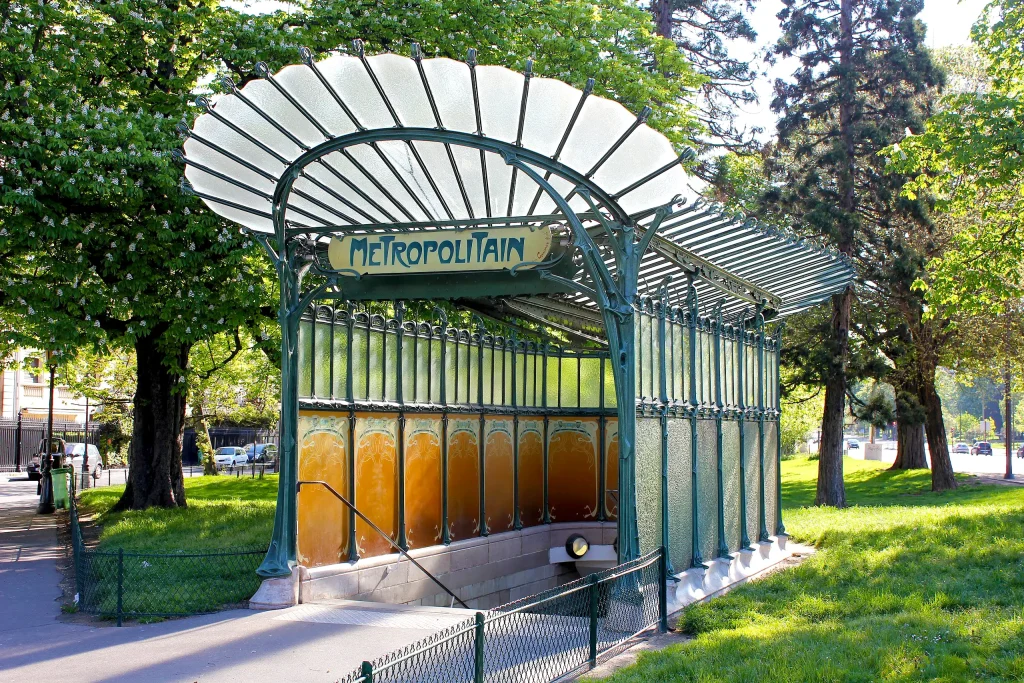
Jugendstil in Germany
Transitioning from the unique characteristics of Art Nouveau in France, Jugendstil in Germany emerges as a distinct and influential movement within the larger European Art Nouveau landscape.
Influenced by the Vienna Secession, this German artistic style was named after the renowned artistic magazine “Jugend.” Embracing organic forms and modern materials and rejecting traditional artistic boundaries, Jugendstil in Germany captivated artists with its fusion of linearity and natural elements.
This movement was particularly associated with regional styles encompassing organic and linear forms in art and architecture, contributing to the diverse tapestry of Art Nouveau across Europe.
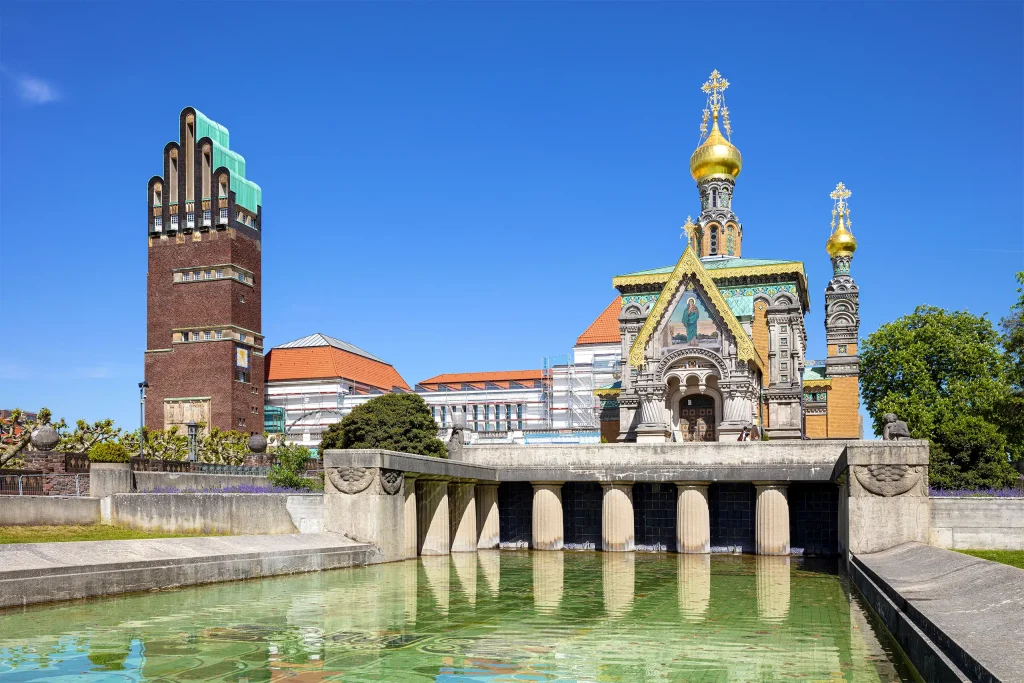
Secession in Austria–Hungary
Transitioning to the unique variant of Art Nouveau in Austria-Hungary, Secession, we delve into a movement centered in Vienna. Notably distinct for its ornate and organic designs, the Vienna Secession was spearheaded by prominent artists such as Koloman Moser and Otto Wagner.
The movement’s significant works include the floral embellishments adorning Maiolica House’s facade, the grandeur of Stoclet Palace in Brussels, and the iconic Secession Hall in Vienna.
This regional style contributed distinctive elements to Art Nouveau with its characteristic curves and focus on natural motifs.
Koloman Moser’s multifaceted talent extended across numerous artistic mediums – from magazine illustrations to furniture design – leaving an indelible mark on the Vienna Secession.
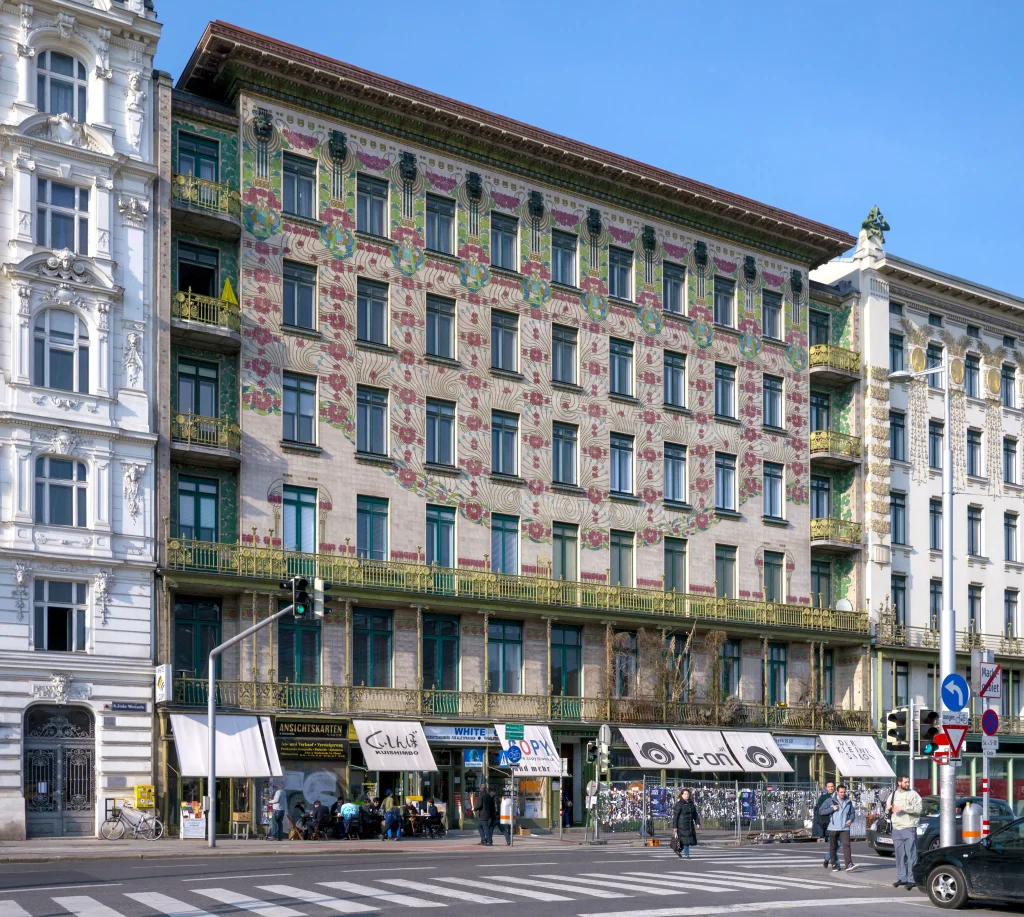
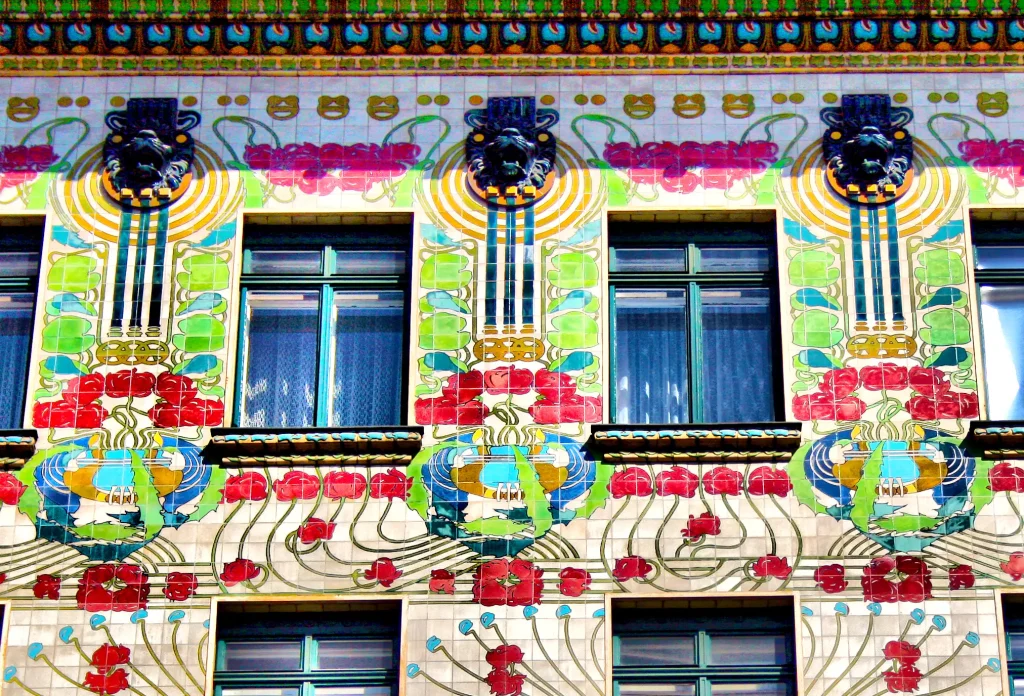
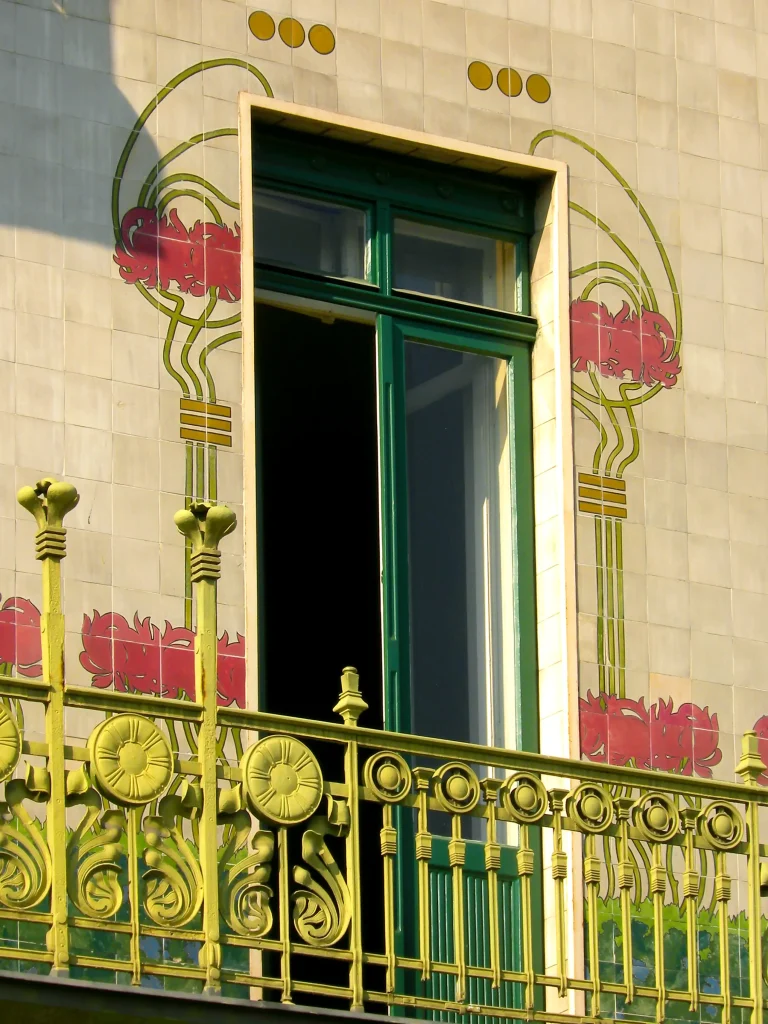
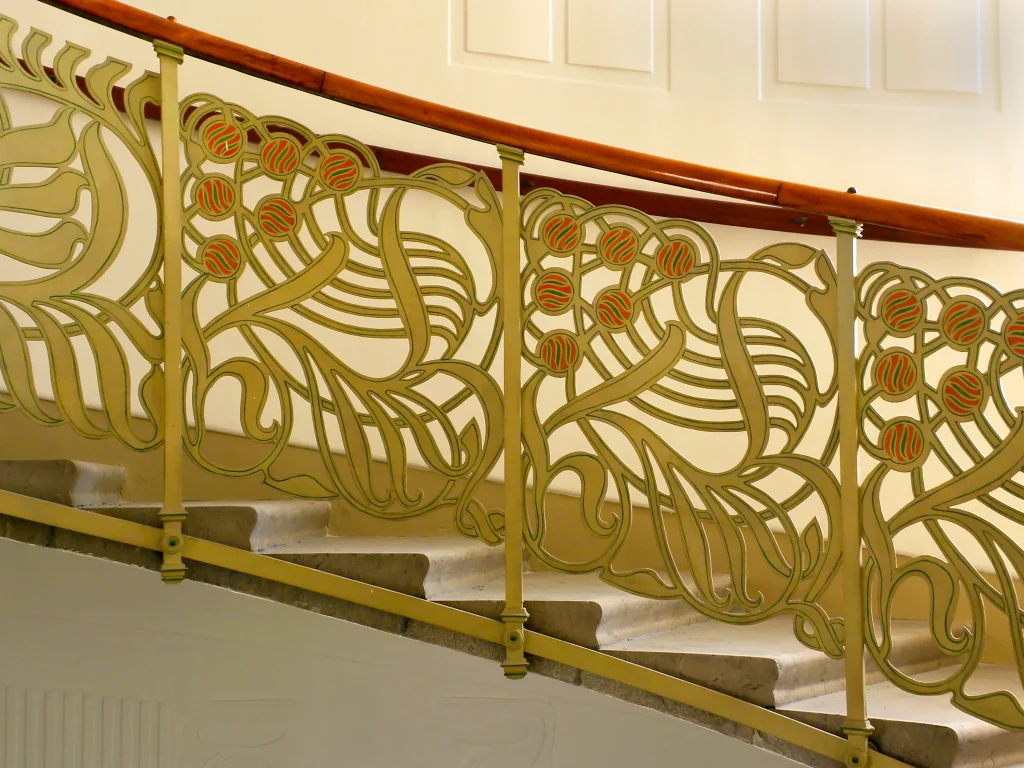
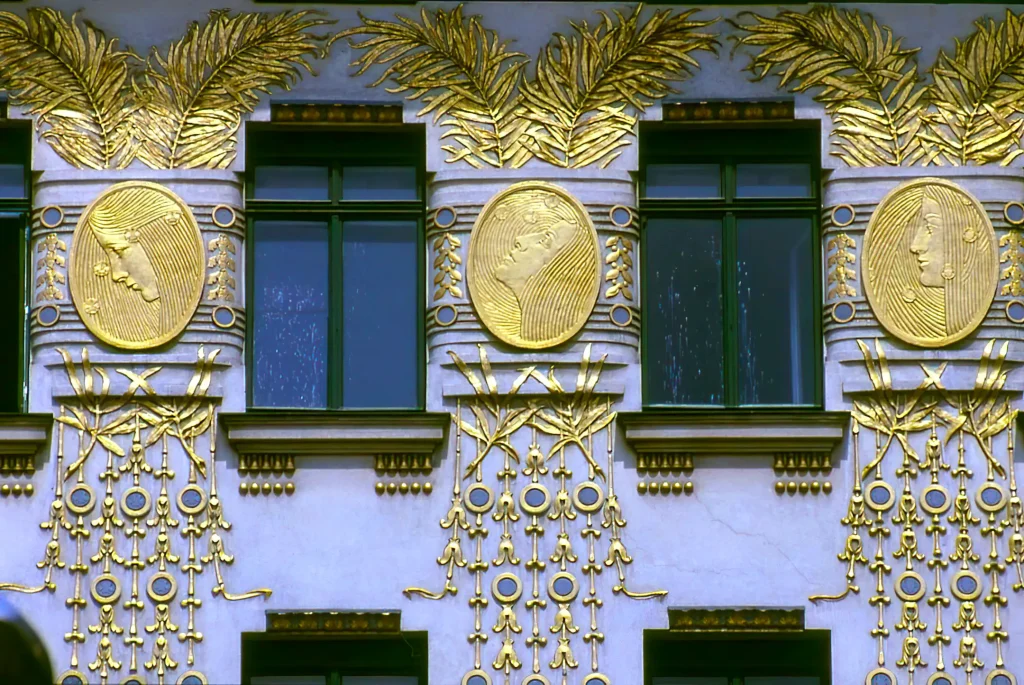
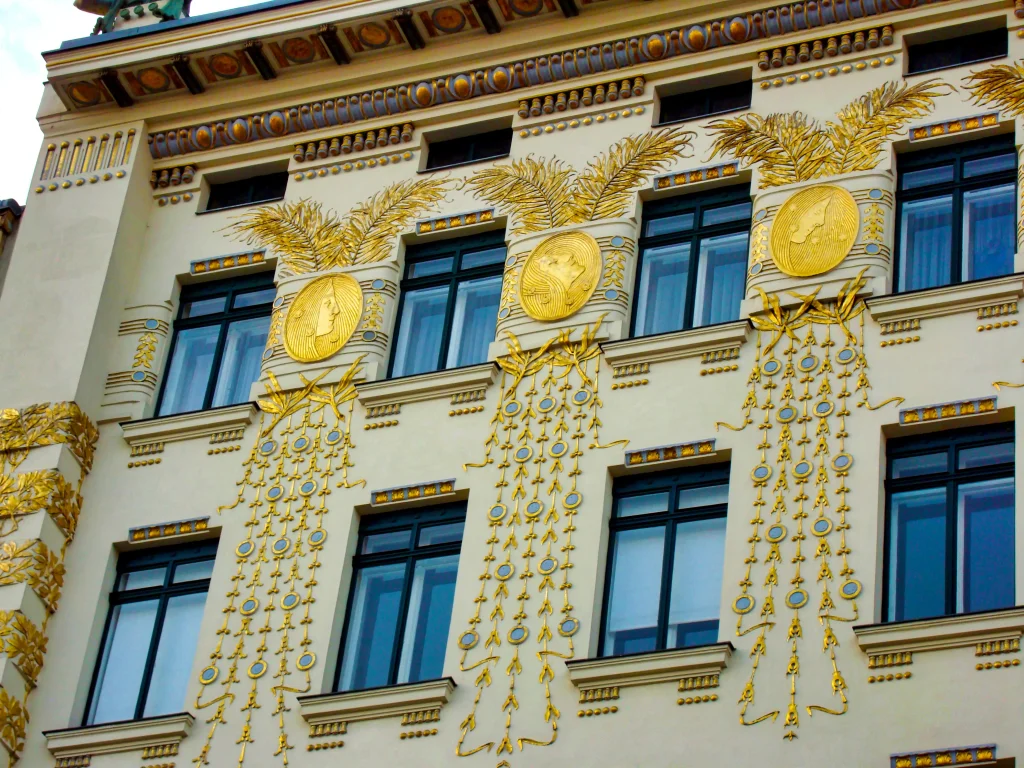

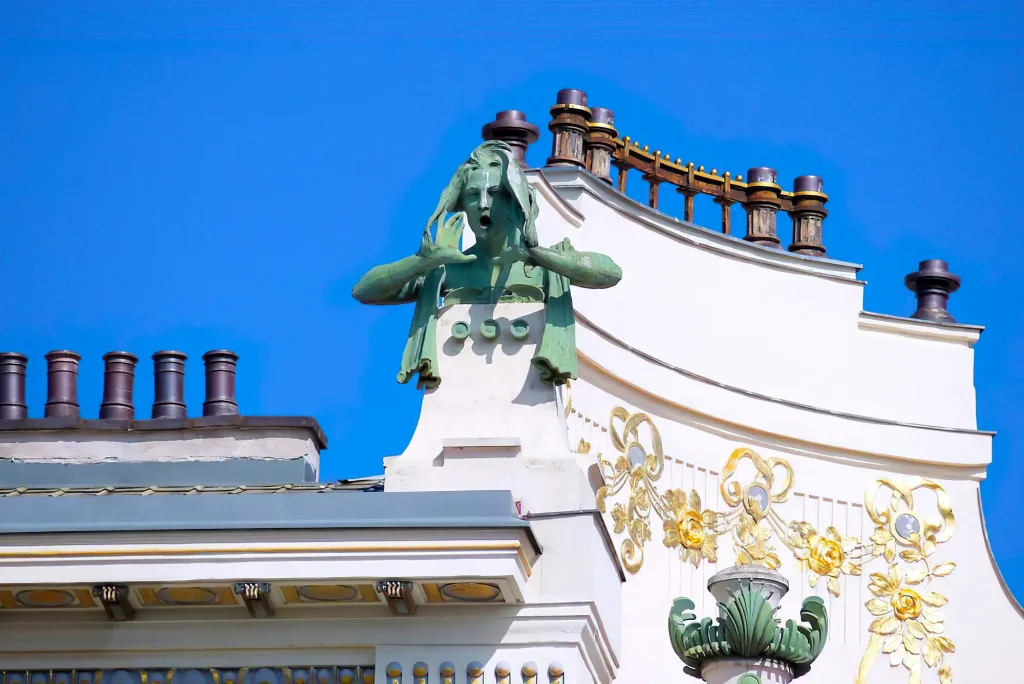
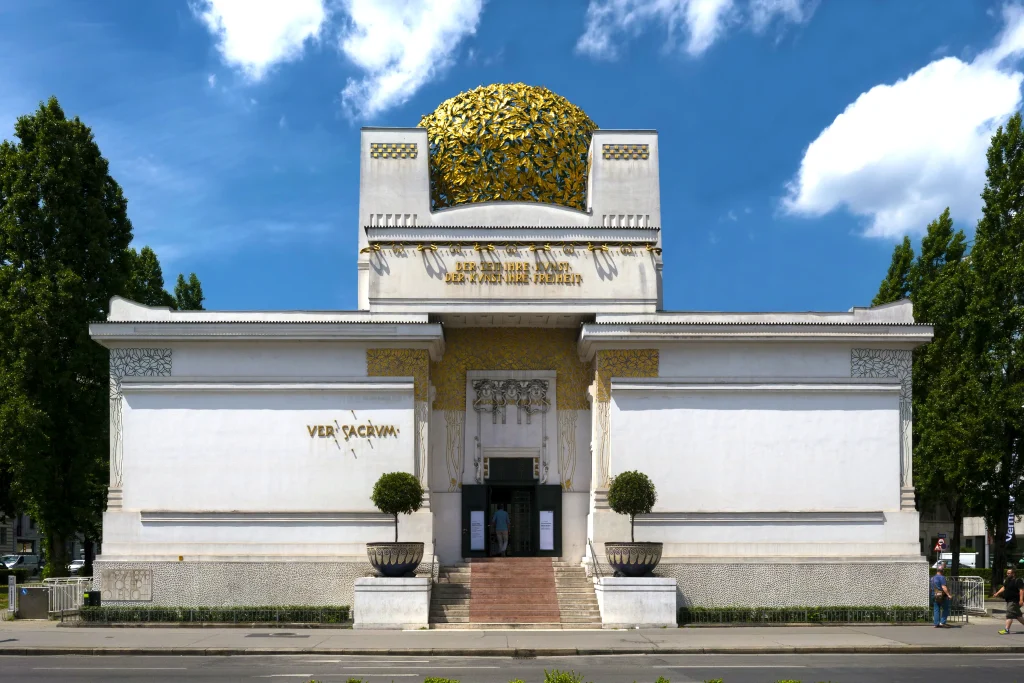
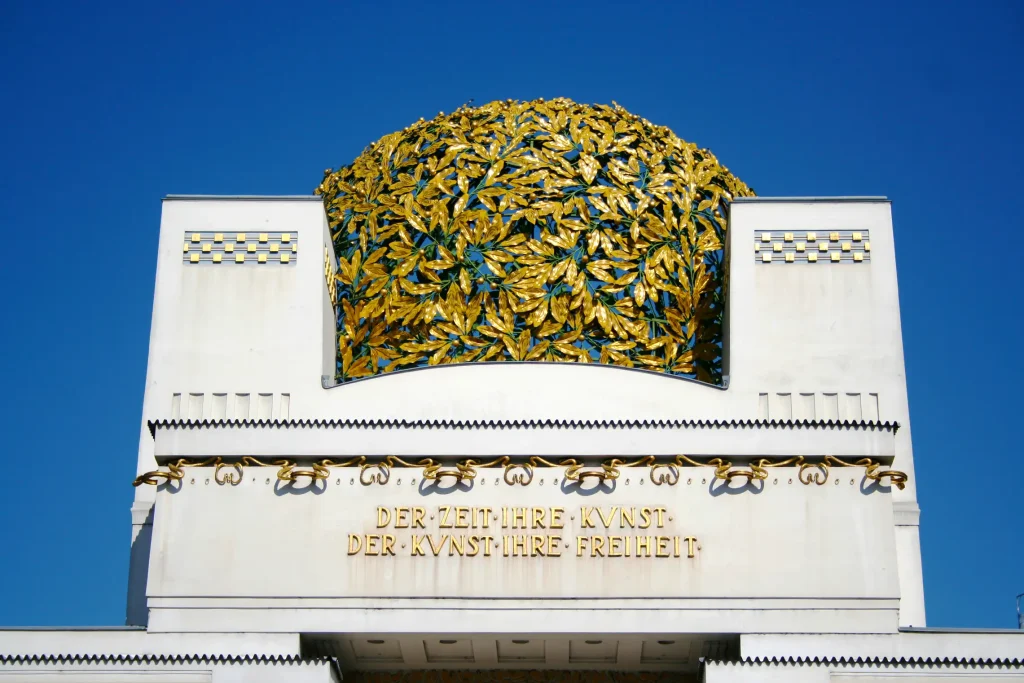
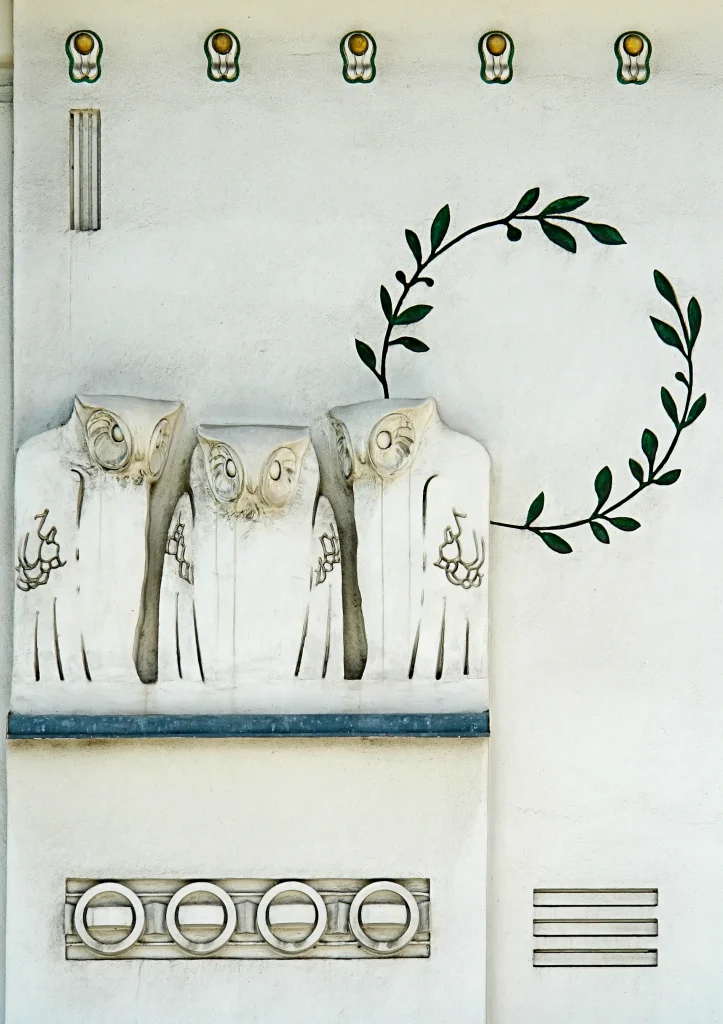
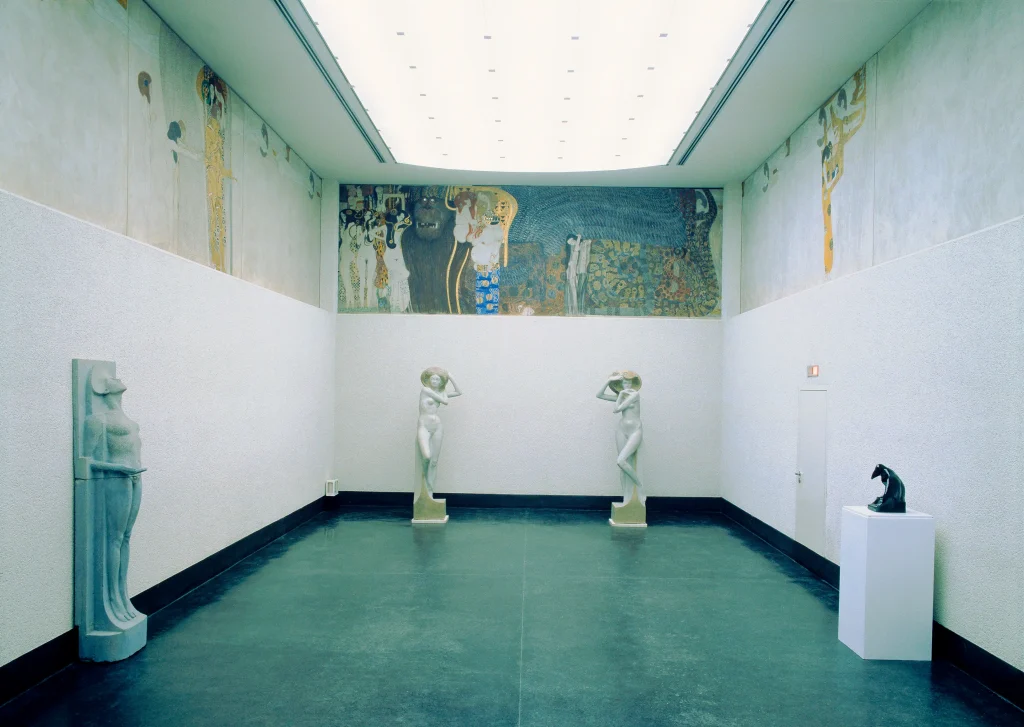
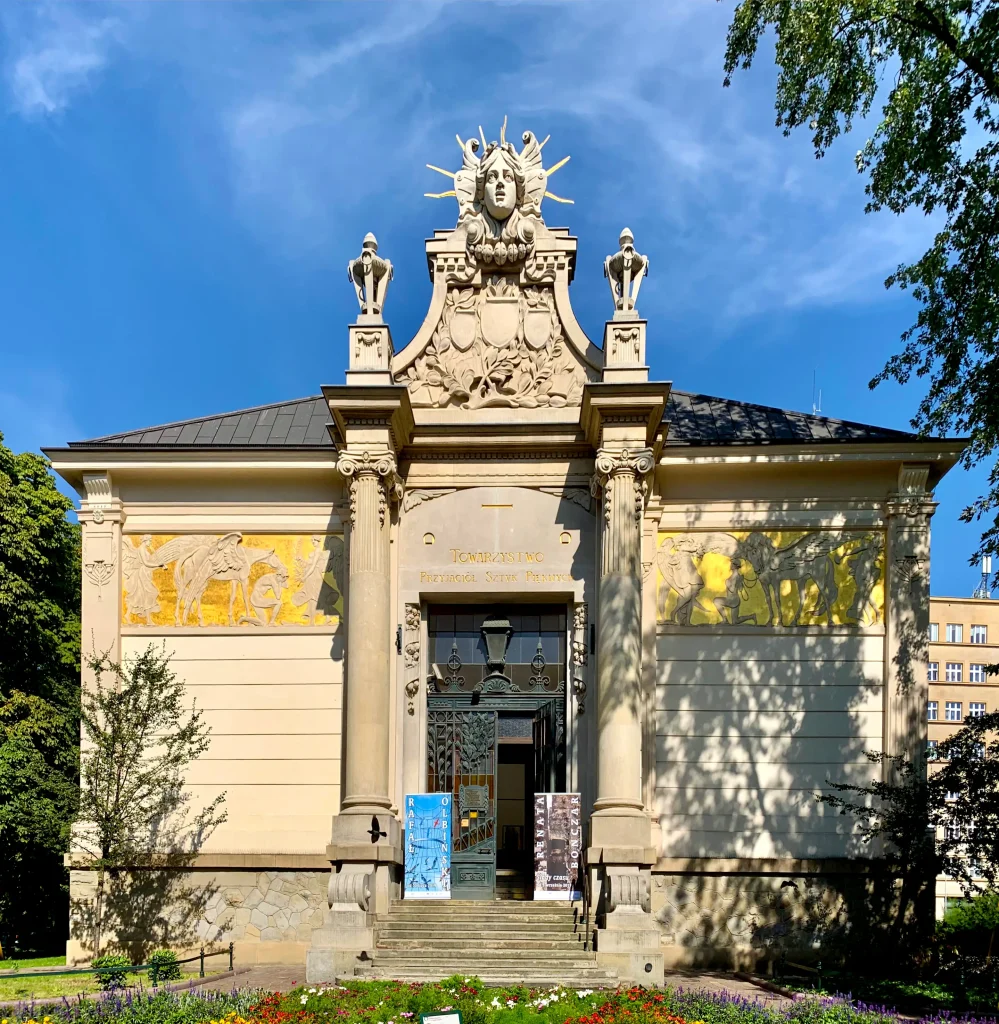
Medallion House, Secession Building & Maiolica House in Vienna
Stile Liberty in Italy
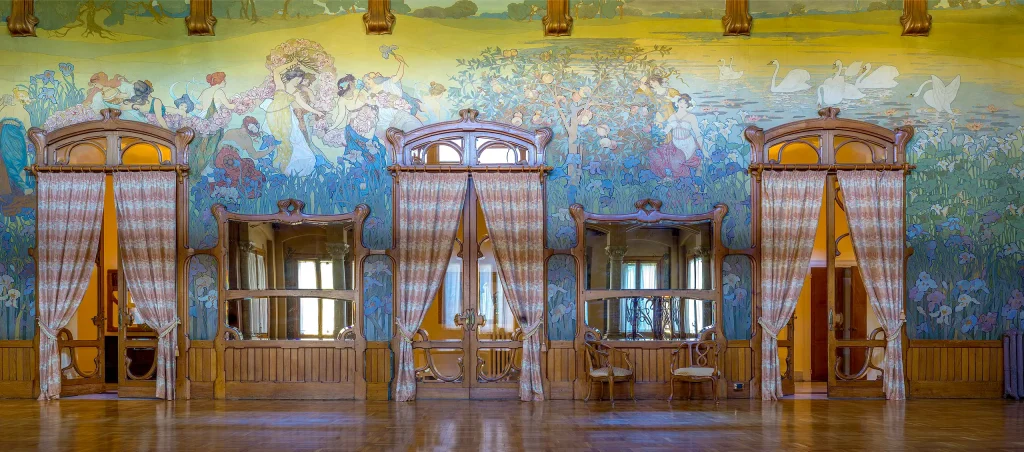
Stile Liberty in Italy exhibited diverse regional characteristics. Milan embraced a more geometric and linear style, while Florence favored an organic and floral approach. The movement encompassed various art forms like painting, architecture, furniture, and decorative arts, showcasing innovative forms and modern materials.
Notable contributors included Carlo Bugatti, renowned for intricate furniture inlay and metalwork, and Raimondo D’Aronco, celebrated for architectural designs. Cities such as Turin, Milan, and Florence host Stile Liberty buildings characterized by intricate facades and interiors.
In the late 19th to early 20th centuries, Stile Liberty formed part of the broader Art Nouveau movement – prevalent across Europe – reflecting the era’s embrace of innovative artistic expression influenced by nature’s organic beauty.
Tiffany Style in the United States
Tiffany’s Style in the United States resulted from regional variations in Art Nouveau, influenced by the movement’s focus on natural forms and modern materials. This unique style integrated iron, glass, ceramics, and concrete to create unconventional forms and more expansive spaces.
It drew inspiration from the local adaptations of Art Nouveau in different countries, infusing it with a distinctly American flavor while retaining the movement’s essence. The influence of Art Nouveau on modernism further shaped the Tiffany Style, eventually impacting subsequent modernist movements such as Bauhaus.
Louis Comfort Tiffany significantly shaped this distinctive American interpretation of Art Nouveau by using innovative materials and organic designs. His groundbreaking work with stained glass and decorative arts has left an indelible mark on the art world, defining a notable chapter within the broader narrative of Art Nouveau’s evolution across different regions and creating famous lamps still admired today.
Art Nouveau Exhibitions and Their Impact
The Paris 1900 Exposition Universelle, with its captivating Art Nouveau displays, attracted a staggering fifty million international visitors. These exhibitions showcased the movement’s organic and sensual designs, significantly impacting the global art scene.
Notably featured in international expositions such as the Turin International Exposition of Modern Decorative Arts, Art Nouveau gained widespread recognition and admiration among art lovers worldwide.
With its myriad exhibitions, Art Nouveau set off a wave of influence that resonated deeply with subsequent modernist movements. The movement’s emphasis on intricate detail, flowing lines, and natural motifs proved to be an enduring source of inspiration for future generations.
The Relationship between Art Nouveau and Other Art Movements
Art Nouveau was heavily influenced by the arts and crafts movement, as well as the symbolist and aesthetic movements. It also played a significant role in shaping subsequent art movements such as Art Deco, Modernismo, and Jugendstil with its innovative designs and organic forms.
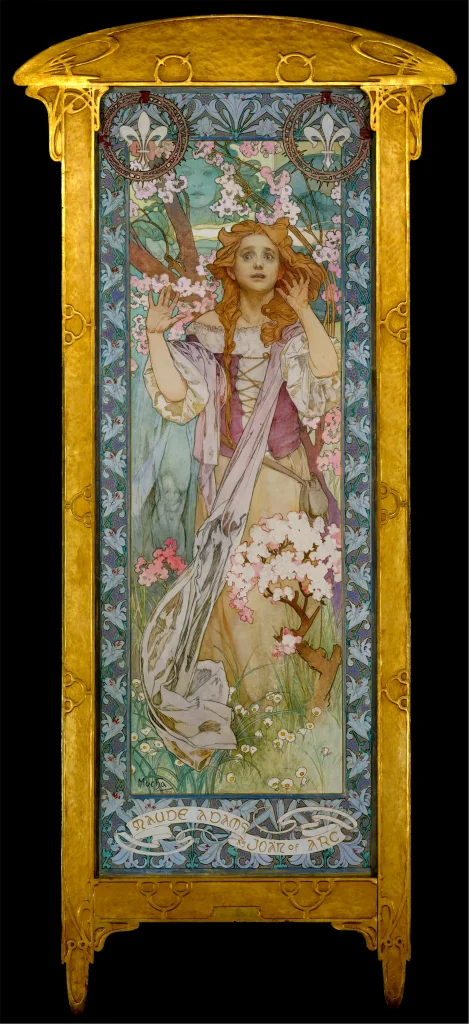
Alphonse Mucha – Maude Adams as Joan of Arc
Influences on Art Nouveau
Influences on Art Nouveau stemmed from Britain’s Arts and Crafts movement, embracing innovative ideas by artists like Aubrey Beardsley and Charles Rennie Mackintosh. The fascination with various aspects of Japan, known as Japonism, also played a fundamental role.
Additionally, Art Nouveau was influenced by Pre-Raphaelite painters of the 1880s, leading to its unique blend of sensuality and organic forms. Embracing new technologies in publishing enabled this art form to rapidly reach a global audience through illustrated publications and art magazines.
The movement sought to modernize design by drawing inspiration from both organic and geometric forms while aiming to bridge the gap between fine and applied arts.
Art Nouveau’s Influence on Subsequent Art Movements
Art Nouveau profoundly influenced later art movements, such as Bauhaus and Art Deco, focusing on fluid lines and organic forms. This influence extended into various artistic disciplines, including architecture, furniture design, and graphic arts, impacting how artists approached their work.
Notably, Art Nouveau’s emphasis on integrating art into everyday life was pivotal in shaping subsequent modernist movements across Europe and the United States. Its legacy inspires contemporary artists seeking to merge functionality with aesthetic appeal while celebrating natural motifs and innovative design.
The impact of Art Nouveau also led to a reevaluation of utilitarian arts, blurring the boundary between practicality and decorative elements within various creative fields. This shift has left an enduring mark on today’s artistic landscape by encouraging a fusion of beauty with functionality in diverse art forms worldwide.
The End of Art Nouveau and its Legacy
Art Nouveau reached its zenith at the 1900 Paris International Exposition before waning by 1914, making way for Art Deco and Modernism in the 1920s. Despite its brief existence, Art Nouveau left an enduring legacy.
Emphasizing function over form and eliminating unnecessary ornamentation paved the way for the Art Deco movement and later graphic design movements in the 1960s.
Art Nouveau vs. Art Deco: A Comparative Analysis
As we reflect on the profound legacy left by Art Nouveau, it becomes natural to delve into a comparative analysis with Art Deco, the movement that followed its decline. A side-by-side comparison highlights the salient features and differences between the two remarkable styles.
| Aspect | Art Nouveau | Art Deco |
| Period | Late 19th to early 20th century | 1920s to 1940s |
| Stylistic Origins | Inspired by natural forms and structures | Influenced by Cubism, Futurism, and Constructivism |
| Visual Characteristics | Curvilinear forms, asymmetry, and elaborate organic motifs | Geometric shapes, symmetry, streamlined and sleek forms |
| Colors | Earthy and muted with pastel hues | Bold and vibrant with metallic tones |
| Materials | Use of wrought iron, glass, and ceramics | Emphasis on chrome, steel, and other modern materials |
| Iconic Elements | Stained glass, floral patterns, and intricate details | Streamlined forms, ziggurat shapes, and sunburst motifs |
| Cultural Context | Reaction to the academic art of the 19th century | Symbolized modernity and progress in the interwar period |
| Architectural Examples | Casa Batlló by Antoni Gaudí | Chrysler Building by William Van Alen |
| Representative Artists | Gustav Klimt, Alphonse Mucha | Tamara de Lempicka, René Lalique |
| Economic Context | Associated with luxury and the elite | Mass production made designs more accessible |
As we uncover the distinguishing attributes of Art Nouveau and Art Deco, the elegance of both movements continues to endure, each celebrating beauty through their distinct visual vocabularies.
Conclusion
Art Nouveau captivated the world with its organic beauty and innovative approach to art and design. Its sensuality, intricate lines, and fusion of natural forms revolutionized decorative arts across continents.
The international movement sought to break down traditional barriers between fine and applied arts, influencing various disciplines such as architecture, glass art, jewelry, and furniture.
Rooted in nature-inspired designs and modern materials, it left a lasting impact on subsequent art movements. With its timeless elegance and dynamic influence on contemporary aesthetics, Art Nouveau continues to inspire creativity across diverse artistic expressions today.
FAQs
1. What is Art Nouveau?
Art Nouveau is a popular art style during the Belle Époque, known for its natural forms, flowing lines, and organic beauty. It includes architecture, posters, jewelry, and interior decoration.
2. Who were some famous artists in the Art Nouveau movement?
Famous artists included Emile Gallé with his favorite glass creations; Louis Sullivan, who impacted architecture; Josef Hoffmann from Wiener Werkstätte; and Margaret Macdonald of the Glasgow Style.
3. What are some of the signature features of Art Nouveau design?
Look out for curvy lines called “style coup de fouet,” peacock motifs like ‘the peacock skirt,’ trencadís tilework, and polychrome sculptures that show off vibrant colors.
4. Were there different names for Art Nouveau around the world?
Yes! The style was known as l’Art nouveau in France and Belgium, Sezessionstil in Austria, Nieuwe Kunst in the Netherlands, Stile Liberty in Italy, and Szecesszió in Hungary.
5. Are there other Art Nouveau buildings that were not mentioned?
Yes, there are plenty! Buildings such as Hôtel van Eetvelde in Brussels— a prime example of this unique style’s blend into Architecture— are all over Europe and there are some fantastic Art Nouveau structures across Riga in Latvia.
6. Is there anything special about Art Nouveau jewelry?
Art Nouveau jewelry often featured elegant designs inspired by nature with symbolic elements—all crafted to make each piece stand out as a work of art.