
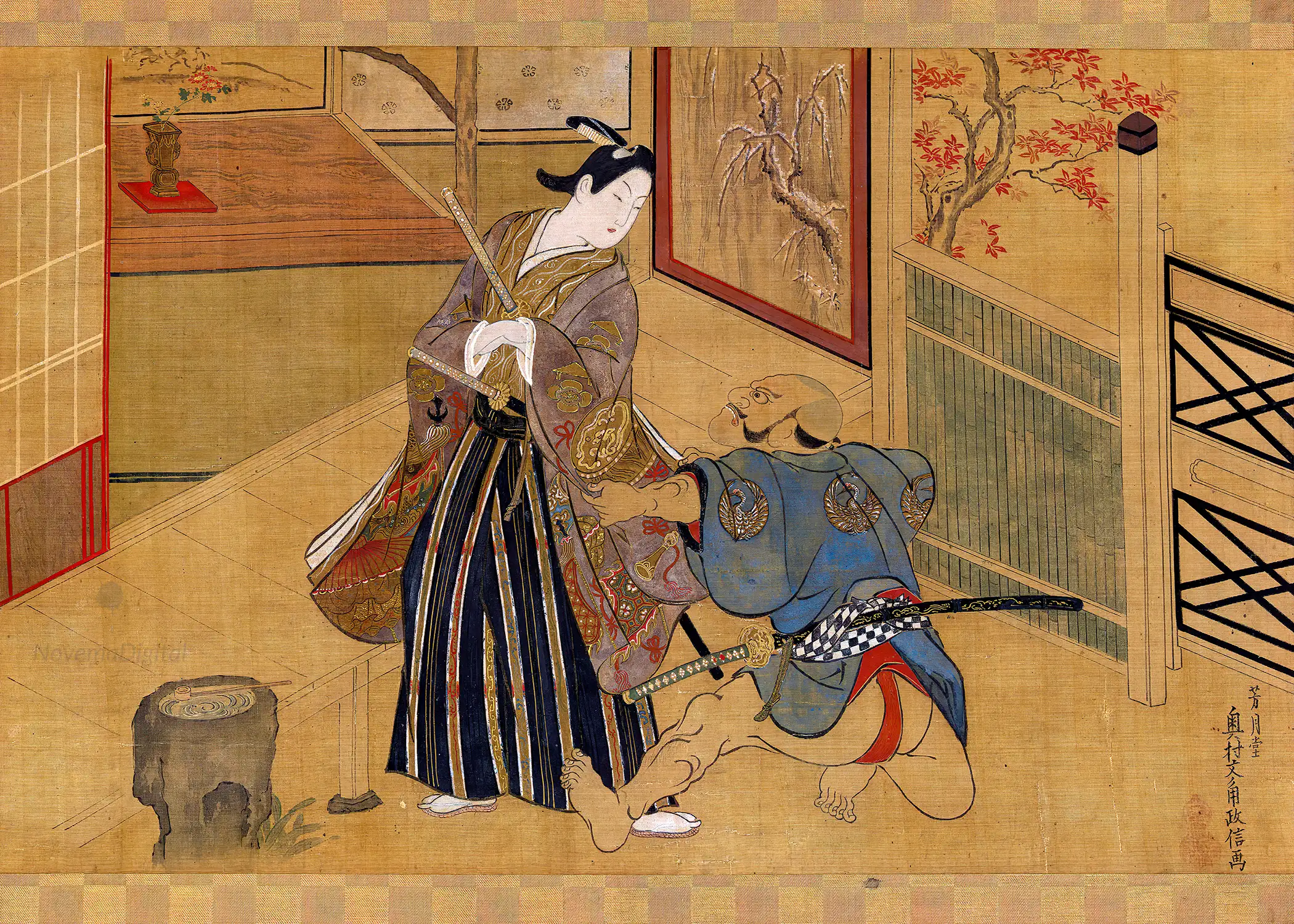
Okumura Masanobu – Kabuki Play Kusazuribiki from the Tales of Soga (1700s)
Original price was: $9.99.$4.99Current price is: $4.99.
Okumura Masanobu – Kabuki Play Kusazuribiki from the Tales of Soga (1700s)
Description
This work of art has been digitally enhanced without erasing signs of ageing for the sake of authenticity. Digital paintings are very popular right now as an affordable and stylish way to decorate and personalize your home and office.
Okumura Masanobu – Kabuki Play Kusazuribiki from the Tales of Soga (1700s)
“Okumura Masanobu (Japanese: 奥村 政信; 1686 – 13 March 1764) was a Japanese print designer, book publisher, and painter. He also illustrated novelettes and in his early years wrote some fiction. At first his work adhered to the Torii school, but later drifted beyond that. He is a figure in the formative era of ukiyo-e doing early works on actors and Bijin-ga (“pictures of beautiful women”).
Masanobu is said to be master of the Urushi-e style. Urushi-e is usually done on woodblocks and has thick black lines. Styles of urushi-e can be found in many works from Masanobu. The most famous examples are Large Perspective View of the Interior of Echigo-ya in Suruga-chô, Actor holding folders, Actor as Wakanoura Osana Komachi, Actors Ôtani Hiroji and Sodesaki Iseno, and Lion, Peonies, and Rock. All these works have dark, thick lines and are made on woodblocks. His works are famous for his gentile and flowing lines throughout his drawings.
He has a recurring pattern consisting of tan backgrounds and neutral coloring. His pieces capture things and or people in motion. His objects in drawings are always in mid-motion of walking somewhere or doing something. Masanobu was famous for capturing the beauty of nature. He painted and drew birds, women, men, actors, and warriors. The Japanese women he draws have the same style and ‘boneless’ structure. The faces show: however, the bodies are covered by long, flowing dresses. This style is referred to as Tan-e: drawing women as full-bodied and round. The Tan-e style brings a sense of gentleness and gracefulness to the beauties.
Okumura Masanobu’s art consists of the insights of stores and theatres. These pieces are large-scale and referred to as Uki-e, which is a style used by Japanese artists that means “looming picture”. He was very good at capturing the luxury and leisure of his paintings on theatre. He played around and experimented with all kinds of styles on woodprints and was always willing to learn more. By experimenting, he created and is said to be the first artist to make pillar prints. Okumura is also said to be the creator of the large, wide, vertical prints referred to as Habahiro Hashira-e. Many of his scripts are examples of this style of print.
Masanobu was known for staying true to his time and what he was good at. He created many new styles that are used today; without him art wouldn’t be the same. His Ukiyo-e were mostly produced in the Kyōhō era. They display the printmaker’s sense of line, colour, and composition. The subjects are most often humorous and are executed in a lively manner with figures in brightly coloured, fashionable clothing.”
After purchase you will have access to a PDF document with a link to these files available for download: 5×7”, 8×10”, 9×12”, 11×14”, 16×20″, 18×24″, 24×36″ and A1.
All files are in JPG format and at 300 PPI/DPI resolution. Please note that colours on your screen may be slightly different from the actual print.
This is not a physical item therefore nothing will be shipped to you.
Since these are printable downloads, refunds cannot be issued. Should you have any issues or questions please contact us and we will be happy to assist you.
For personal use only. Please do not use our digital art files for commercial use or resale.
© NovemaDigital
Only logged in customers who have purchased this product may leave a review.
Related products
-
Sale!

Auguste Renoir – The Farm at Les Collettes, Cagnes (1908-1914)
Original price was: $9.99.$4.99Current price is: $4.99. -
Sale!

Pieter Gerardus van Os – The Canal at ’s Graveland (1818)
Original price was: $9.99.$4.99Current price is: $4.99. -
Sale!
George Inness – The Old Mill (1849)
Original price was: $9.99.$4.99Current price is: $4.99. -
Sale!
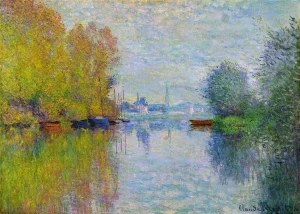
Claude Monet – Automne sur la Seine à Argenteuil (1873)
Original price was: $9.99.$4.99Current price is: $4.99.
Reviews
There are no reviews yet.