Painter Spotlight: Claude Monet
Claude Monet, a name synonymous with Impressionism. Born in Paris in 1840, Monet wasn’t just a participant in the Impressionist movement; he spearheaded it, forever changing the course of art history with his innovative use of color and light.
This article aims to unravel the mystery behind Claude Monet’s genius: from his early days as a caricaturist to becoming one of modern art’s most influential figures.
We’ll explore his life’s work, revealing how his approach to painting outdoors and capturing fleeting moments laid down the foundation for modern art as we know it.
Key Takeaways
- Claude Monet was born in Paris on November 14, 1840, and became a key figure in the Impressionist movement. He started with charcoal caricatures and later explored outdoor painting to capture light and nature.
- Monet’s work “Impression, Sunrise” coined the term Impressionism. It shows how he broke traditional painting methods by focusing on how light changes colors throughout the day.
- He developed a series of paintings like the Water Lilies and Rouen Cathedral to show one scene under different lighting conditions. This method showcased his mastery of color and atmosphere.
- Despite facing health challenges later in life, Monet continued to paint, particularly scenes from his garden at Giverny. His work remains influential today, inspiring modern art movements such as Pop Art and Minimalism.
- Museums worldwide are dedicated to preserving Monet’s masterpieces for future generations. His innovative techniques changed how artists perceive light and color, making him a pioneer of modern art.
Claude Monet: A Brief Biography
Claude Monet, born in France, changed art forever. He started painting at a young age and never stopped exploring light and nature throughout his life and work.
Birth and Childhood
Claude Monet was born on November 14, 1840, in Paris’s vibrant ninth arrondissement. Soon after, his family moved to Le Havre in Normandy. There, surrounded by nature, young Monet developed a lasting connection with the outdoors.
He began drawing at an early age, capturing the world around him with pencil and paper.
The second son of Claude-Adolphe Monet and Louise-Justine Aubrée Monet, he grew up in a middle-class household. His father owned a grocery business before shifting gears to sell ship supplies.
This change brought them to Le Havre when Monet was just five years old and marked the start of his journey into art. Inspired by Normandy’s bustling port and scenic landscapes, he enrolled in the Academie Suisse as his interest in painting took root.
Education and Early Training
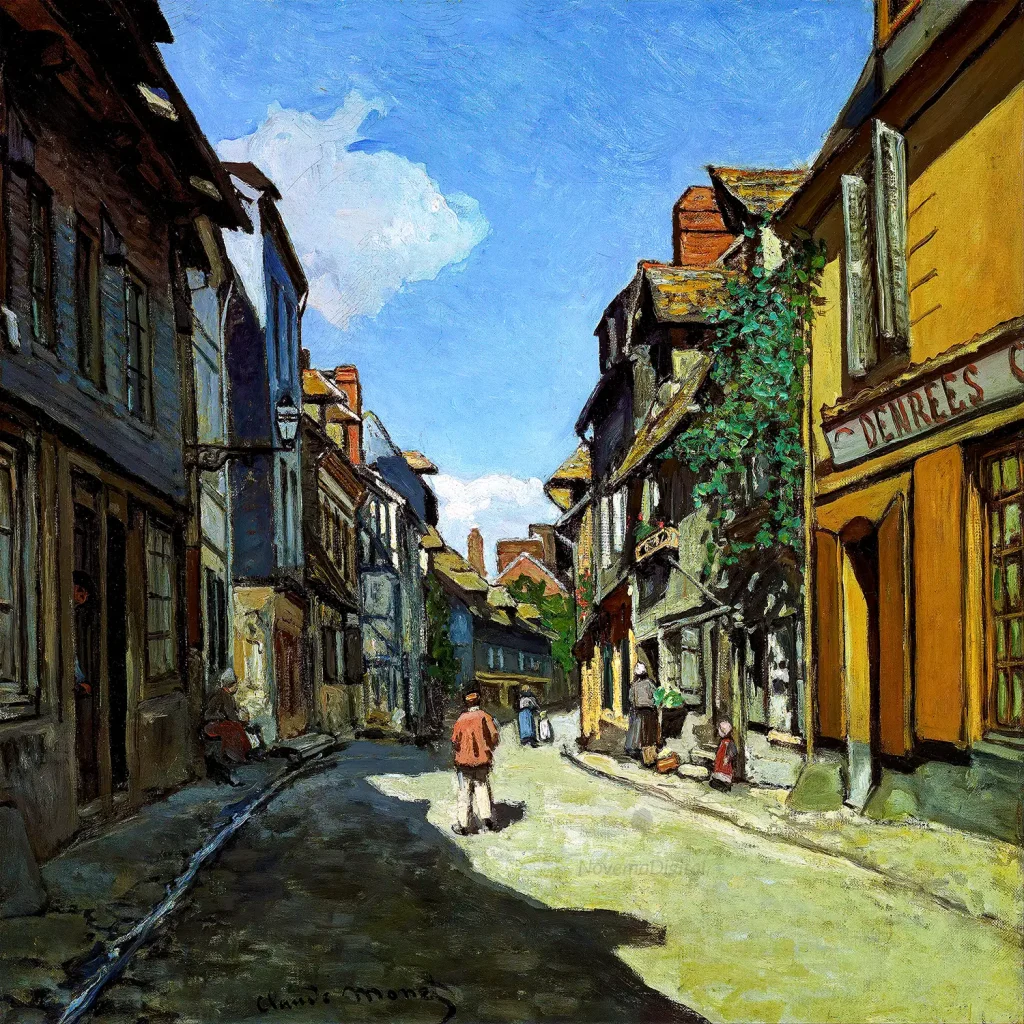
Monet began his artistic journey in Le Havre, where he gained local fame for his charcoal caricatures. Encouraged by his father, he started exploring the world of painting and drawing from a young age.
His talent quickly shone through. In 1859, Monet took a significant step towards professional artistry by studying at the Swiss Academy in Paris. This period was crucial; it exposed him to new techniques and ideas that would shape his future work.
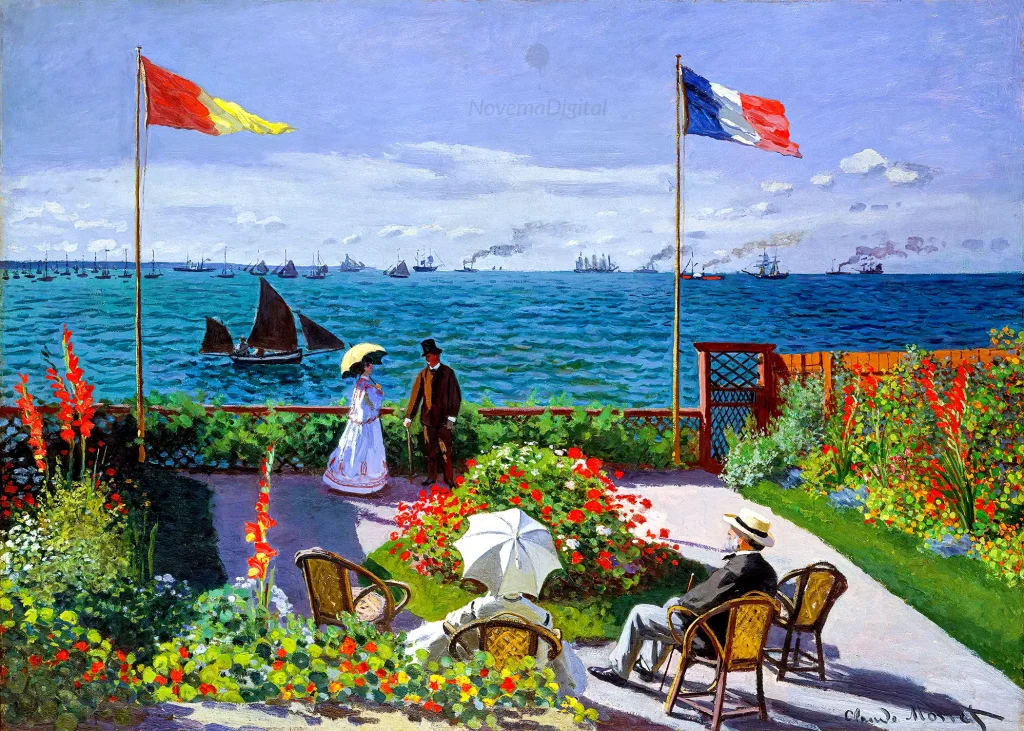
In Paris, Monet met Charles-François Daubigny, a painter from the Barbizon school known for his landscapes. Daubigny became an important influence on Monet’s development as an artist.
Their encounters sparked Monet’s interest in capturing natural scenes with a fresh perspective—leading the way to plein-air landscape painting that would become synonymous with Impressionism.
Mature Period
After honing his skills and defining his unique style, Claude Monet entered a transformative phase in the 1880s that would continue until he died in 1926. This period was marked by remarkable creativity and innovation, where he deeply explored series painting.
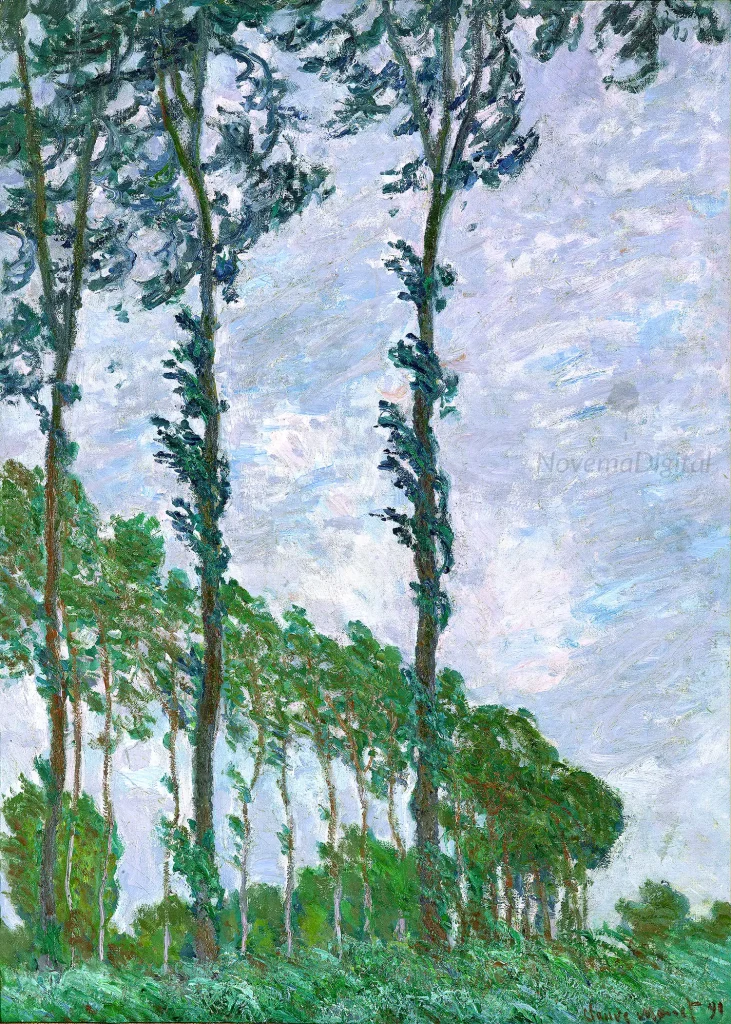
These works captured various subjects under differing conditions of light and atmosphere, showcasing Monet’s mastery over these elements. He painted seascapes, landscapes, and even cities, focusing on how changing light could alter the mood of a scene.
His dedication to capturing fleeting moments led him to create multiple sequences of the same subject at different times—from sunrise to sunset—and under various weather conditions.
This approach allowed viewers to experience the transient effects of light and color through his eyes. The Rouen Cathedral series is one prominent example where Monet painstakingly depicted this Gothic structure in more than thirty canvases—each portraying different atmospheric conditions and times of day.
Through these series, he challenged traditional painting methods and pushed the boundaries of Impressionism further than ever before.
Late Years and Death
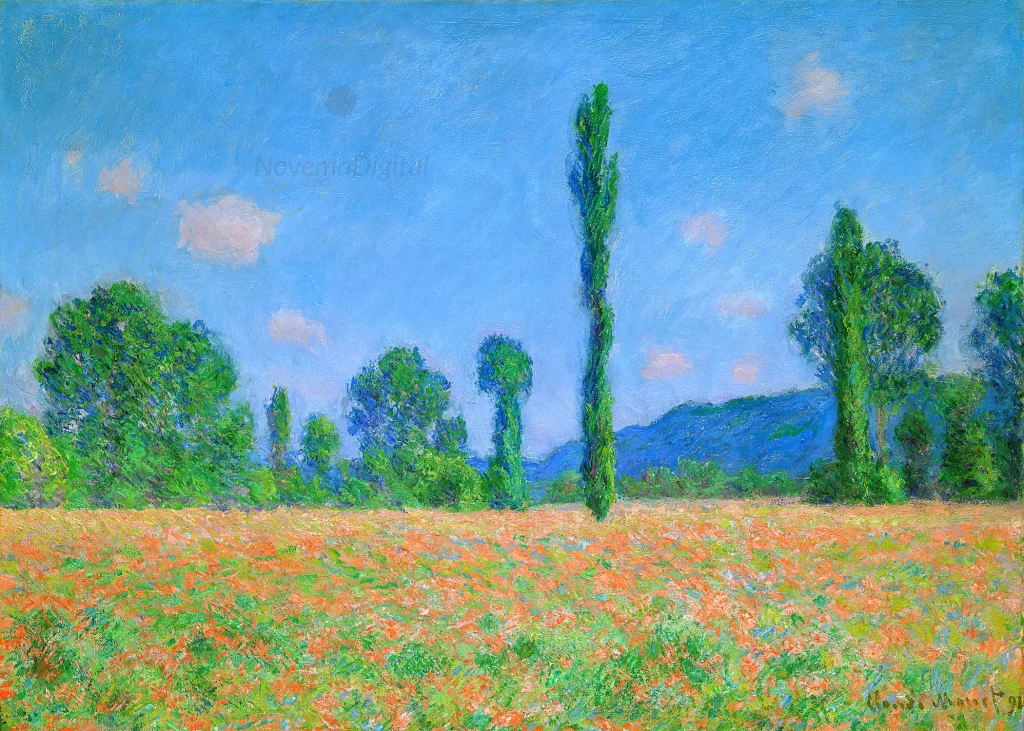
Claude Monet faced depression in his final years. His health worsened, leading to a diagnosis of lung cancer. Despite these challenges, he continued to paint, capturing the beauty of his garden at Giverny with even greater intensity and emotion.
Monet’s passion for painting stayed strong until the end.
Monet died on December 5, 1926, at his beloved home in Giverny. He was 86 years old. True to his wishes, his funeral was a simple affair. Friends and family gathered to say their goodbyes before laying him to rest in the Giverny church cemetery.
Monet’s Influence on Impressionism
Claude Monet transformed the art world, leading Impressionism to a new height where light and color became the soul of painting.
First Impressionist Paintings of Claude Monet
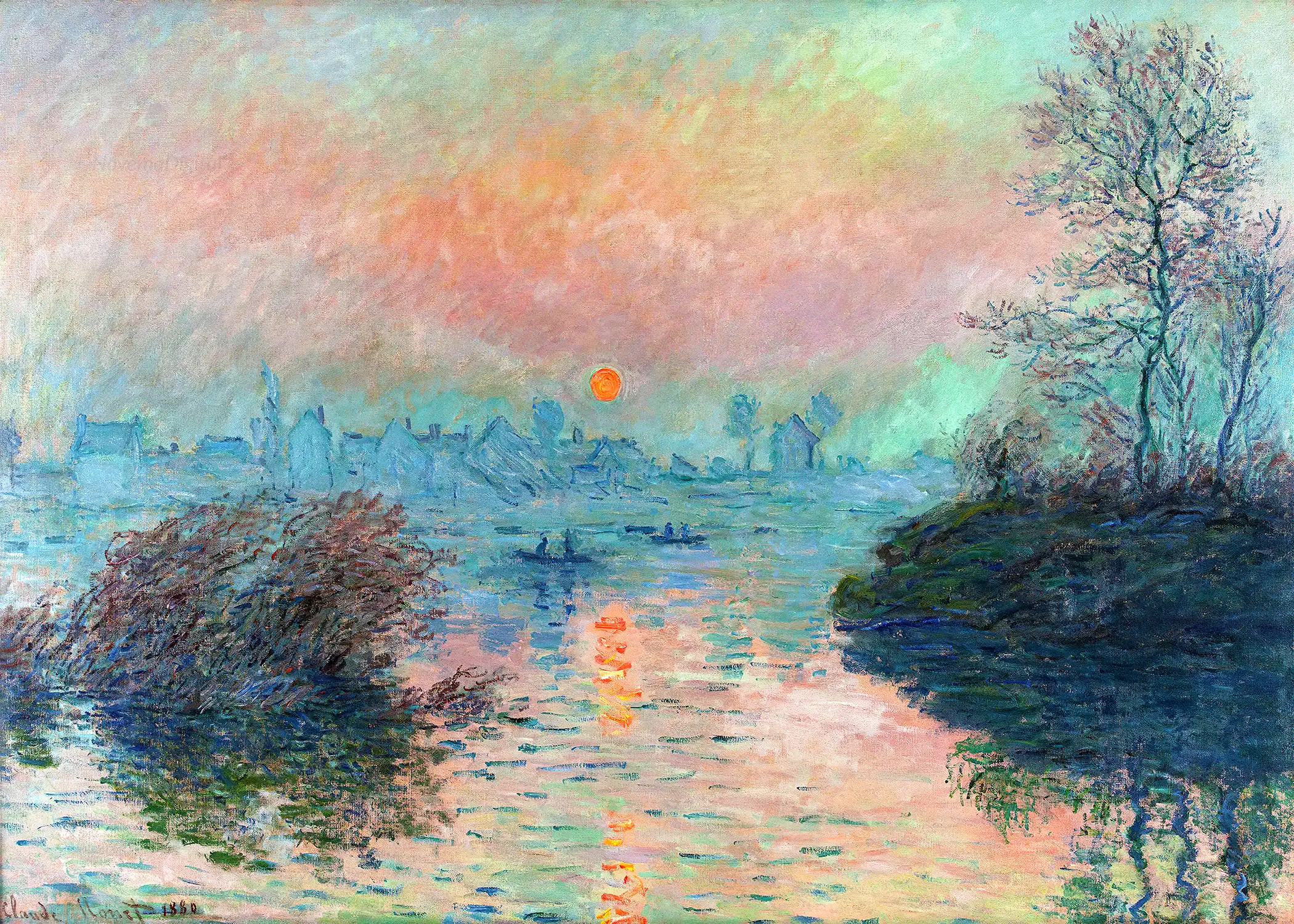
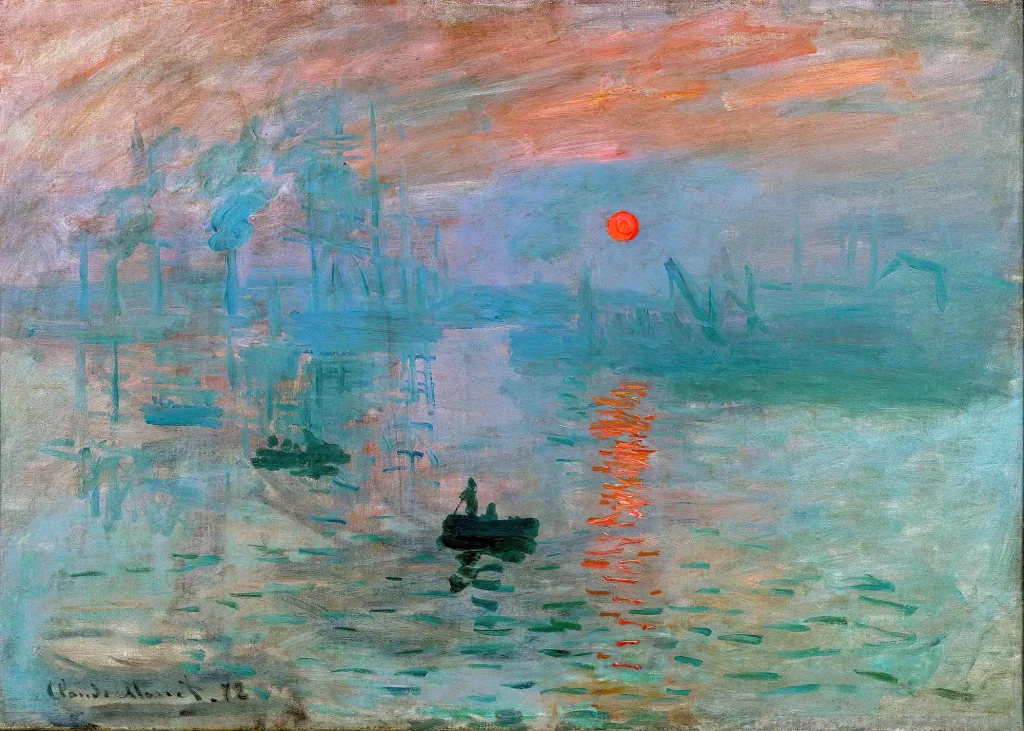
Monet’s first steps into Impressionism were bold and groundbreaking. His painting “Impression, Sunrise” gave the name to the entire movement. This piece showed a sunrise over Le Havre’s port, capturing fleeting moments of light with quick brushstrokes.
Monet focused on how light and color changed throughout the day. He painted outside, directly observing nature – this method is known as “plein air.” Many saw his work as radical because he broke from traditional techniques.
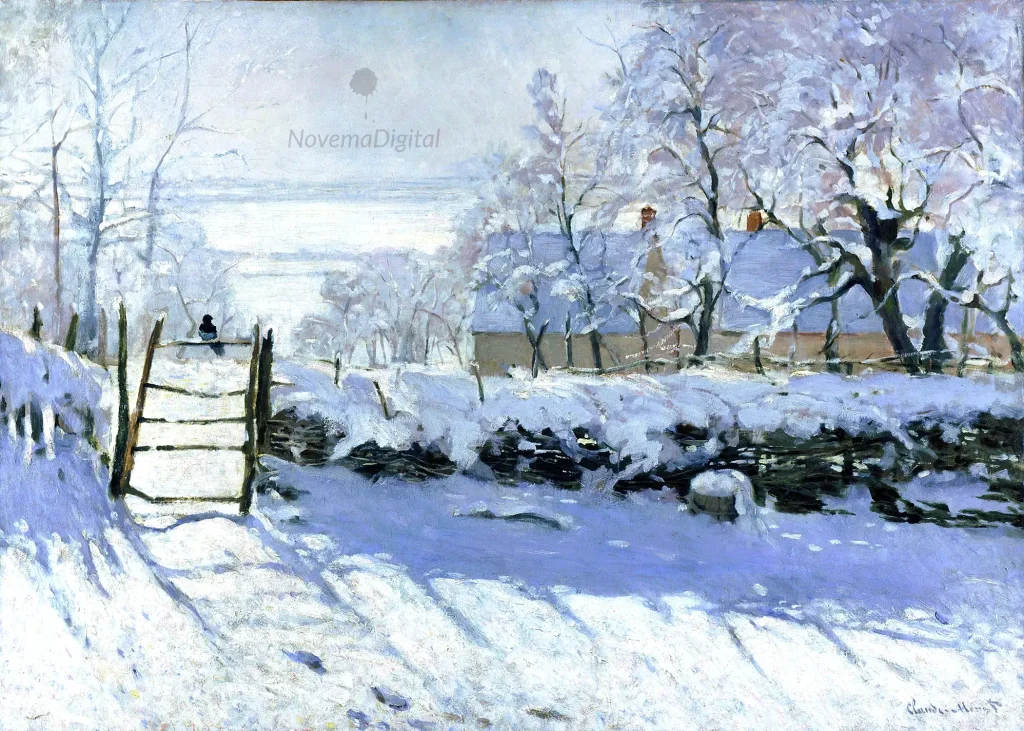
In these early paintings, Monet explored different times of day and various effects of light on landscapes. He often worked on several canvases simultaneously, each capturing a different angle or time of day.
By doing so, he showed how an ordinary scene could transform under changing lighting conditions. His dedication to capturing natural beauty led him to paint scenes across France.
Each artwork aimed to convey a specific feeling or atmosphere rather than depicting details precisely.
Later Impressionism
Building on his groundbreaking early work, Claude Monet continued to evolve and deepen his exploration of natural scenes in later years. His experiments with light and shadow became bolder and more innovative.
He played with the changing times of day and the transformations that light underwent, creating mesmerizing effects on canvas.
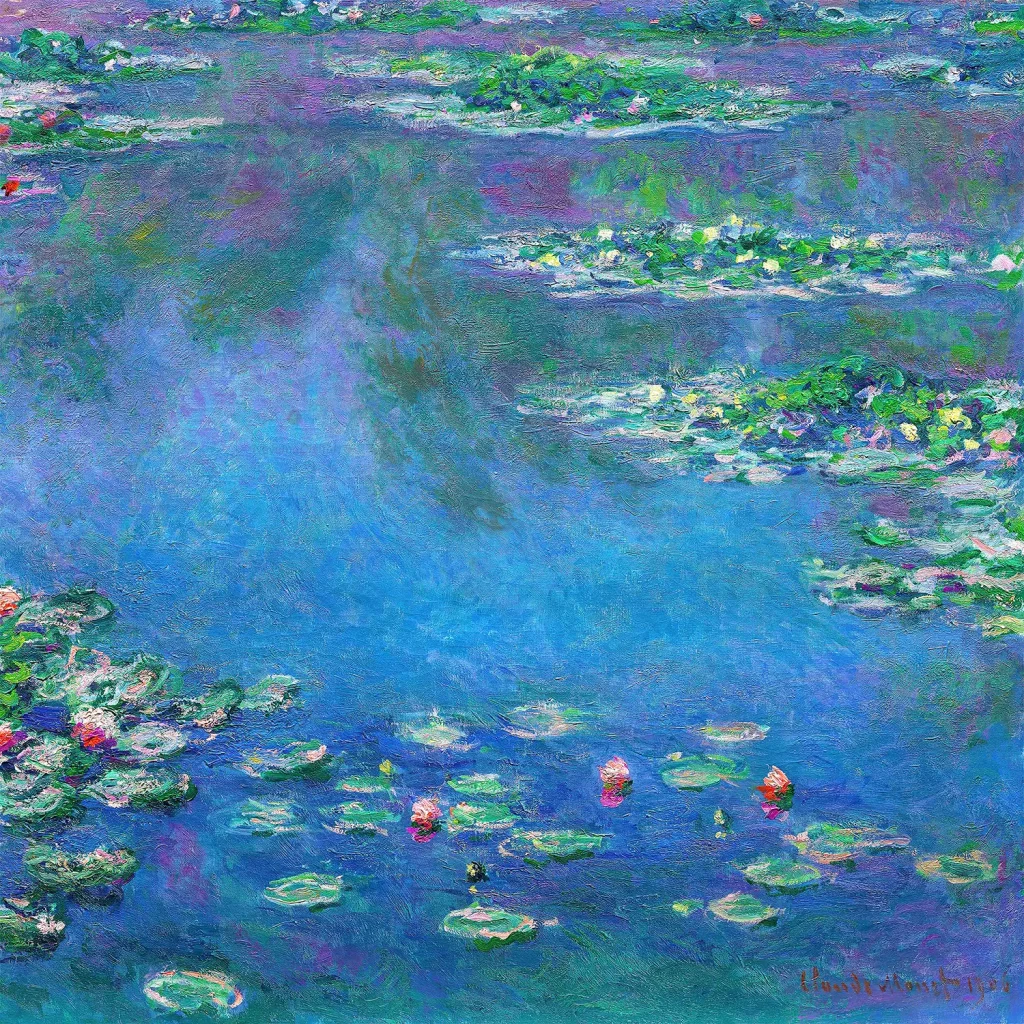
In this phase, Monet focused on series painting—capturing the same scene under different lighting conditions. The “Water Lilies” series, one of his most celebrated works, showcases this method brilliantly.
He painted the lilies in varying lights from dawn to dusk. This approach highlighted his skill in portraying atmospheric changes using color and texture, solidifying his influence on Impressionism’s legacy.
Monet’s Artistic Method and Style
Monet captured the fleeting moments of light and color in nature, crafting scenes that feel alive.
Observations of Light and Atmosphere
Monet was deeply fascinated by the ways light and atmosphere transform a scene. He explored this interest through various studies of the same subjects under different lighting conditions.
This passion led him to work outdoors, directly in the face of nature’s changing moods. His painting “Impression, Sunrise” (1872) is a prime example, capturing the fleeting effects of light on water with its innovative use of color and brushwork.
Through his keen observations, Monet contributed significantly to 19th-century color theory. He showed how colors change under different lights without relying on black for shadows or white for highlights.
Instead, he used pure colors side by side to mimic natural light’s diverse effects. This method allowed viewers to mix colors visually from afar, revolutionizing how artists approached painting landscapes and outdoor scenes.
Use of Color and Texture
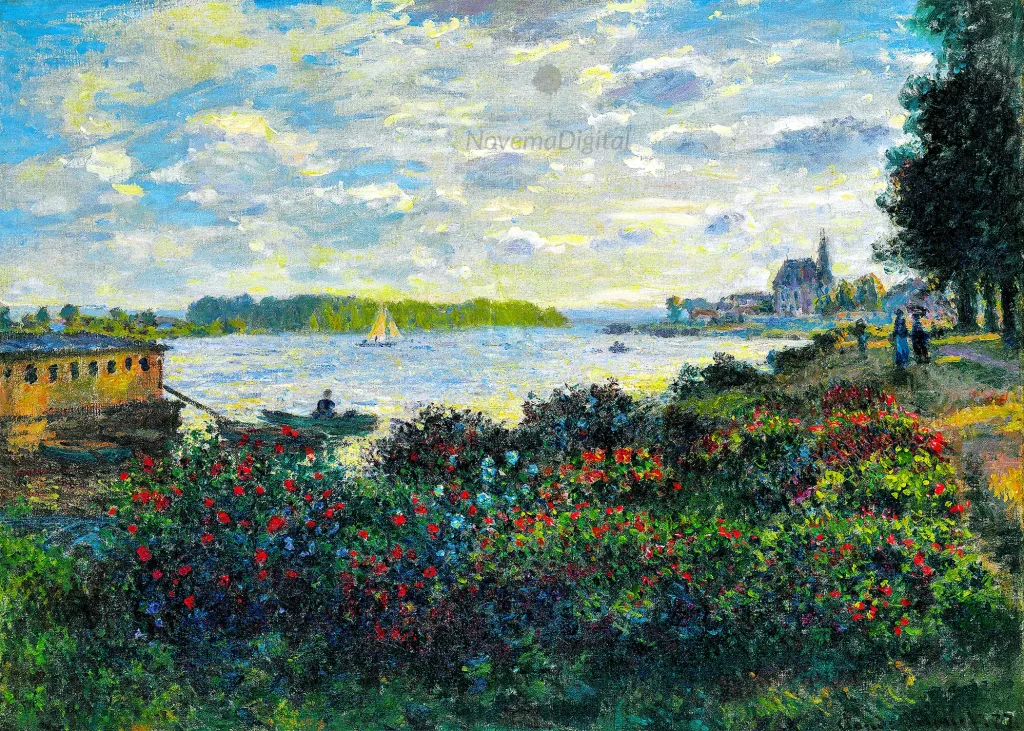
Monet brought his paintings to life using pure, primary, and complementary colors on light backgrounds. This technique helped reflect light, making his scenes vibrant with energy.
He preferred short, loose brush strokes and vivid hues to capture the essence of a moment. These choices allowed him to portray fleeting sensations rather than fixed realities. He also prepared his canvases with light-colored tones before adding various shades to shadows. This method contributed significantly to the impression of light dancing across his works.
By doing so, Monet’s paintings offer viewers an experience akin to witnessing the sparkle and play of light in natural environments. His approach conveyed not just images but atmospheres brimming with life and movement.
Repeated Themes and Sequences
Claude Monet had a unique way of exploring the world through his art. He often revisited certain themes and sequences, offering us varied perspectives on similar subjects.
- Circular shapes played a significant role in Monet’s compositions. He was fascinated by the round arches of the Waterloo Bridge and the circular puffs of smoke from factories and boats. These elements added a rhythmic quality to his works, connecting industrial progress with natural forms.
- Light and climate conditions were at the heart of Monet’s series painting. He created multiple works on distinct topics like haystacks, poplar trees, and the Rouen Cathedral to study these effects at different times of day and in various weather conditions. This approach helped him capture fleeting moments of beauty in everyday landscapes.
- Water lilies are among Monet’s most celebrated subjects, embodying his fascination with repeated themes. At his property in Giverny, he cultivated a water garden that became the inspiration for over 250 paintings. Each piece reflects changes in light, atmosphere, and seasons across time.
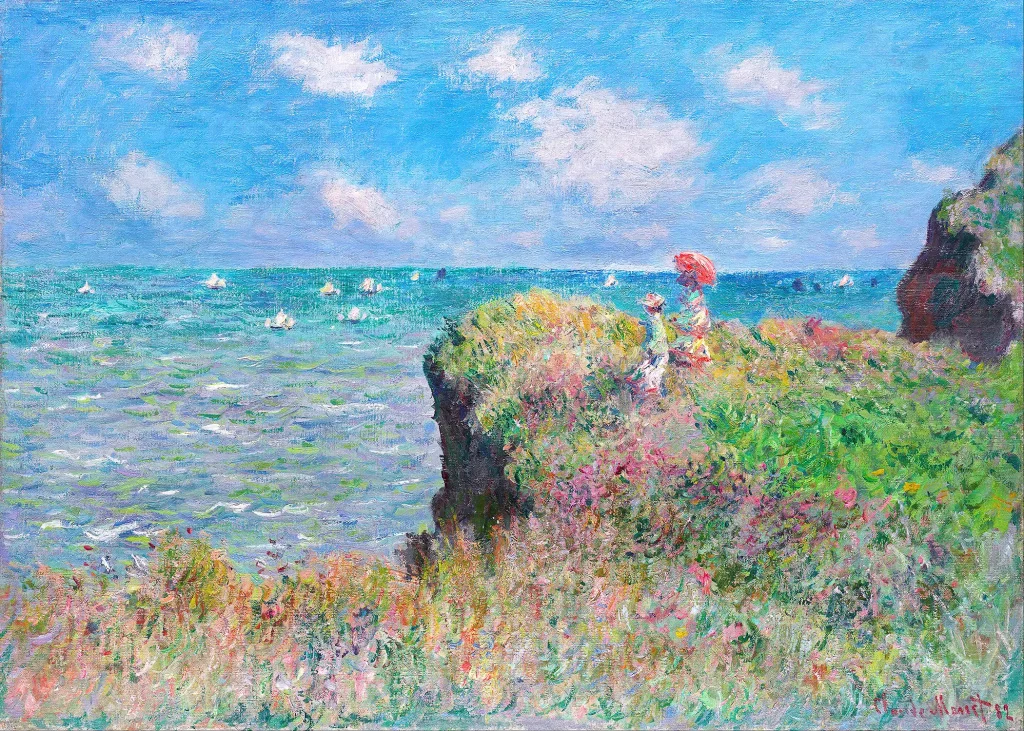
- The Normandy coast was another favorite subject for its dramatic cliffs and shifting skies. Monet returned to this theme throughout his career, drawn by the play of light on water and rock formations.
Notable Works by Monet
Monet created many paintings that changed how we see art. His most famous pieces capture stunning moments of light and color.
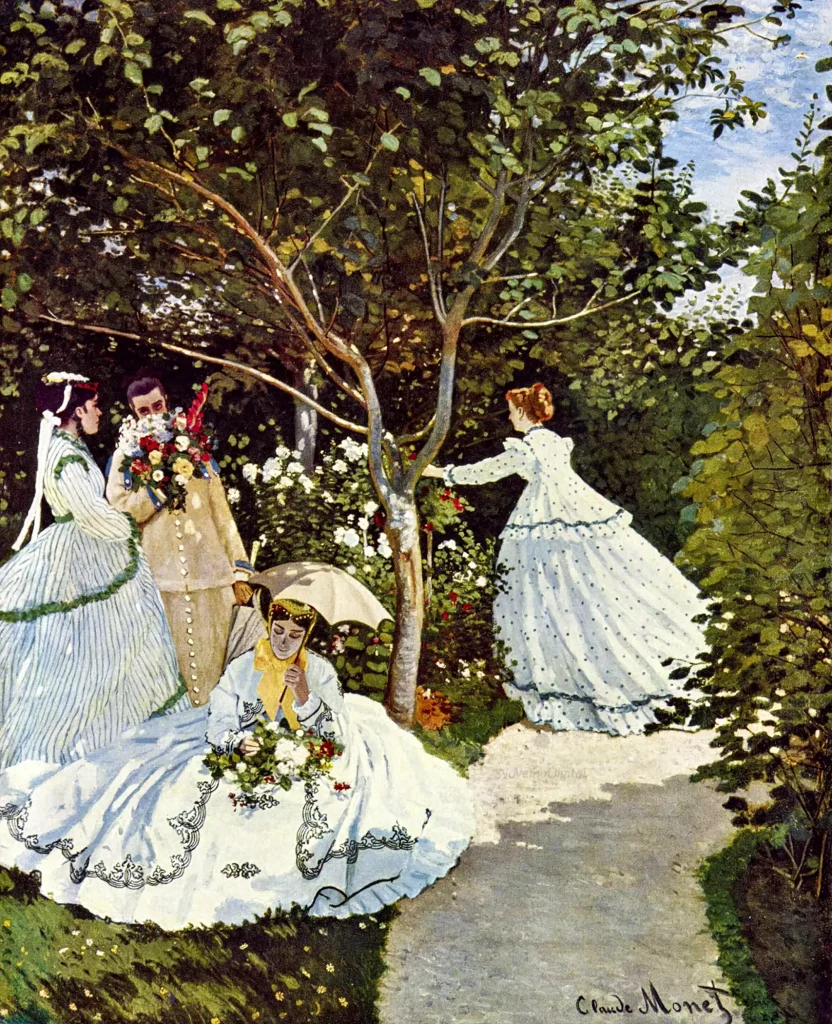
Women in the Garden
Claude Monet showcased his muse and wife, Camille Doncieux, in the timeless piece “Women in the Garden.” Painted in 1866, this artwork didn’t make it to the Paris Salons because of its rejection in 1867.
It stands out for portraying four women, all dressed in elegant dresses that beautifully catch the light and shadows. This painting is a typical example of French Impressionism’s embrace of natural light and momentary impressions.
Each figure modeled after Camille brings to life the vividness and dynamism Monet envisioned for the Impressionist style. Through “Women in the Garden,” viewers are invited into an intimate scene enriched by fine details—highlighting not just fashion through time but also Monet’s mastery over color and texture.
His work here transcends mere portraiture, offering instead a slice of everyday elegance captured with groundbreaking techniques that defined an era.
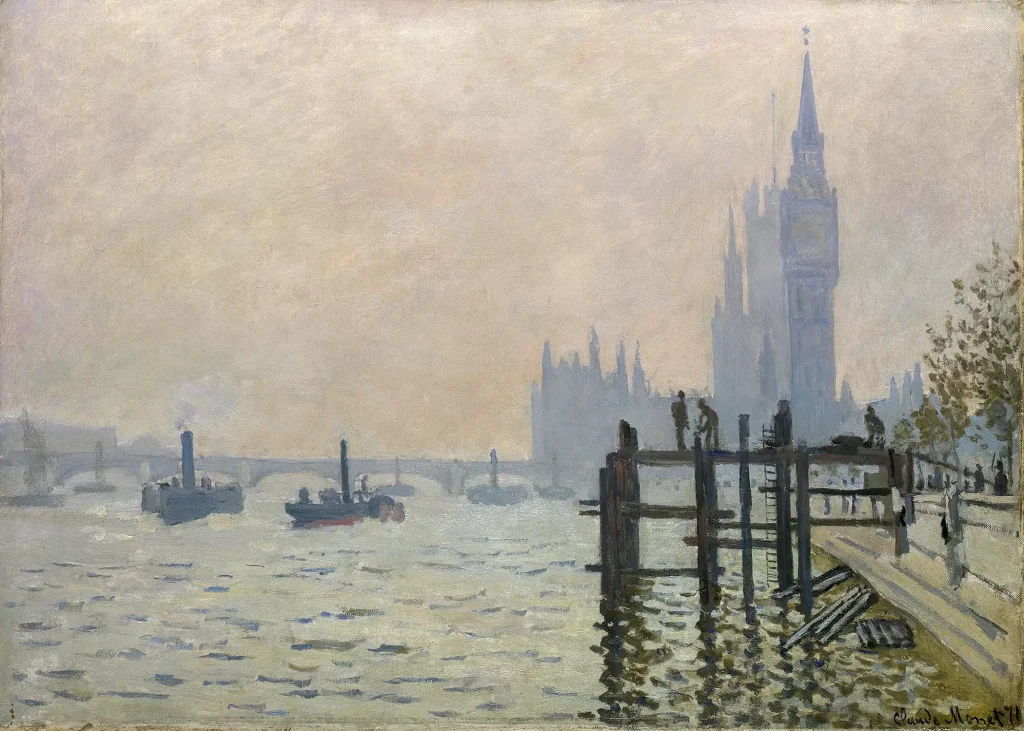
The Thames Below Westminster
During the tumultuous times of the Franco-Prussian War, Monet found refuge in London. There, he painted one of his most celebrated pieces, “The Thames below Westminster.” Setting up his easel on Victoria Quay gave him a perfect view of the Houses of Parliament.
His brush captured not just buildings but the very essence of London’s misty atmosphere.
This artwork is a testament to Monet’s impressionist style—blending colors and light to encapsulate a fleeting moment. Created in 1871, it offers an intimate look at the Thames River and nearby architecture through Monet’s eyes.
The painting is not just about what is seen; it’s about feeling the chilly air and damp fog that characterizes London mornings. Through this piece, Monet invites viewers into a world where light dances on water and historical edifices loom through fog, showcasing his unparalleled ability to capture atmospheric conditions.
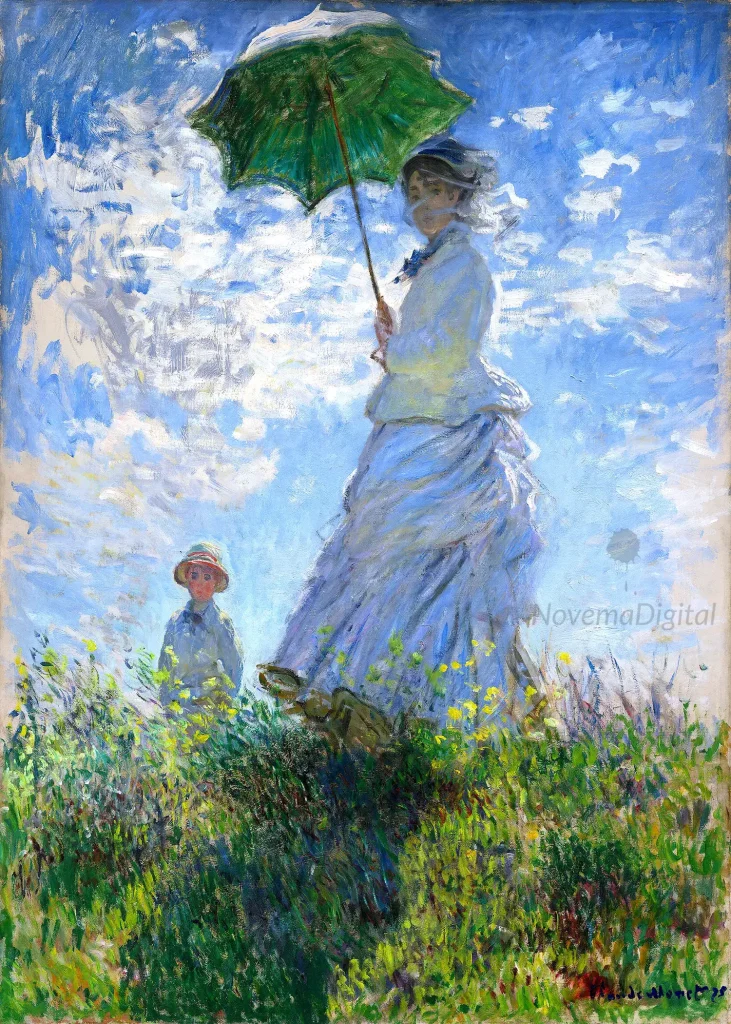
Woman with a Parasol – Madame Monet and Her Son
Shifting our focus from the serene waters of the Thames, we explore another facet of Claude Monet’s genius in “Woman with a Parasol.” This oil on canvas masterpiece, created in 1875, features Monet’s wife, Camille, and their son, Jean, enjoying a breezy day in a meadow.
The painting is notable for its dynamic, almost diagonal composition. Camille is positioned slightly off-center, creating a sense of movement as she and Jean appear caught in a gentle wind. This movement is further emphasized by how Monet has captured Camille’s parasol and dress fluttering.
Monet’s masterful use of light and color brings a sense of vibrancy to the painting. The sunlight filters through the clouds, casting a soft, dappled light on Camille and Jean. The color palette includes soft greens, blues, and yellows, reflecting the gentle quality of the day and adding to the overall freshness of the scene.
Overall, “Woman with a Parasol – Madame Monet and Her Son” is celebrated for its innovative approach to composition, light, and movement. It encapsulates Monet’s ability to blend the personal with the artistic, creating a work that is both aesthetically pleasing and deeply personal.
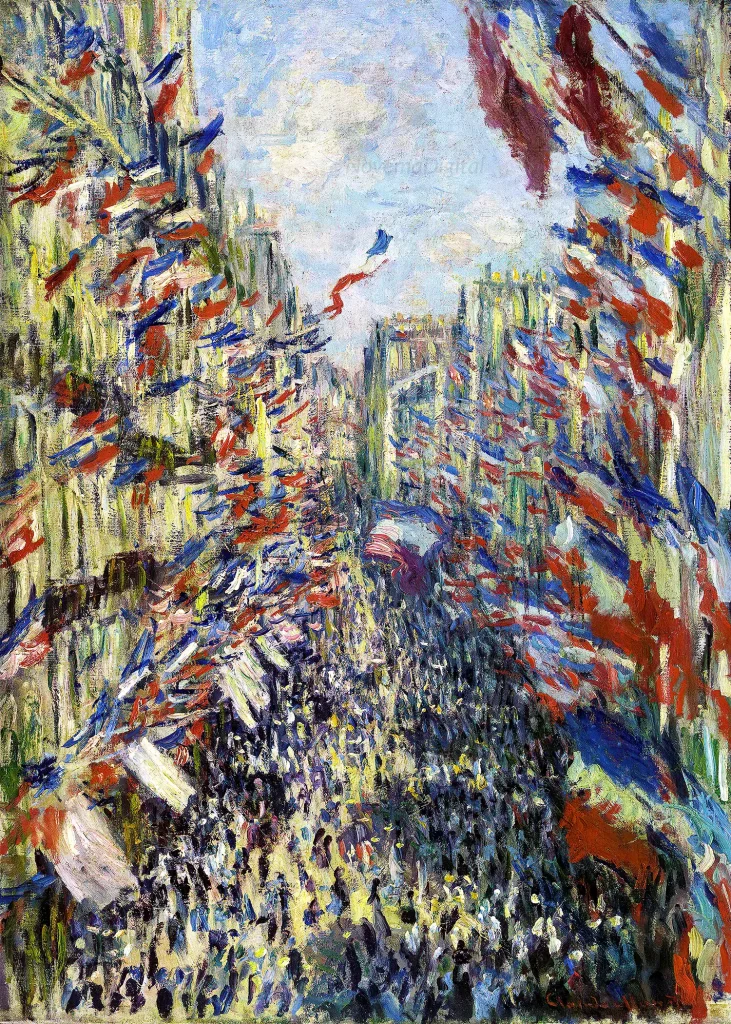
The Rue Montorgueil in Paris. Celebration of June 30th, 1878
Moving from the bustling scenes captured in “Boulevard des Capucines,” Claude Monet showcases a vibrant celebration with “The Rue Montorgueil in Paris. Celebration of June 30th, 1878.” This masterpiece brings to life the festive atmosphere of June 30, 1878, a day declared by the government to celebrate “peace and work.” Monet’s brush strokes vividly portray the streets filled with flags and jubilant crowds, encapsulating the spirit of national pride.
“The Rue Montorgueil” symbolizes France’s resilience and rebirth after its defeat in 1870. Through this painting, Monet depicted the joyous celebrations and explored advancements in vision and optics.
It was created alongside its twin piece, “The Rue Saint-Denis,” reflecting on one of many events during the festival that celebrated the launch of an international exhibition.
Water Lilies
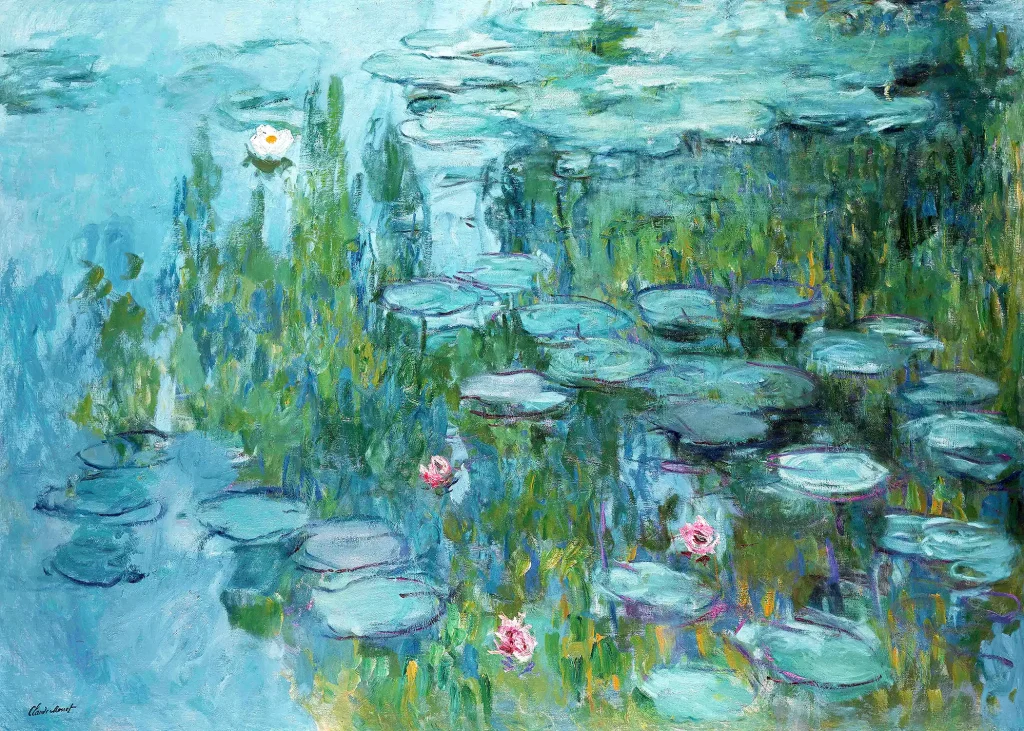
The Water Lilies series captures about 250 oil paintings by Claude Monet, showcasing his deep fascination with the natural interplay between garden, water, and sky. Monet found inspiration in his property at Giverny, where he meticulously designed a lily pond that served as the inspiration for this iconic series.
His initial works presented a balanced division of the pond’s environment—complete with plants, bridges, and trees—against a fixed horizon to draw viewers into a tranquil world.
As Monet advanced in age and his vision started to blur due to cataracts, his portrayal of water lilies evolved. The later paintings blur the lines between reflection and reality, offering an abstract view ahead of its time.
These pieces vary dramatically in size; some stretch over six feet in width, allowing onlookers to feel immersed in Monet’s aquatic garden. This groundbreaking approach influenced impressionism and paved the way for modern abstract art.
Monet’s Legacy
Monet’s work forever changed the art world, sparking a revolution that paved the way for modern art. His innovative use of light, color, and reflection continues to inspire artists around the globe.
Influence on Modernism
Claude Monet’s art became a cornerstone of the Modernism movement. His pioneering interest in serial displays of objects influenced both Pop Art and Minimalism. This innovation broke away from traditional forms, bringing a fresh perspective to modern art scenes.
His series paintings, such as Haystacks and Cathedrals, showcased Monet’s break from linear perspectives. Inspired by Japanese woodblock prints, these works emphasized two-dimensional surfaces, playing a crucial role in shaping modern art’s development.
Through his focus on atmosphere over modernity, he opened doors for abstract expressionists like Jackson Pollock, changing how artists perceived their environments and subjects.
Impact on Future Artists
Monet’s role in establishing Impressionism laid the groundwork for future generations of artists. His unique approach inspired many to explore new directions in art. Monet’s techniques, particularly his use of light and atmosphere, have become vital tools for artists aiming to capture the changing world around them.
His sequences of paintings offer a fresh perspective on how to observe nature.
His defiance against traditional Academy standards opened doors for artists to express their creativity more freely. This spirit of rebellion is seen as foundational within modern art movements today.
Moreover, Monet’s influence extends beyond just technique – his commitment to capturing fleeting moments has encouraged artists to see beauty in the transient aspects of life. Through this lens, Monet continues to inspire not just painters but creators across various disciplines seeking to push boundaries and explore new horizons in their work.
Preservation of His Works
Continuing Monet’s profound impact on art, efforts to preserve his masterpieces remain a vital part of honoring his legacy. Museums and institutions worldwide are dedicated to keeping his work safe and accessible for future generations.
A significant highlight is the ongoing painting conservation project for two original landscapes by Claude Monet. This initiative showcases the meticulous care taken to ensure his contributions to Impressionism endure.
Careful steps are also being taken to safeguard other pieces in public and private collections from damage or deterioration. Advances in technology aid conservators in repairing even minor issues before they become major problems, further guaranteeing that Monet’s vibrant scenes of nature will captivate audiences well into the future.
Conclusion
Claude Monet revolutionized the art world, embracing nature’s fleeting moments with his brush. His journey from a young talent to a founder of Impressionism highlights his enduring legacy.
Through innovative techniques, he captured light and atmosphere like no one before. Monet’s masterpieces continue to inspire artists and captivate audiences worldwide. Imagine looking at life through Monet’s eyes—seeing the beauty in every moment.
Let his dedication motivate us to find our own impressionistic view of the world around us.
FAQs
1. Who was Claude Monet?
Claude Monet, also known as Oscar-Claude Monet, was a famous French painter who played a crucial role in the Impressionism movement. His work focused on capturing light and natural forms.
2. What is “Impression, Soleil Levant”?
“Impression, Soleil Levant” is an iconic painting by Claude Monet that depicts a sunrise over the harbor of Le Havre, Normandy. This piece led to the naming of the Impressionist movement.
3. Did Claude Monet paint outdoors?
Indeed, he loved painting in the open air, or plein air landscape painting. He believed this method helped him better capture the changing effects of light and color in nature.
4. Can you name other artists close to Monet?
Monet had many artistic friends like Camille Pissarro, Alfred Sisley, Auguste Renoir, and Frédéric Bazille, who shared his ideas about capturing moments spontaneously through art.
5. Are there any museums dedicated to his works?
Absolutely! The Musée Marmottan Monet in Paris houses the most extensive collection of Monets’ masterpieces globally – including “Impression, Soleil Levant.”
6. What makes Water Lilies so special?
The series Water Lilies is perhaps one of Claude Monet’s most beloved works, in which he meticulously captured his garden’s beauty at Giverny using impressionist techniques, showing his unique ability to blend colors and reflection perfectly.