
Painter Spotlight: Franz Marc
Franz Marc, born in Munich, Germany, on February 8, 1880, was a famous painter and printmaker. He played a significant role in starting the German Expressionist movement. With friends, he created Der Blaue Reiter journal in 1911 to show how art can go beyond being pretty and having deep spiritual meaning.
Marc loved using bright colors and abstract shapes in his paintings. He believed animals showed pure feelings and spirituality that people could learn from. Some of his best-known artworks include “The Yellow Cow,” “Fate of the Animals,” and “The Tower of Blue Horses.” Each color he used had a deep meaning: blue represented masculinity, yellow represented femininity, and red tied back to the physical world.
After meeting artist Robert Delaunay in 1912, Marc’s style changed even more towards using broken shapes and lines full of energy. Sadly, his life ended early when he died in World War I in 1916, but he left behind ideas that continue to inspire today’s artists—especially those who see nature as deeply connected with us on a spiritual level.
Early Life of Franz Marc
Franz Marc grew up in a creative household, and his talents were nurtured from a young age. He eventually pursued art passionately, seeking education at the Academy of Fine Arts in Munich.
Childhood and Education
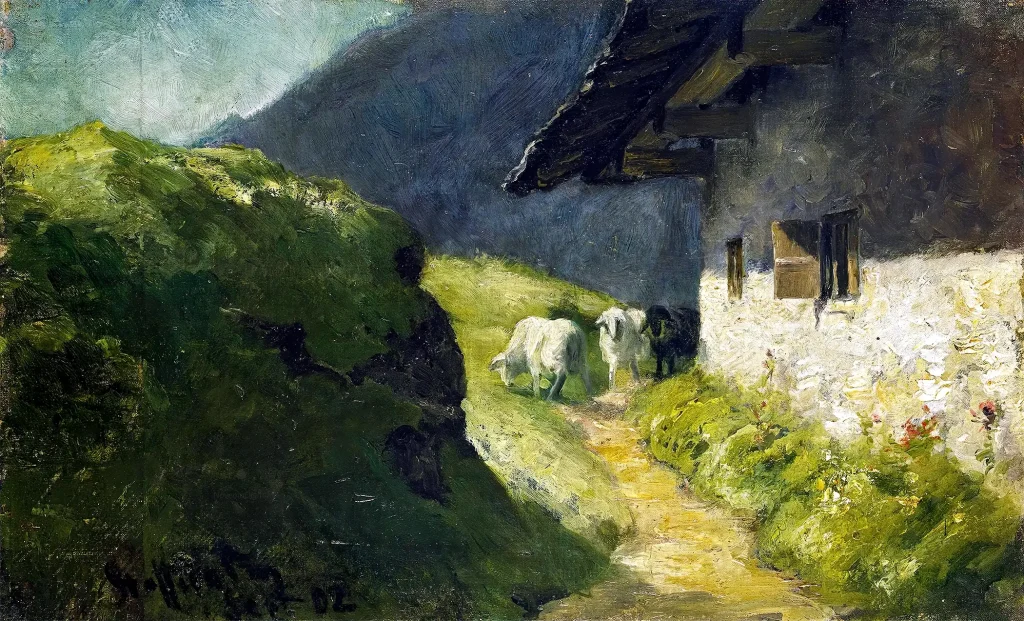
Marc grew up in Munich, Germany, the heart of artistic innovation. His father, Wilhelm Marc, was not only an amateur landscape painter but also a professor at the Academy of Fine Arts in Munich.
This environment profoundly influenced him from a young age. Initially dreaming of becoming a priest, his path took a sharp turn towards art under the influence of his family and the vibrant cultural scene around him.
Marc’s education in art began earnestly with his studies at the Academy of Fine Arts in Munich. During his education at the academy, Marc’s style began to take shape. He drew inspiration from icons like Paul Cezanne, Gauguin, and Van Gogh—artists who were breaking new ground with their use of color and form.
These influences steered him away from traditional paths and toward innovative artistic explorations.
Family Influence
Growing from his early educational experiences into a burgeoning artist, Franz Marc found profound inspiration within his own family. His father, Wilhelm Marc, wasn’t just any painter; he was a landscape artist deeply invested in theology.
This unique blend of art and spirituality filled their home, exposing young Franz to the vastness of nature’s beauty and the complexity of spiritual thought from an early age.
The artistic atmosphere fostered by his father’s profession and the family’s spiritual musings cultivated Marc’s distinctive approach toward art. He didn’t see animals as mere subjects but as vessels carrying deeper meanings – a reflection of his contemplation on Christianity’s essence and cultural ramifications.
This influence shaped Marc’s perception of the world around him and how he represented it through his paintings.
Artistic Career
Franz Marc painted his dreams, filling canvases with vivid colors and emotions. His journey took him through Europe, where art became his voice and vision.
Travels to Paris
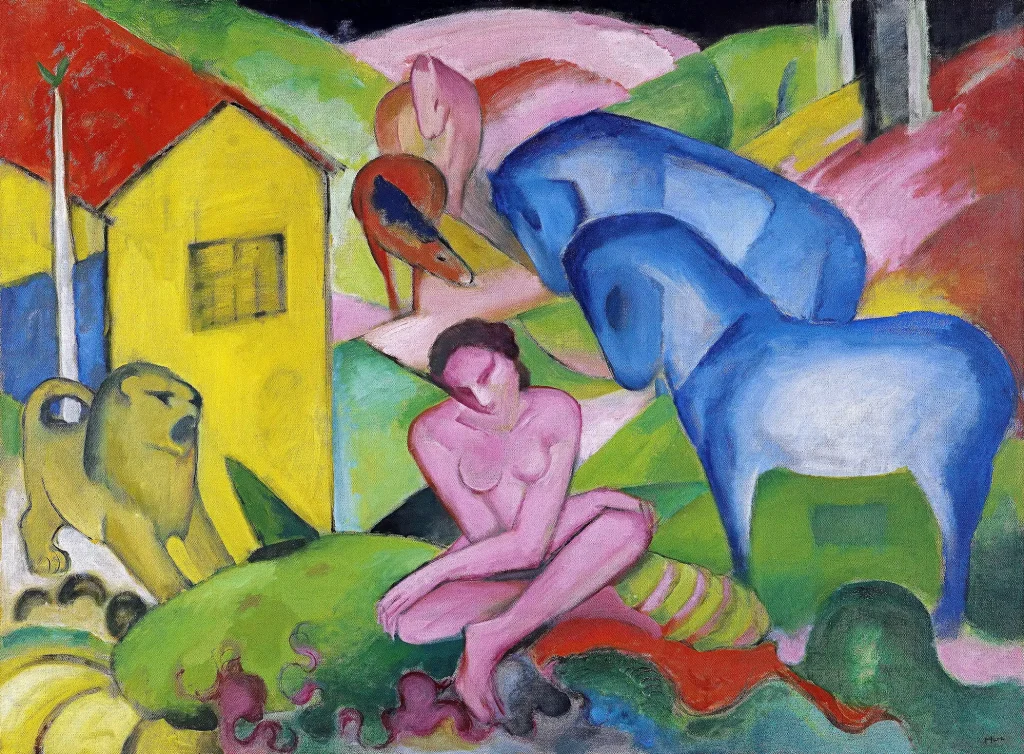
Marc visited Paris several times, starting in 1903. These trips played a considerable role in shaping his artistic vision. He first saw the work of Vincent van Gogh in 1907, which left a lasting impact on him. Van Gogh’s paintings’ vibrant colors and emotional intensity inspired Marc deeply.
Marc also encountered other modern movements like Cubism, Impressionism, and Post-impressionism throughout his visits. He was especially drawn to the Fauves for their bold use of color.
This exposure helped Marc develop a unique style, blending these influences with his love for animals, leading to mystical paintings full of color and emotion. His time in Paris marked a significant shift towards abstraction and symbolism in his art, setting him apart from other artists of his time.
Involvement with the Futurist movement
After his time in Paris, Franz Marc’s artistic journey took a turn towards the future. He met Robert Delaunay in 1912. Delaunay was known for his innovative use of color and design, which perfectly aligned with the futurist movement’s emphasis on dynamism and technology.
He started to incorporate these futuristic ideas into his art. Inspired by movements that broke traditional boundaries, he embraced new ways to express speed, energy, and modern life through bold colors and dynamic compositions.
This phase marked a significant evolution in Marc’s style as he explored beyond the realms of expressionism into futurism’s vibrant universe.
Development of Marc’s Distinct style
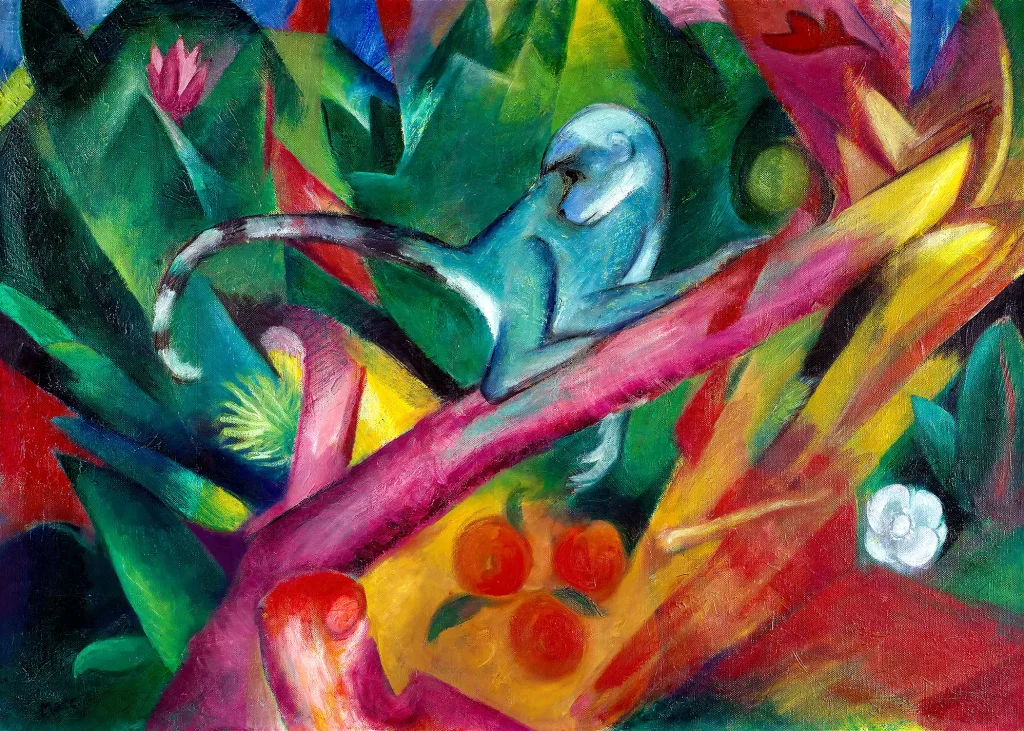
Moving from his involvement with the Futurist movement, Franz Marc began to carve out a distinct style that set his works apart. He found inspiration in color symbolism and abstraction, elements that became central to his artistic expression.
Marc’s love for animals deeply influenced his subjects, portraying them as pure and spiritual beings amidst vibrant, dreamlike backdrops. He aimed to depict not just the physical form but also the energy and dynamism inherent within these creatures.
Marc integrated theories of psychology and philosophy into his art, linking mood with abstract forms and vivid colors. This approach allowed him to develop a unique visual language that communicated more than just the appearance of the subject matter—it conveyed emotions and ideas.
His style evolved further as he experimented with cubism, adding another layer of complexity to his work through fragmented shapes and new perspectives on familiar themes.
Der Blaue Reiter Journal and Expressionism
Franz Marc co-founded Der Blaue Reiter journal, aiming to challenge traditional art norms. This bold move sparked a wave of innovation in the Expressionist movement, marrying vivid abstraction with emotional depth.
Formation and Purpose
Wassily Kandinsky and Marc launched Der Blaue Reiter in 1911. They aimed to go beyond everyday life by exploring art’s spiritual essence. This movement brought together artists who felt disconnected from reality due to rapid modernization.
They aimed to express through painting the deep emotional and spiritual values they cherished.
Der Blaue Reiter (The Blue Rider) was not just a name but a vision shared by its founders for their exhibitions and publications. The artists involved were united in their quest for abstraction, symbolic imagery, and spiritual references in art.
By doing so, they hoped to transcend mundane experiences and redefine artistic expression with a focus on abstract themes.
Impact on Marc’s Artistic Style
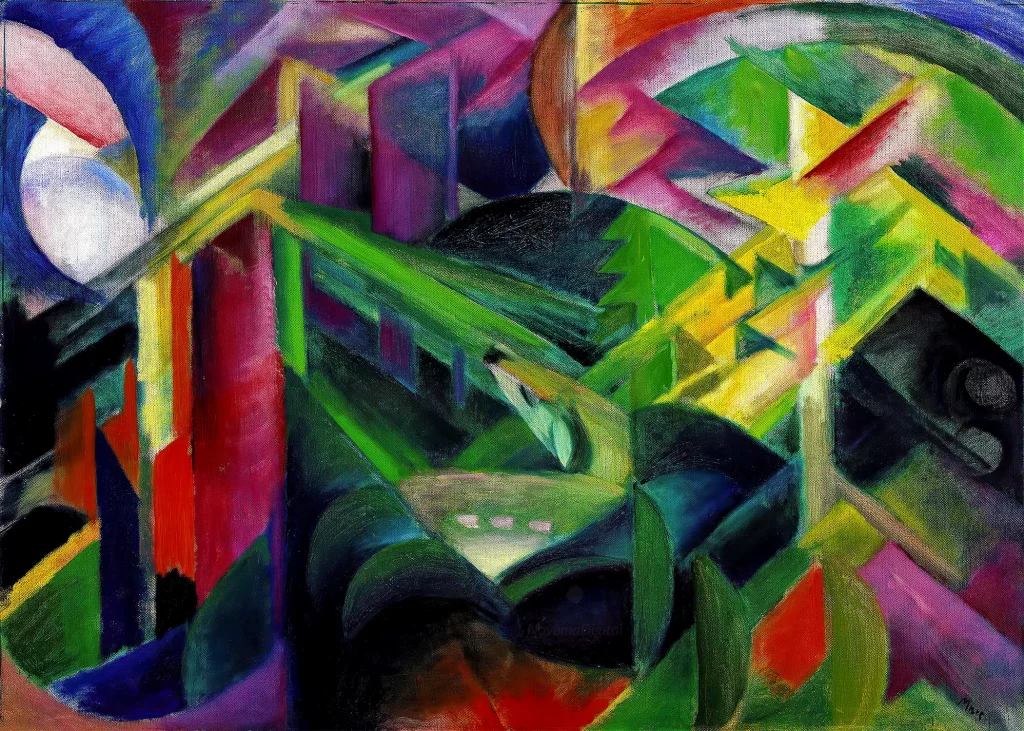
The Der Blaue Reiter group profoundly influenced Marc’s art’s shift toward abstraction and spiritual themes. He began experimenting with naturalism and realism but soon found a passion for abstract forms that better expressed his inner feelings and ideas.
This change marked a significant turn in his career, guiding him away from depicting the physical world to exploring deeper emotional resonances.
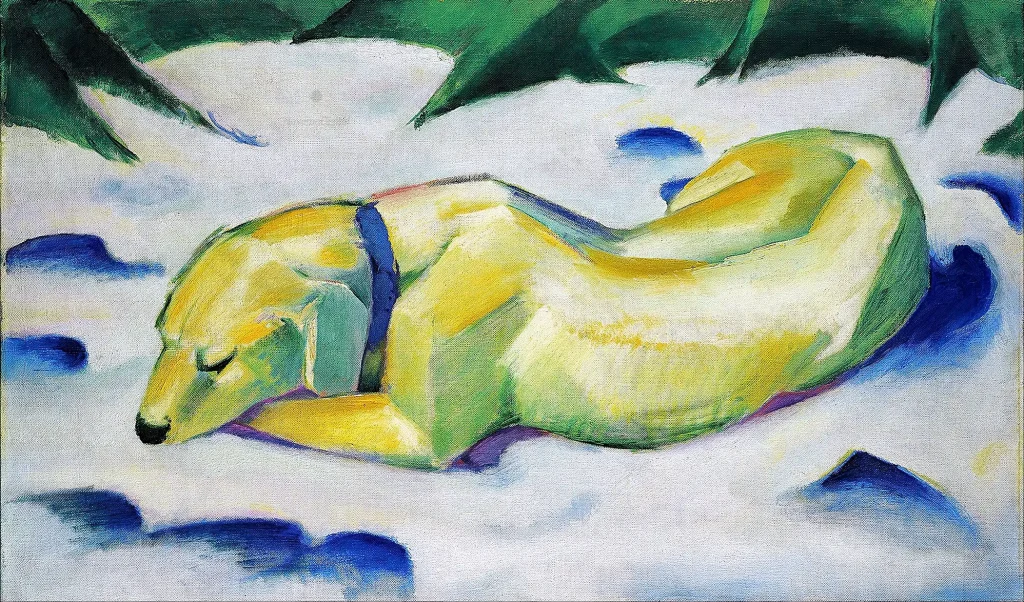
German Expressionism and contacts within Der Blaue Reiter introduced Marc to Cubist faceting and Futurist force lines. These elements became crucial in developing his distinct style, blending dynamic energy with vivid color fields to capture the essence of his subjects beyond their mere appearance.
His work started reflecting a harmonious balance between form, color, and meaning—setting the stage for some of his most memorable pieces.
Marc’s Signature Artwork
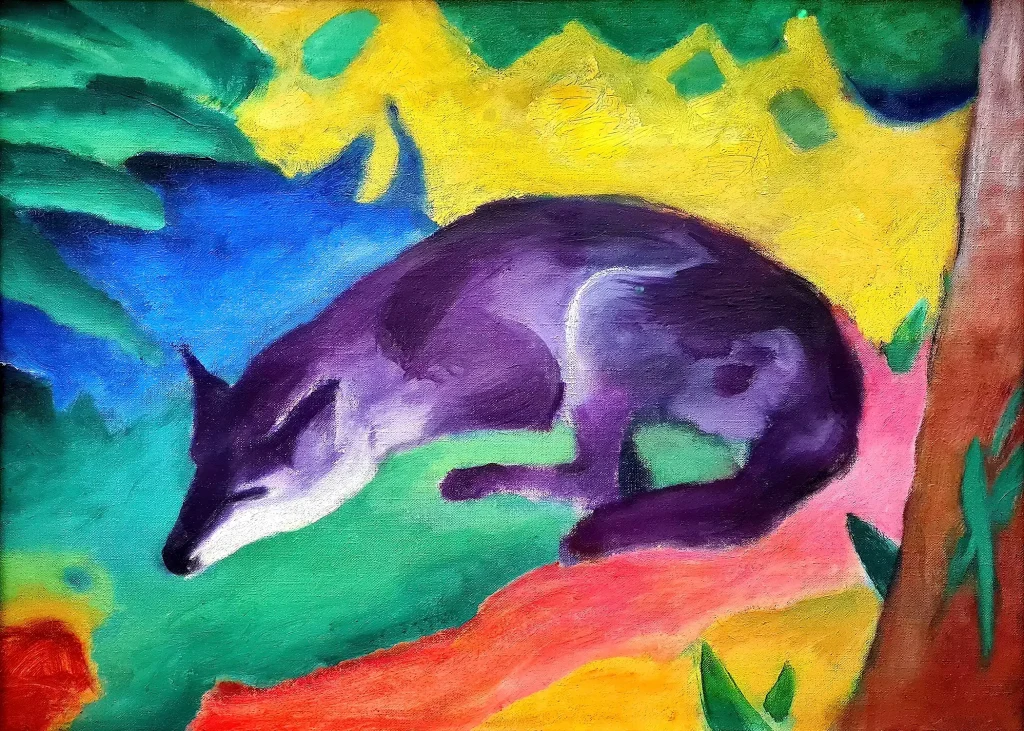
Franz Marc created masterpieces that still captivate art lovers around the world. His bold use of color and abstract shapes makes each piece a window into his creative genius.
The Yellow Cow
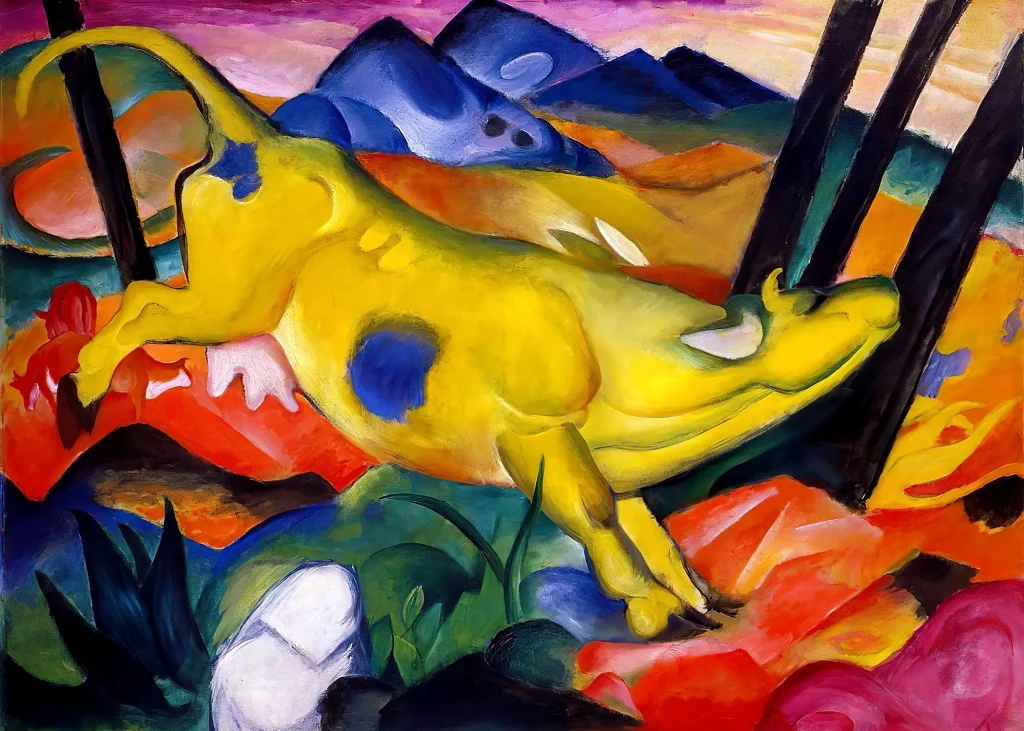
The Yellow Cow, painted by Franz Marc in 1911, bursts with vivid colors and dynamic forms. Marc gave different colors specific meanings—yellow stood for femininity and sensuality.
This painting captures those qualities perfectly, showcasing a bright yellow cow leaping against a colorful backdrop. It departed from his earlier works, inspired by German nudists’ embrace of freedom and nature.
This artwork quickly rose to fame, becoming one of Marc’s most recognized pieces. The Yellow Cow reflects an artistic style and Marc’s interpretations of color and form.
Through this painting, Marc delved deep into expressionism—a movement he was heavily involved with through Der Blaue Reiter journal—and showcased his unique ability to convey emotion and abstract ideas using colors as his language.
Fate of the Animals
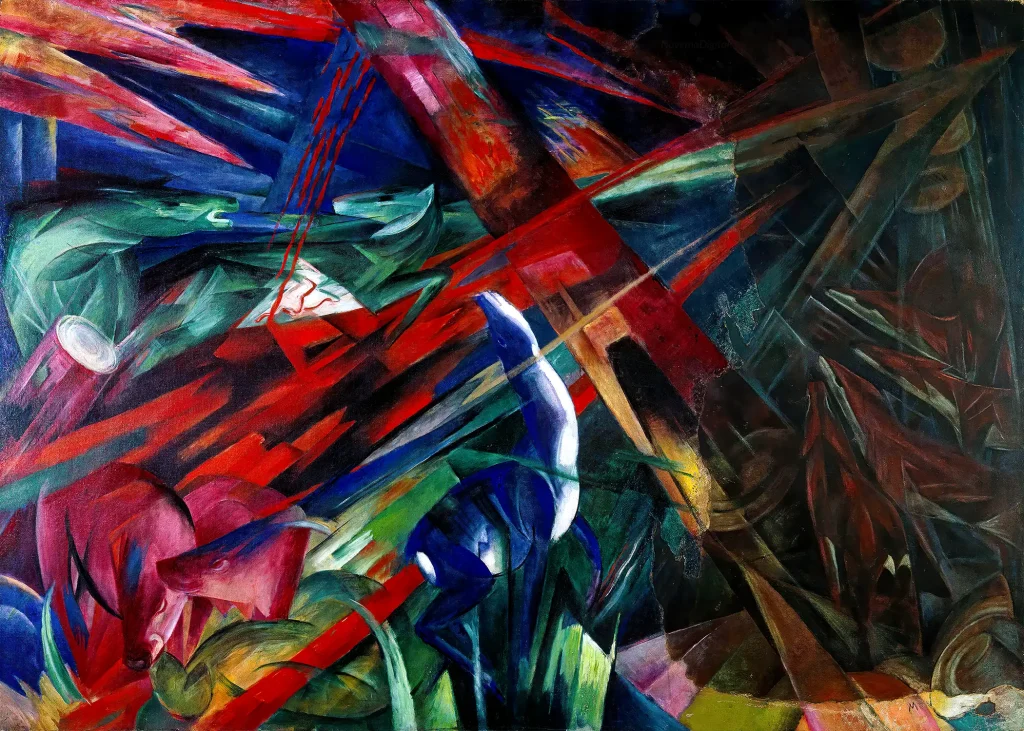
Franz Marc created “Fate of the Animals” to show how people cause pain and chaos in the animal world. He saw animals as pure beings, full of emotion and beauty that humans have lost.
This painting is a powerful message about animals being deep symbols for human souls and our journey.
Marc believed in connecting with nature through these creatures. His work reflects a deep respect for their role in understanding spirituality and humanity’s essence. He invites us to see the world more compassionately through vivid colors and dynamic scenes.
The Tower of Blue Horses
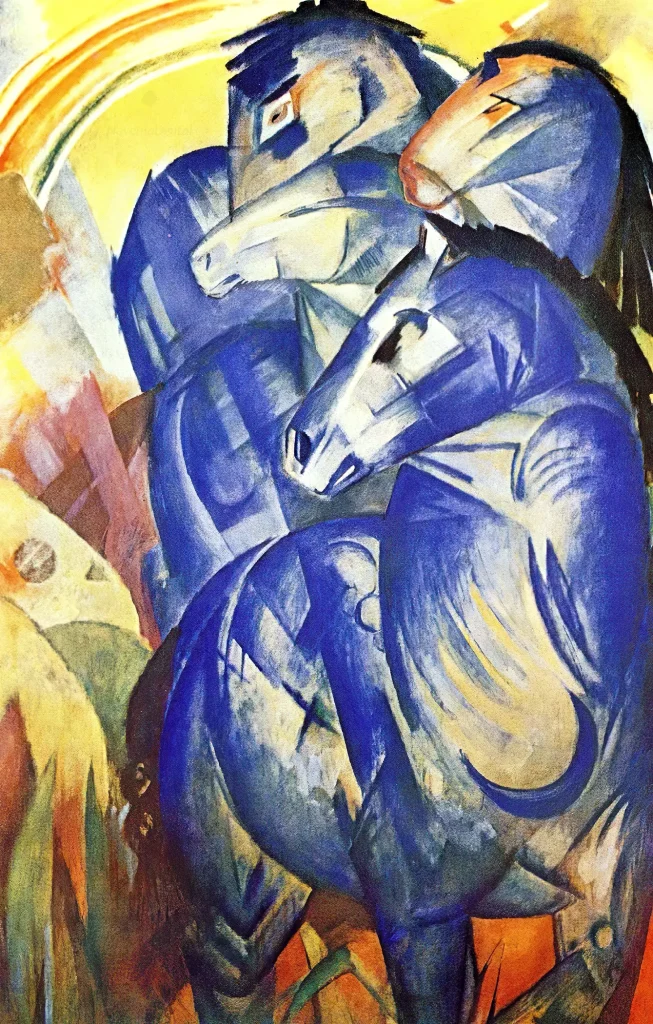
The Tower of Blue Horses, painted in 1913 by Franz Marc, stands out as a masterpiece showcasing his expressionist style. This oil painting captures four majestic blue horses, layered atop one another against a vibrant background.
Marc chose the color blue to dive deep into harmony and emotional depth, reflecting on man’s connection with nature. The artwork symbolizes apocalyptic fears and exemplifies Marc’s innovative use of color to convey deeper meanings.
Sadly, this significant piece went missing over time after being declared “degenerate” by the National Socialists in 1936. Its loss remains a substantial blow to German expressionism and abstract art history.
Despite its unknown whereabouts, The Tower of Blue Horses continues to be celebrated for its impactful representation of symbolic animal motifs and profound exploration into color theory and emotionality—qualities that profoundly influenced the evolution of Marc’s artistry.
Continuing, we delve into how abstraction marked a pivotal turn in Franz Marc’s creative journey.
The Evolution of Marc’s Art
Franz Marc’s journey through art led him from vivid animal portraits to bold, abstract landscapes, showing us a world transformed by color and form.
Abstraction
Marc saw abstraction as more than just a style; it was a way to express the universal creative force. He broke away from traditional forms, depicting animals in fragmented, abstract shapes, highlighting their deep connection with nature.
The Fauvists deeply influenced this approach and prioritized color as a means of expression.
His bold use of abstraction paved the way for future movements, including Abstract Expressionism. Artists within this movement took cues from Marc’s work, focusing on creating simpler forms charged with mystical energy.
These works broke from traditional forms to capture emotions and themes like harmony and discord among natural elements. His style invited people to see beyond the surface—to understand life’s spiritual aspect through the dynamic interplay of colors.
Colorscapes
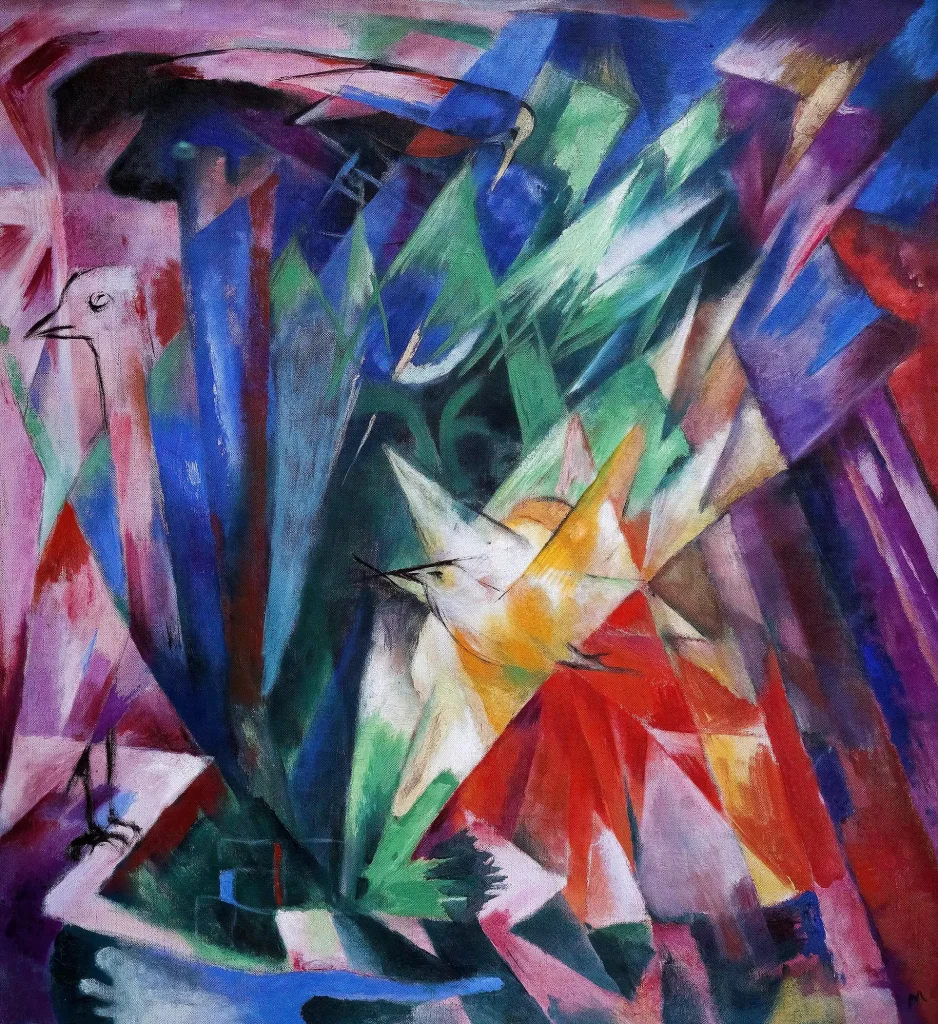
Franz Marc revolutionized the art world with his vibrant colorscapes, using bold and bright colors to create a sense of harmony. He saw colors as symbols: blue represented masculinity, yellow femininity, and red captured the essence of the physical world.
These choices weren’t random; they were deeply connected to Marc’s views on nature and spirituality.
In his creations, primary and secondary colors burst forth in their most intensely saturated states—a form of expressionism that conveyed personal symbolism.
The backgrounds in his animal paintings transformed into Cubistic, linear color fields—blurring the lines between abstractionists’ works and impressionist influences. Marc left an indelible mark on German Expressionism through this innovative approach, connecting deeply with viewers’ emotions through nature-inspired hues and forms.
The Emphasis on Animal and Human Forms
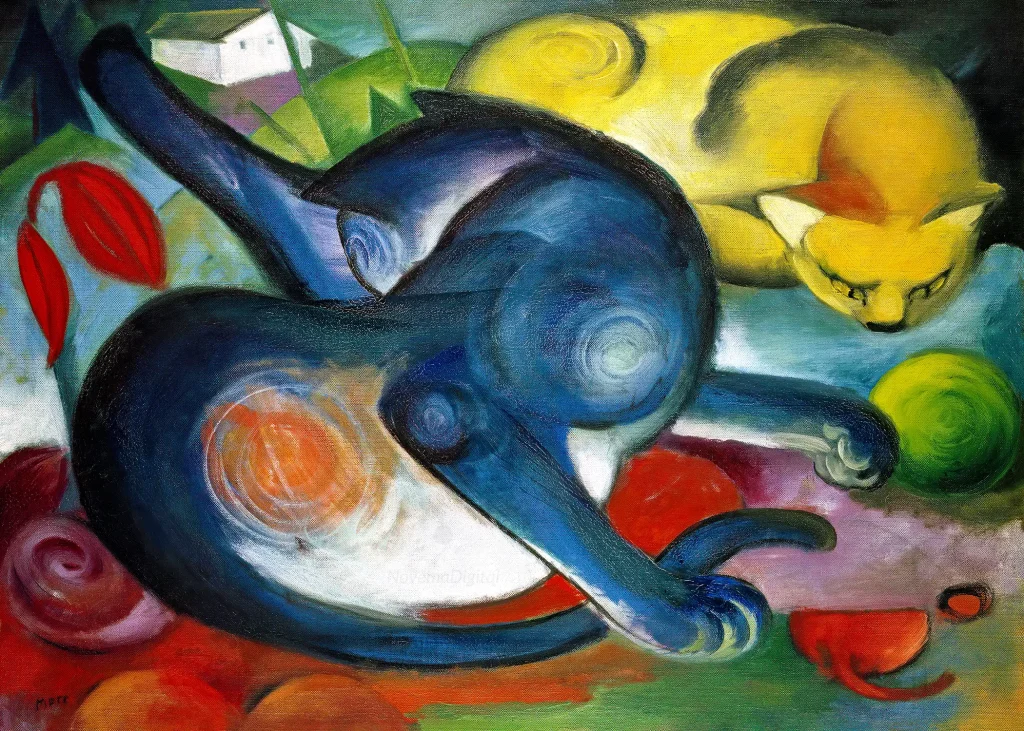
Moving beyond colorscapes and abstraction, Franz Marc’s work focuses on the intricate dance between animal and human forms. His paintings often showcase animals in vibrant colors, revealing a deep connection between man and beast.
This recurring theme highlights his belief that animals might even be superior to humans. Through his art, Marc explores the evolutionary ties binding humans to their animal counterparts.
Marc’s unique perspective on this relationship challenges viewers to consider the spiritual link shared with animals. He suggests that understanding this bond is vital to unlocking greater truths about our own existence.
Such themes are not just prevalent but central in his works, where emotion and essence leap from canvas to viewer, igniting questions about life’s interconnectedness.
Franz Marc’s Tragic Death and Legacy
Marc lost his life in World War I at 36, his involvement in the Battle of Verdun ended with him being killed by a shell splinter.
This loss cut short what could have been an even more influential career in the art world. Despite this, Marc’s work continued to resonate powerfully among fans and artists alike.
His death abruptly halted his contributions to German Expressionism and the Der Blaue Reiter. Yet, Marc’s influence did not fade; it thrived and grew, inspiring future generations within various expressionist movements.
His unique blend of mystical Modernism remains a significant touchstone for artists exploring similar themes today.
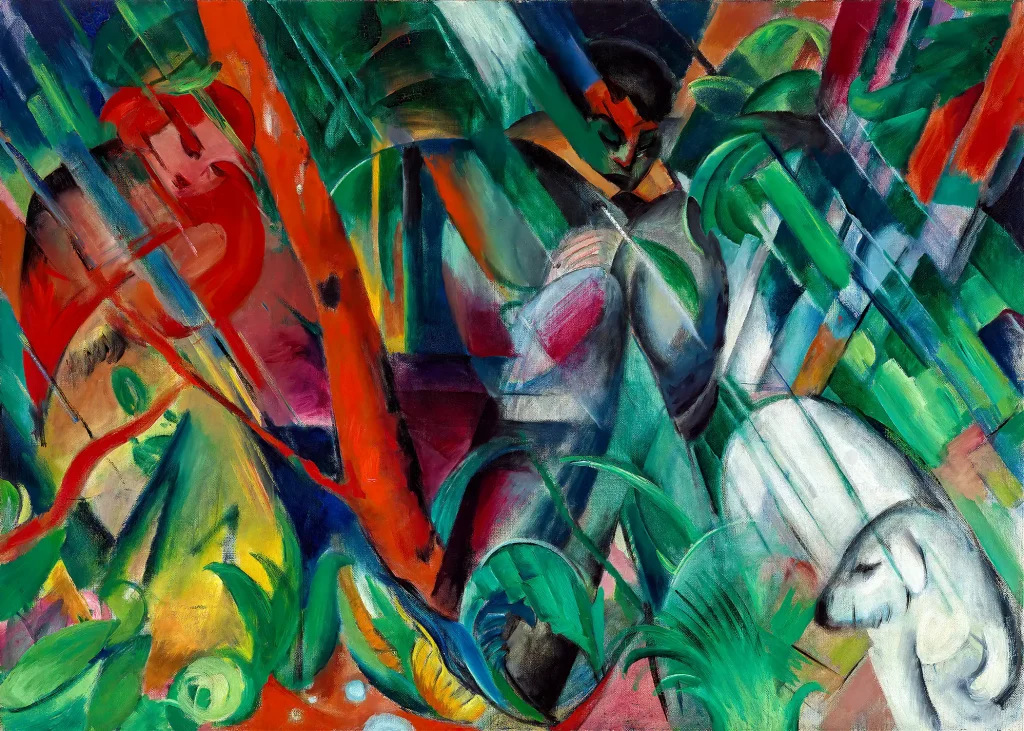
Influences and Connections
His connections extended beyond painters; Marc spoke with figures across the European avant-garde spectrum. Notably, his friendship with Paul Klee played a significant role in shaping his artistic philosophy towards abstraction.
Their discussions on art’s role amidst societal turmoil—especially during World War I—revealed their utopian hopes for how creativity could offer solace or even solutions during chaos.
Moreover, these relationships positioned Marc as a German expressionist and an influential player within broader Expressionist and Futurist circles throughout Europe.
Impact on German Expressionism
Franz Marc was pivotal in reshaping the art world as a cornerstone of the German Expressionist movement. His innovative approach and bold use of color brought new life to expressionism, influencing peers and setting standards for future generations. He challenged traditional perspectives through his artworks and ideas, inviting artists to explore emotional depth and spiritual themes.
Among them were key figures in abstract expressionism and color field painting, like Jackson Pollock and Jasper Johns. These artists saw in Marc’s work a way to push boundaries and explore new dimensions of emotion through art.
Marc’s legacy did not stop with just these movements; it also touched the hearts of minimalist painters and those interested in the spiritual aspects of art. Piet Mondrian, known for his geometric abstraction, appreciated Marc’s quest to express the more profound realities behind physical appearances.
Similarly, Paul Klee took inspiration from Marc’s vibrant palette to enhance his explorations of color theory. Thus, through his pioneering use of abstraction and color theory, Marc left an indelible mark on the canvas of 20th-century art history, proving that true creativity knows no bounds or eras.
Conclusion
Franz Marc’s vibrant paintings of animals and nature left an indelible mark on 20th-century art. Though his life was cut tragically short, his expressive use of color and form to capture the spiritual essence of the natural world continues to captivate viewers today. Marc’s work bridges Expressionism and abstraction, pointing the way toward new artistic possibilities.
Central to Marc’s artistic vision was his spiritual approach to nature and color. Influenced by Theosophy and his own philosophical beliefs, Marc sought to reveal the inner essence of his subjects, particularly animals, whom he viewed as embodiments of spiritual purity. His distinctive color theory allowed him to convey emotional and spiritual states beyond visual representation.
This spiritual quest led Marc to increasingly abstract forms, as seen in works like “Fate of the Animals,” where he fragments reality to hint at cosmic forces beyond ordinary perception. By doing so, Marc invited viewers to look beyond surface appearances and connect with a deeper, more primordial state of being.
Marc’s artistic journey reflects broader currents in early 20th-century thought, particularly the desire to reconcile modern life with spiritual values. His work resonates with contemporary environmental and spiritual movements, reminding us of our intrinsic connection to nature and the cosmos.
More than a century after his death, Franz Marc’s vision of harmony between humans, animals, and the cosmos remains powerfully relevant. His paintings continue to invite us to see the world anew, challenging us to perceive the spiritual essence that lies beneath the surface of our everyday reality. In our increasingly complex and technologically driven world, Marc’s art offers a timeless reminder of the beauty, mystery, and interconnectedness within all living things.
FAQs
1. Who was Franz Marc?
Franz Marc, a key figure in the German Expressionist movement, became famous for his vividly colored animal paintings. He studied at the Academy of Fine Arts, Munich, and co-founded Der Blaue Reiter (The Blue Rider) group.
2. What is the Blaue Reiter Circle?
The Blaue Reiter Circle, co-founded by Marc and Kandinsky, represented a group of artists who aimed to express spiritual truths through their art, breaking away from traditional forms.
3. Why are animals often seen in Marc’s paintings?
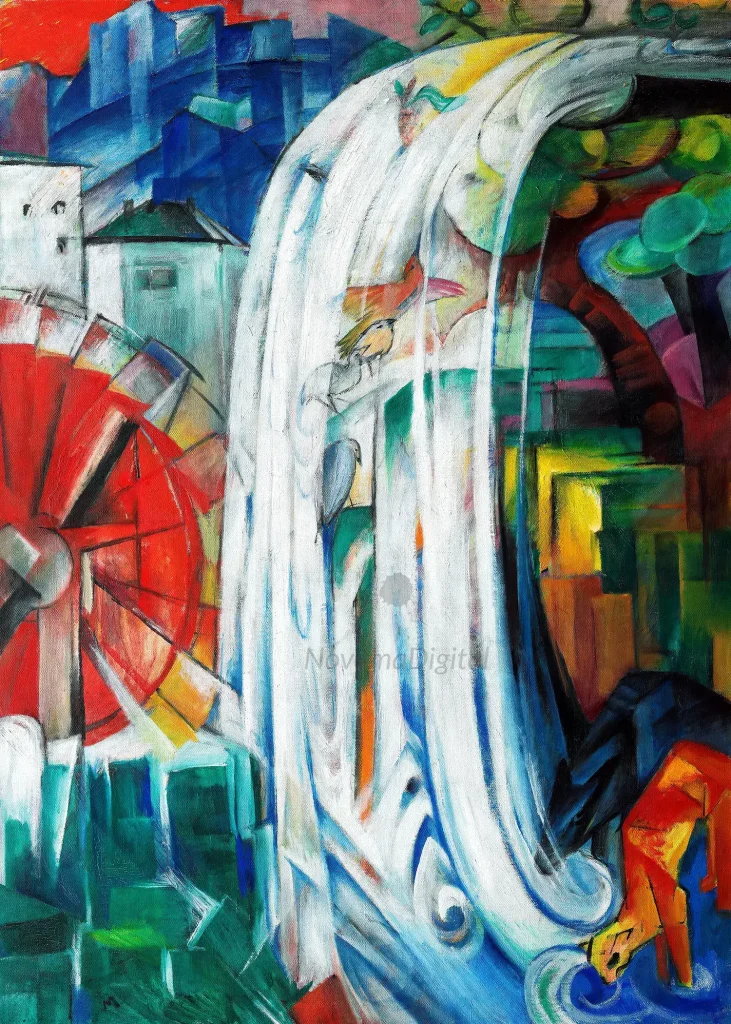
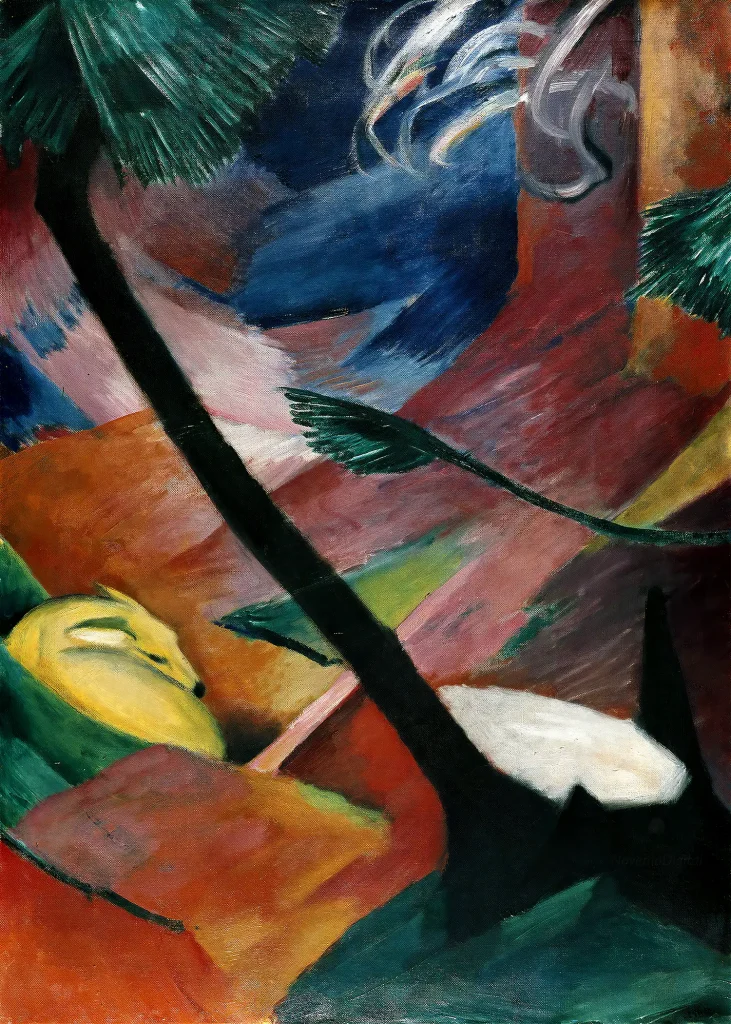
Marc believed animals possessed purity and innocence far beyond humans. His famous works like “Deer in the Monastery Garden” and “The Bewitched Mill” showcase this belief with vibrant colors and emotional depth.
4. How did World War I impact Franz Marc’s life and work?
Tragically, World War I cut short Franz Marc’s life; he was killed in battle. Before his death, however, the war influenced his artwork to adopt darker themes—reflecting the turmoil of the times.
5. What does “degenerate artist” mean concerning Franz Marc?
Marc was labeled as a “degenerate artist” by National Socialist Germany due to his innovative style that deviated from traditional norms—his works were banned from exhibitions and considered controversial at the time.
6. Can you see Franz Marc’s artwork today?
Yes! Despite some losses during WWII, many of Franz Marc’s masterpieces survived—thanks to collectors like Hildebrand Gurlitt—and can now be admired in museums worldwide, including The Thannhauser Galleries.